Ask how much red light therapy you should use for a sore muscle or an achy joint, and you will get wildly different answers online. The honest reality is that dosing is one of the most technical and least settled parts of this topic. This article explains the core dose concepts in plain terms, why more is emphatically not better, and where credible parameter guidance comes from — all with the caution this health-sensitive subject deserves. The aim is to help you read your device’s instructions wisely and ask better questions, not to hand you a universal prescription that does not exist. Studies on red light therapy dosage muscle have drawn increasing attention from researchers.
Because the right parameters depend on the goal, the tissue, the device, and the individual, dosing is best approached with humility. Following device and clinician guidance matters far more than chasing a number you read in a forum. When examining red light therapy dosage muscle, it helps to look carefully at the underlying research.
The Building Blocks of a Dose
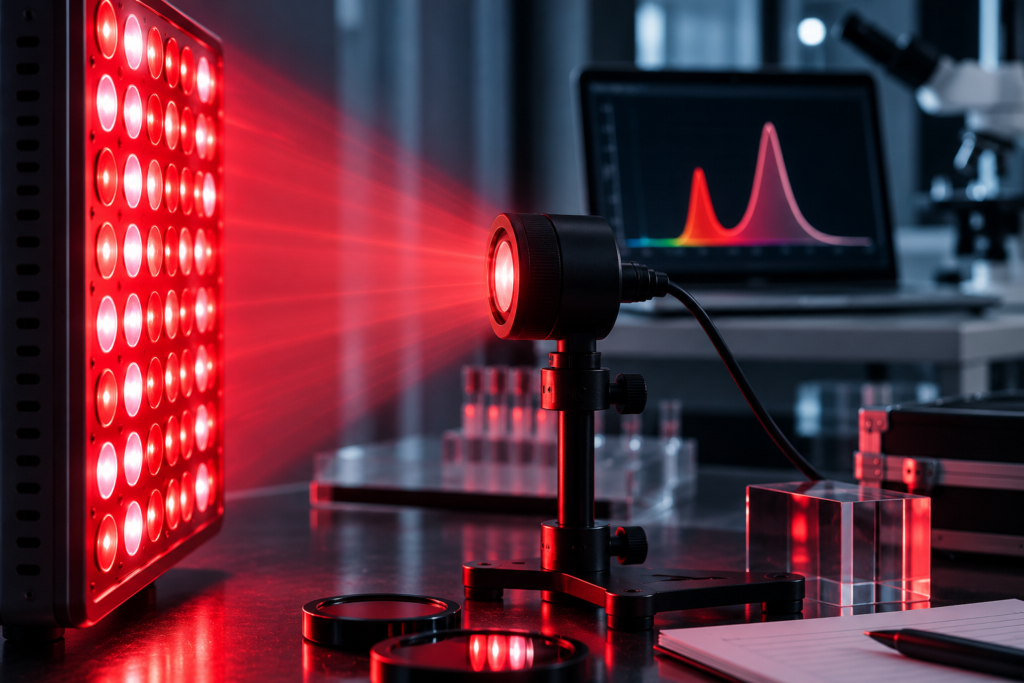
A light dose is built from a few interacting factors. Wavelength describes the kind of light, measured in nanometers (nm); red is roughly 630 to 660 nm and near-infrared roughly 810 to 850 nm. Irradiance is how much light energy reaches a surface, usually given in milliwatts per square centimeter (mW/cm²). Time is how long the exposure lasts. Multiply irradiance by time and you get the total energy delivered to an area, often expressed in joules per square centimeter (J/cm²). That J/cm² figure is what most people mean by dose. [source] The evidence around red light therapy dosage muscle remains an active area of investigation.
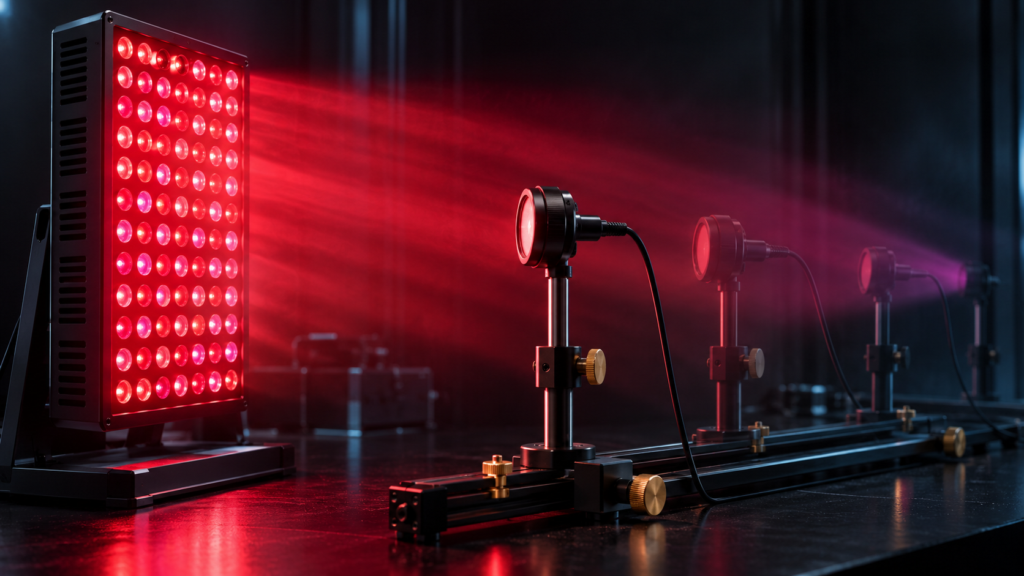
Two devices can deliver very different doses even at the same wavelength if their irradiance or your distance differs, which is why a single number divorced from context is rarely meaningful. A reading of, say, a certain number of joules only makes sense once you also know the irradiance behind it and the distance at which it was measured. This is why copying a friend’s settings or a forum figure can be misleading: the same dial setting on a different device, at a different distance, delivers a different dose to your skin. For those exploring red light therapy dosage muscle, setting realistic expectations matters.
Why Wavelength and Depth Matter for Muscles and Joints
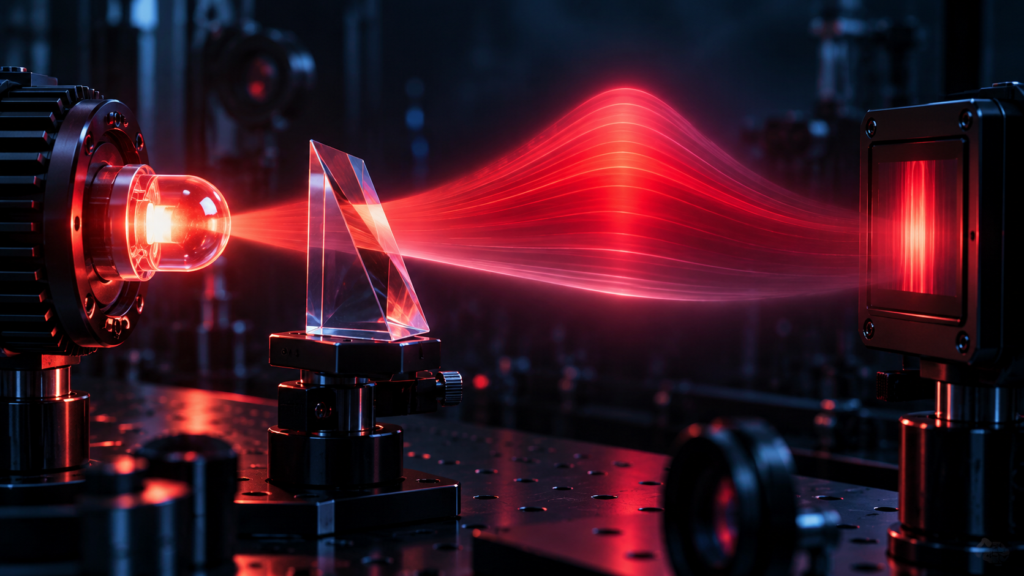
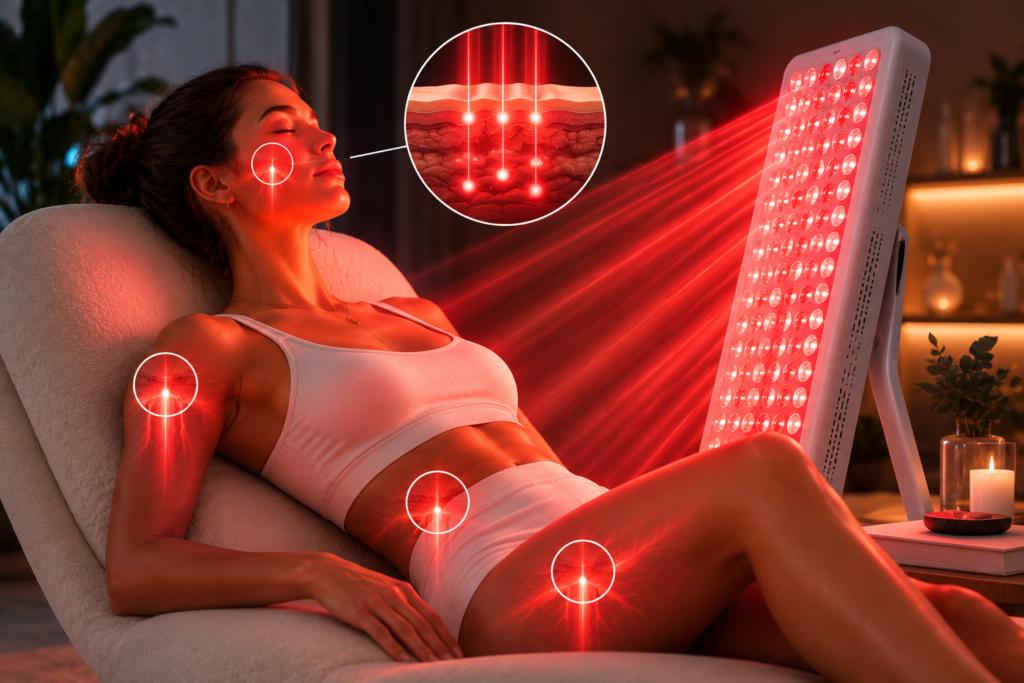
For muscle and joint goals, the target often sits beneath the skin, so depth is relevant. Research measuring the penetration depths of red and near-infrared light in human tissue shows that longer near-infrared wavelengths generally reach deeper than shorter red wavelengths. This is why devices aimed at deeper tissue often emphasize near-infrared. It also means part of the delivered light is absorbed or scattered before it reaches a deeper target, which complicates any simple dose calculation. [source] Understanding red light therapy dosage muscle requires separating marketing claims from published data.
In other words, the dose at the skin surface is not the dose at the joint. This is one reason precise dosing for deep targets is genuinely difficult and why exact protocols remain unsettled. Anyone researching red light therapy dosage muscle will find the science is still developing.

The Biphasic Rule: More Is Not Better
The single most important dosing concept is the biphasic dose response. Research updating the biphasic dose response in low-level light therapy describes how the relationship between dose and effect is not a straight line: too little light may do nothing, a moderate dose may produce a helpful effect, and too much can reduce or even reverse the benefit. This stands the common assumption on its head. Doubling your session length or pressing the device closer in hopes of a bigger result can push you past the helpful range. [source] The current state of red light therapy dosage muscle research points to early, modest findings.
Underlying this is the cellular mechanism. As research by Michael Hamblin and colleagues explains, red and near-infrared light is thought to be absorbed by cellular targets such as cytochrome c oxidase, supporting energy and signaling at appropriate doses — a system that can be over-stimulated rather than endlessly pushed. The practical lesson is simple: respect the recommended dose rather than maximizing it. Interest in red light therapy dosage muscle has grown alongside broader photobiomodulation research.
Where Credible Dose Guidance Comes From
If exact numbers are unsettled, where should you look? The World Association for Photobiomodulation Therapy (WALT) publishes guidance on parameters such as wavelength and dose for various clinical applications, which is a more credible reference than marketing claims or anecdotal forum posts. Clinicians who use photobiomodulation often work from such parameter guidance and adjust for the individual and the goal. [source] Most published reviews on red light therapy dosage muscle call for larger, better-controlled trials.
For a consumer, the most useful sources are your device’s documented specifications and recommended distance and time, ideally interpreted with input from a qualified professional when a specific muscle or joint concern is involved. A device that clearly states its wavelengths, irradiance, and recommended distance gives you the information needed to use it sensibly; vague claims without numbers do not. A clear-eyed look at red light therapy dosage muscle means separating anecdote from controlled evidence.
An Honest Summary
There is no single universal dose for muscle and joint goals. Dose depends on wavelength, irradiance, distance, time, and the target tissue, and the optimal parameters are still being studied. The reliable principles are that wavelength should match the depth of your goal, that a moderate dose is the aim, and that more is not better. Consulting a healthcare provider about red light therapy dosage muscle is always a sensible step.

Practical, Cautious Dosing Habits
Translating this into practice, a few habits help. Read and follow your device’s instructions on distance and session time rather than improvising, since those instructions are tied to the device’s specific irradiance. Expose bare skin over the target area, because clothing blocks light and changes the effective dose. Keep the distance consistent, as irradiance falls off quickly as you move farther from a panel. Be consistent over weeks rather than front-loading long sessions, and resist the urge to escalate the dose if you do not see immediate results. Devices marketed for red light therapy dosage muscle vary widely in power output and wavelength.
For healthy adults, red light therapy at consumer doses is generally considered low-risk, with side effects that tend to be mild and temporary. Even so, sensible dosing and eye protection from bright light remain reasonable precautions. Practitioners field frequent questions about red light therapy dosage muscle from clients.
Common Dosing Mistakes to Avoid
A few predictable errors tend to undermine sensible dosing, and naming them makes them easier to sidestep. The first is the belief that a longer session or a closer device must work better; the biphasic principle says otherwise, and overdoing it can erase any benefit. The second is ignoring distance, since irradiance drops sharply with even small increases in the gap between you and a panel, quietly changing the dose you receive. The third is treating clothing as irrelevant, when fabric blocks much of the light and leaves the true skin dose far lower than expected. The fourth is borrowing a number from someone else’s device or an online post without knowing the irradiance and distance behind it, which makes the figure close to meaningless for your situation. And the fifth is impatience — abandoning a reasonable routine after a few sessions, or repeatedly cranking up the dose chasing a faster result. Avoiding these traps will not guarantee an effect, but it will at least ensure you are giving the tool a fair, safe trial rather than working against yourself. Studies on red light therapy dosage muscle have drawn increasing attention from researchers.
When to Involve a Professional
Dosing questions become more important when a real muscle or joint problem is involved. For persistent, severe, or worsening pain, for an injury, or for a diagnosed condition, a healthcare professional or physical therapist can advise on whether light is appropriate and on suitable parameters as part of a broader plan. Red light therapy is not a replacement for that care, and no dosing strategy changes the fact that significant problems deserve a professional assessment. When examining red light therapy dosage muscle, it helps to look carefully at the underlying research.
Keeping Expectations Realistic: Red light therapy dosage muscle Notes
Even with sensible dosing, red light therapy may offer only modest support for muscle and joint goals, and responses vary from person to person. Getting the dose roughly right improves your odds of a fair trial; it does not guarantee a result. Treat dosing as a way to use the tool responsibly, not as a lever that forces an outcome.
The Bottom Line
Red light therapy dosage for muscle and joint goals comes down to wavelength, irradiance, distance, and time, combined into a total dose — with no single universal number. The most important rule is biphasic: a moderate dose may help while more can backfire. Lean on credible parameter guidance such as WALT and your device’s documented specs, match wavelength to the depth of your goal, follow device and clinician guidance, and see a professional for any significant muscle or joint concern.
Frequently Asked Questions
How many joules should I use for muscle recovery?
There is no single universal number. The right dose depends on wavelength, irradiance, distance, time, and the target tissue, and optimal parameters are still being studied. Follow your device’s guidance and a professional’s advice for specific concerns.
Is more red light therapy better for sore joints?
No. Research describes a biphasic dose response: a moderate dose may help, while too much can reduce or even reverse the benefit. Doubling session length or moving the device too close can be counterproductive.
Does near-infrared reach deeper than red light for joints?
Generally yes. Research on penetration depths shows longer near-infrared wavelengths reach deeper than red light, which is why devices aimed at deeper tissue often emphasize near-infrared. Even so, the surface dose is not the dose at the target.
Where can I find trustworthy dosing guidance?
The World Association for Photobiomodulation Therapy (WALT) publishes parameter guidance on wavelength and dose, and your device’s documented specifications are useful. A qualified professional can help interpret these for a specific goal.
Do I still need a professional if I dose carefully?
Yes, for significant concerns. For persistent, severe, or worsening pain, injuries, or diagnosed conditions, a professional can advise whether light is appropriate and at what parameters. It is not a replacement for proper care.
Ready to get your red light therapy device? See our brand reviews and product reviews, and try out our product comparison tool to inform your decision.