
Working nights or rotating shifts asks the body to do something it is not naturally designed for: stay alert when the internal clock expects sleep, and sleep when it expects daylight. The result is often poor, fragmented rest and persistent fatigue. Many shift workers searching for relief come across red light therapy and wonder if it can help. This article centers the evidence-based light strategies that actually address shift work challenges, and it is candid that those strategies are different from red light therapy, which has little direct evidence here. Studies on red light therapy shift work have drawn increasing attention from researchers.
The honest framing matters because sleep is a serious matter for shift workers, affecting safety and well-being. The well-supported approaches involve managing bright light and darkness to shift or anchor the body clock, not red light panels. When examining red light therapy shift work, it helps to look carefully at the underlying research.
Why Shift Work Disrupts Sleep
The body’s circadian rhythm is a roughly 24-hour internal clock that strongly influences when you feel alert and when you feel sleepy. The NIH explains that this clock is set largely by light and that disrupting normal light-dark patterns can throw it out of sync. Shift work does exactly that: it requires wakefulness during the body’s biological night and sleep during its biological day, which the circadian system resists. [source] The evidence around red light therapy shift work remains an active area of investigation.
This misalignment is why night workers often feel sleepy on the job and struggle to sleep well afterward. The clock is sending sleep signals at work and wake signals at home. Addressing shift work sleep challenges is largely about working with this clock through light and darkness. For those exploring red light therapy shift work, setting realistic expectations matters.
Evidence-Based Light Strategies for Shift Workers
Occupational health guidance focuses on using light strategically. The CDC’s NIOSH materials for night-shift workers describe using bright light during the shift to promote alertness, and reducing light exposure on the way home and at home to support daytime sleep. The general principles are consistent and practical. [source] Understanding red light therapy shift work requires separating marketing claims from published data.
Bright Light During the Shift
Exposure to bright light while working at night can help promote alertness and support staying awake during the biological night. Adequate workplace lighting is therefore not just about seeing clearly; it can help counter the drowsiness that the body clock produces overnight. This bright light works through the eyes and the circadian system. [source] Anyone researching red light therapy shift work will find the science is still developing.
Limit Light After the Shift, and Darken the Bedroom by Day
On the journey home in the morning, bright daylight can signal the body clock to stay awake, making subsequent daytime sleep harder. NIOSH guidance suggests minimizing bright light exposure after a night shift, for example by wearing sunglasses on the way home, and then sleeping in a dark room. The Sleep Foundation similarly emphasizes keeping the sleep environment dark, which is especially important for daytime sleepers facing bright daylight outside. Blackout curtains and eye masks help create the darkness the body needs to produce melatonin and sleep during the day. The current state of red light therapy shift work research points to early, modest findings.

How Red Light Therapy Is Different
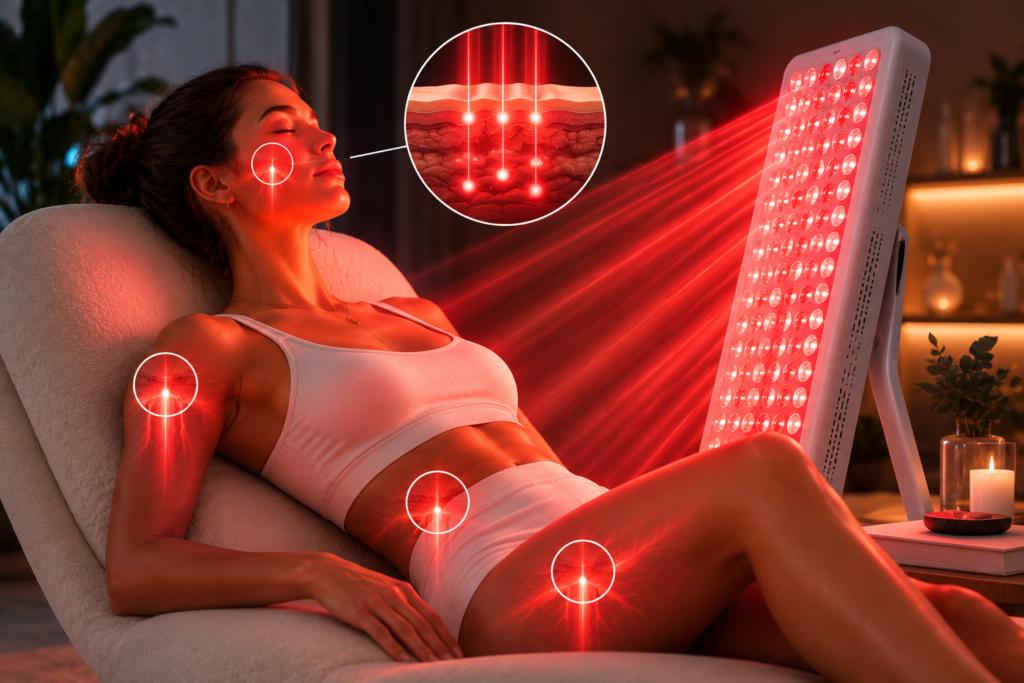
Here is the crucial distinction. The strategies above use bright light, or its absence, acting through the eyes to shift and anchor the circadian clock. Red light therapy, by contrast, delivers red and near-infrared wavelengths primarily to the skin and tissues, and it is studied mostly for goals such as skin appearance and recovery, not for resetting the body clock or improving shift work sleep. Interest in red light therapy shift work has grown alongside broader photobiomodulation research.
There is little direct evidence that red light therapy addresses shift work sleep challenges. It should not be confused with the evidence-based light strategies, nor with bright light therapy used during shifts. One relevant and limited consideration is that red wavelengths appear to suppress melatonin minimally compared with bright blue light. In principle, that means encountering dim red light is unlikely to disrupt a worker’s ability to wind down as much as bright blue light might. But this is a statement about being relatively non-disruptive, not about actively improving shift work sleep, and the evidence is very limited. Most published reviews on red light therapy shift work call for larger, better-controlled trials.
Where a Red Light Session Might, and Might Not, Fit
For a shift worker who already uses red light therapy for other reasons, doing a session as part of a calming routine before daytime sleep is unlikely to be strongly disruptive, given red light’s minimal melatonin effect. That is different, however, from claiming it will help you sleep. As a dedicated solution to shift work sleep problems, red light therapy is not supported by direct evidence. The strategies most likely to help remain bright light at the right times, darkness at others, and consistent routines, alongside good general sleep habits. A clear-eyed look at red light therapy shift work means separating anecdote from controlled evidence.

Other Supportive Habits
Beyond light, consistency helps the body cope with shift work. Keeping a sleep schedule as regular as the rotation allows, creating a quiet and cool bedroom, limiting caffeine toward the end of a shift, and protecting a dark, undisturbed daytime sleep period all support better rest. These habits do not fix the underlying circadian challenge of shift work, but they reduce additional obstacles to sleep. None of them depends on red light therapy. Consulting a healthcare provider about red light therapy shift work is always a sensible step.

Three Different Practices, Often Confused
Because the word light appears in so many sleep recommendations, it is easy to blur distinct practices together. Keeping them separate clarifies why red light therapy is not the tool for shift work. The first practice is timed bright light reaching the eyes, used during a shift to promote alertness and managed afterward to allow daytime sleep, which is the evidence-based circadian approach. The second is evening, or in this case pre-sleep, light hygiene: dimming lights and reducing bright blue light to protect melatonin before rest. The third is red and near-infrared photobiomodulation devices, the usual meaning of red light therapy, aimed at the skin and studied mainly for non-sleep goals. Bright light therapy boxes belong to the first category and are different from red light panels. For shift workers, the first two practices carry the support; red light therapy does not have direct evidence for this purpose. Devices marketed for red light therapy shift work vary widely in power output and wavelength.
Planning Sleep Around a Rotating Schedule: Red light therapy shift work Notes
Rotating shifts add a further challenge, because the body clock is asked to shift repeatedly rather than settle into one pattern. While there is no perfect fix, some general principles help. Where the schedule allows, anchoring a consistent block of sleep can give the body a more stable rhythm than sleeping at random times. Using bright light to stay alert during work and protecting a dark, quiet space for sleep afterward applies regardless of which shift you are on. Because rotating schedules can be especially taxing, and because individual circumstances differ widely, a healthcare professional or occupational health resource can offer guidance tailored to a specific rotation. Red light therapy does not address this rotational challenge and should not be relied upon to do so. Practitioners field frequent questions about red light therapy shift work from clients.
A Strong Note of Caution
Shift work sleep difficulties can be significant, and some people develop shift work sleep disorder, a recognized condition involving excessive sleepiness and insomnia related to a work schedule. Red light therapy is not a treatment for shift work sleep disorder or any sleep disorder, and it does not guarantee better sleep. If you experience persistent excessive sleepiness, ongoing insomnia, difficulty functioning safely, or other concerning symptoms, see a healthcare professional. Sleepiness also has real safety implications for driving and work, so professional guidance is important. The strategies here support coping with shift work; they do not replace medical care. Studies on red light therapy shift work have drawn increasing attention from researchers.
The Bottom Line
Shift work disrupts the body clock by demanding wakefulness and sleep at unnatural times, and the evidence-based tools for coping are strategic: bright light during the shift to promote alertness, reduced light afterward, and a genuinely dark bedroom for daytime sleep. These work through the eyes and circadian system and are different from red light therapy, which has little direct evidence for shift work sleep. Red light’s minimal melatonin effect means a dim red session is unlikely to be very disruptive, but it is not a proven aid. Prioritize the evidence-based light strategies and consistent habits, and see a professional for shift work sleep disorder or persistent problems. When examining red light therapy shift work, it helps to look carefully at the underlying research.
Frequently Asked Questions
Can red light therapy help me sleep better on shift work?
There is little direct evidence that red light therapy improves shift work sleep. The evidence-based strategies use bright light during shifts and darkness afterward to manage the body clock, which is different from what red light therapy devices do.
What light strategies actually help night-shift workers?
Bright light during the shift can promote alertness, while minimizing bright light on the way home, for example with sunglasses, and sleeping in a dark room supports daytime sleep. These act through the eyes and the circadian system.
Why does shift work make sleep so hard?
Shift work requires wakefulness during the body’s biological night and sleep during its biological day. The circadian clock, set largely by light, resists this, sending sleep signals at work and wake signals at home.
Will a red light session before daytime sleep hurt my rest?
Red wavelengths appear to suppress melatonin minimally compared with bright blue light, so a dim red light session is unlikely to be strongly disruptive. However, that is not the same as proof it improves sleep, and the evidence is very limited.
When should a shift worker see a professional?
If you have persistent excessive sleepiness, ongoing insomnia, trouble functioning safely, or suspect shift work sleep disorder, see a healthcare professional. Red light therapy is not a treatment for these conditions and does not replace medical care.
Ready to get your red light therapy device? See our brand reviews and product reviews, and try out our product comparison tool to inform your decision.