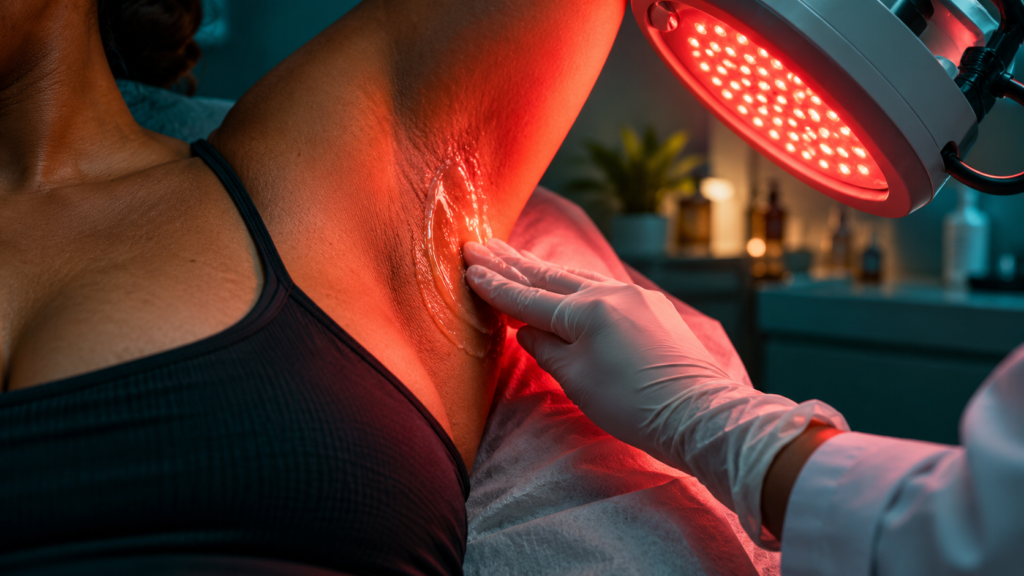
If you are drawn to the idea of including red light therapy in your evening routine, choosing the right red light therapy device for sleep matters, but probably not for the reason marketing suggests. The goal for evening use is not maximum power; it is a comfortable, lower-intensity, minimal-blue option that fits a calm wind-down without flooding your eyes and bedroom with bright, alerting light. Just as important is managing expectations: a device is, at most, an optional ritual cue, not a sleep-disorder treatment.
This buyer-oriented guide focuses on choosing a red light therapy device for sleep while keeping expectations realistic and avoiding exaggerated marketing claims. Red light therapy has not been shown to improve sleep, and the evidence is very limited.
What Evening Use Actually Requires
Daytime and evening priorities differ. Choosing a red light therapy device for sleep starts with understanding how evening light affects your body’s natural transition toward bedtime. During the day, brighter exposure is not a sleep concern. In the evening, the dominant consideration is avoiding bright, blue-heavy light that can interfere with the transition toward sleep. The Sleep Foundation highlights blue light as especially influential on alertness and the body clock, which is why a device destined for nighttime use should lean toward warm red wavelengths with minimal blue content.
Research by Gooley and colleagues found that even ordinary room light before bed can suppress melatonin, so the broader aim is to keep evening light dim. A device that is excessively bright, or that mixes in blue light, works against that aim no matter how it is marketed. For evening use, gentler is generally better.
Features to Favor in a Red Light Therapy Device for Sleep
Lower, Adjustable Intensity
A red light therapy device for sleep does not need to be the most powerful on the market. The Sleep Foundation’s guidance on light and sleep supports keeping evening light low, and an adjustable device gives you control to do exactly that.
Minimal Blue Light
A quality red light therapy device for sleep should focus on red and near-infrared wavelengths while minimizing blue light exposure. If a device prominently features blue light, it is better suited to other goals and other times of day, not a pre-sleep routine.
Comfortable, Eye-Friendly Design
Comfort matters for a calming ritual. Look for a device you can position so the light is not glaring directly into your eyes, and consider eye protection where appropriate, especially with near-infrared-heavy devices, whose light is largely invisible and does not trigger the eye’s natural aversion to brightness. A device that is easy to set up and use without bright setup screens supports the calm you are aiming for. The most practical red light therapy device for sleep is one you’ll actually feel comfortable using every evening.
Appropriate Size and Simplicity
For bedside or evening use, a smaller, simpler device is often more practical than a large, high-output panel built for full-body sessions. Cleveland Clinic describes red light therapy as using low levels of red and near-infrared light; for an evening ritual, a modest device that fits your space and routine is usually a better match than an oversized one you will rarely use.
Reading the Specs Without the Hype
When shopping for a red light therapy device for sleep, look for clearly stated wavelengths (red and near-infrared with minimal or no blue), an honest description of intensity, and clear guidance on distance and session length. Be skeptical of dramatic sleep claims. No consumer device should be marketed as a cure for insomnia or a sleep disorder, and language promising guaranteed better sleep is a red flag rather than a selling point. Transparency about what the device emits is more trustworthy than bold promises about what it will do for your rest.
Beware Sleep-Specific Marketing
Many companies market a red light therapy device for sleep using claims that go well beyond what current research supports. The research on red light and sleep is very limited, essentially a single small trial in a specific group. Treat any device that promises to fix your sleep with caution, and choose based on sensible features and honest specifications instead.
Don’t Confuse an Evening Device With a Light Box
It’s easy to confuse a red light therapy device for sleep with other types of light therapy products, so a quick distinction helps when shopping. A red light therapy device for evening use is a low-intensity red and near-infrared product aimed at the skin and tissues, chosen here as a gentle wind-down cue. A bright light therapy box is a very different thing: it delivers intense light to the eyes and is studied mainly for circadian and seasonal purposes, typically used in the morning rather than at night.
A bright light box used in the evening could be alerting, which is the opposite of what you want before bed. If you come across a product that promises to influence your body clock by shining bright light into your eyes, that is not the kind of device this guide is about, and it is generally not suited to a pre-sleep routine. For evening use, keep the focus on a comfortable, low-intensity red light device and leave bright-light-to-the-eyes approaches to daytime use and, where relevant, professional guidance.
Budget and Practicality for Evening Use
You do not need the most expensive red light therapy device for sleep to support an evening wind-down routine. Because the goal is a calm, low-intensity session rather than maximum output, a modest device that fits your bedside and your routine is often the better buy.
Prioritize features that matter for nighttime use, adjustable or lower intensity, minimal blue light, comfortable positioning, and simple operation, over raw power or large coverage areas designed for full-body daytime sessions. A device you can use easily and calmly every night is worth more than an elaborate one that is awkward to set up when you are tired. Spending more does not buy better sleep, and no price point turns a wellness device into a treatment for a sleep disorder.
How to Use an Evening Device Sensibly
Even the best red light therapy device for sleep depends on how you use it. For evening use, keep sessions modest in length, keep the room dim, set screens aside, and use the device at a reasonably consistent time as part of a wind-down. Avoid turning the session into a bright, stimulating event right before bed. The aim is a calm cue that fits naturally into the slide toward sleep, not a high-intensity routine that leaves you alert. Follow the manufacturer’s guidance on distance and time, and remember that more is not better.
Managing Expectations Before You Buy
Perhaps the most important advice when buying a red light therapy device for sleep is to keep realistic expectations. A red light device may, for some people, serve as a soothing part of an evening ritual, but it is not a treatment for sleep problems and is not proven to improve sleep.
If your main concern is persistent poor sleep, the most valuable investments are consistent sleep timing, a dim and screen-free evening, and, when needed, professional care, not a device. Buy with realistic expectations, and a device can be a pleasant addition rather than a disappointment.
A Word of Caution
No red light therapy device for sleep treats or cures insomnia or any sleep disorder, and the evidence for sleep benefits remains very limited. For evening use, favor lower-intensity, minimal-blue, comfortable options, and avoid bright or blue-heavy light late at night. If you have persistent trouble sleeping, feel unrefreshed, or suspect a sleep disorder, consult a healthcare professional. Anyone who is pregnant, takes medication that increases light sensitivity, or has a relevant eye or medical condition should seek professional advice before using a light-based device. Red light therapy is not a substitute for medical care.
The Bottom Line
The best red light therapy device for sleep is one that supports a calm evening routine with lower or adjustable intensity, minimal blue light, comfortable positioning, and realistic expectations. Read specs honestly, ignore dramatic sleep claims, and keep expectations realistic. A thoughtfully chosen device can be a pleasant part of a wind-down, but the foundation of good sleep remains consistent habits and a dim, screen-free evening, not the device itself.
Ready to get your red light therapy device? See our brand and product reviews, and try out our product comparison tool to inform your decision.
Frequently Asked Questions
What should I look for in a red light therapy device for sleep?
A red light therapy device for sleep offers lower or adjustable intensity, minimal blue light, and a comfortable design that fits naturally into your bedtime routine. Avoid bright, blue-heavy devices for nighttime use.
Should an evening device be very powerful?
Not necessarily. For evening use, the priority is keeping light dim and calm, so a lower-intensity or adjustable device is often more suitable than a high-output panel built for full-body daytime sessions.
Is blue light from a device a problem at night?
For evening use, yes, it is best avoided. Blue-heavy light is especially influential on alertness and the body clock, so a device for nighttime use should center on red and near-infrared wavelengths.
Can a device labeled for sleep cure my insomnia?
No. No consumer red light device treats or cures insomnia or any sleep disorder, and evidence for sleep benefits is very limited. Be wary of products promising guaranteed better sleep.
Do I need eye protection with an evening device?
It is worth considering, especially with near-infrared-heavy devices, since that light is largely invisible and does not trigger the eye’s natural aversion to brightness. Position the device so it does not glare into your eyes.
This article is for general educational purposes only and is not medical advice. Red light therapy is not a substitute for professional care. Talk with a qualified healthcare professional about your individual situation.