Collagen is the structural protein that keeps skin firm, smooth, and resilient. As it naturally declines with age, wrinkles, sagging, and rough texture start to show up. Red light therapy for skin has gained a lot of attention as a non-invasive way to support collagen, but it’s worth understanding what’s actually backed by research rather than just marketing claims. Here’s a closer look at how it works and what the science says.
Why Collagen Matters for Skin Aging
Skin aging is largely a story about collagen. As skin ages, collagen amounts decrease, existing collagen fibers fragment, and the body produces more matrix metalloproteinases, enzymes that break collagen down further. MMP-1 and MMP-2 in particular are known to play a major role in this breakdown process.
This combination, less collagen production and more collagen breakdown, is a big part of why skin loses firmness and develops visible lines over time. Anything that can shift that balance back toward collagen production is worth paying attention to, which is exactly why light-based treatments have drawn so much research interest in dermatology over the past two decades.
How Red Light Therapy for Skin Triggers Collagen Production
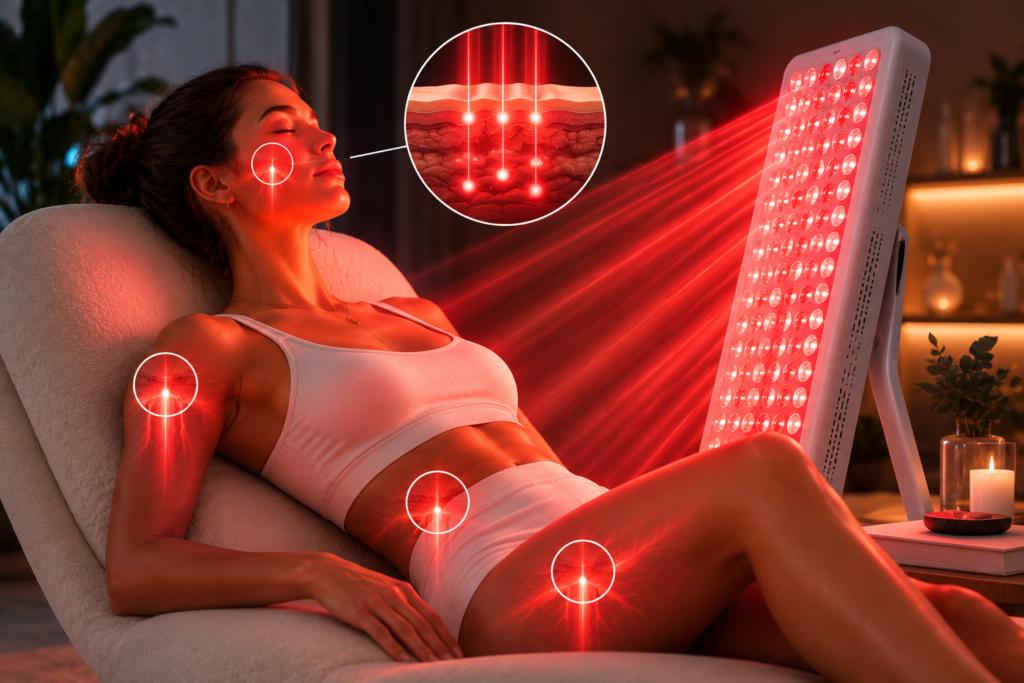
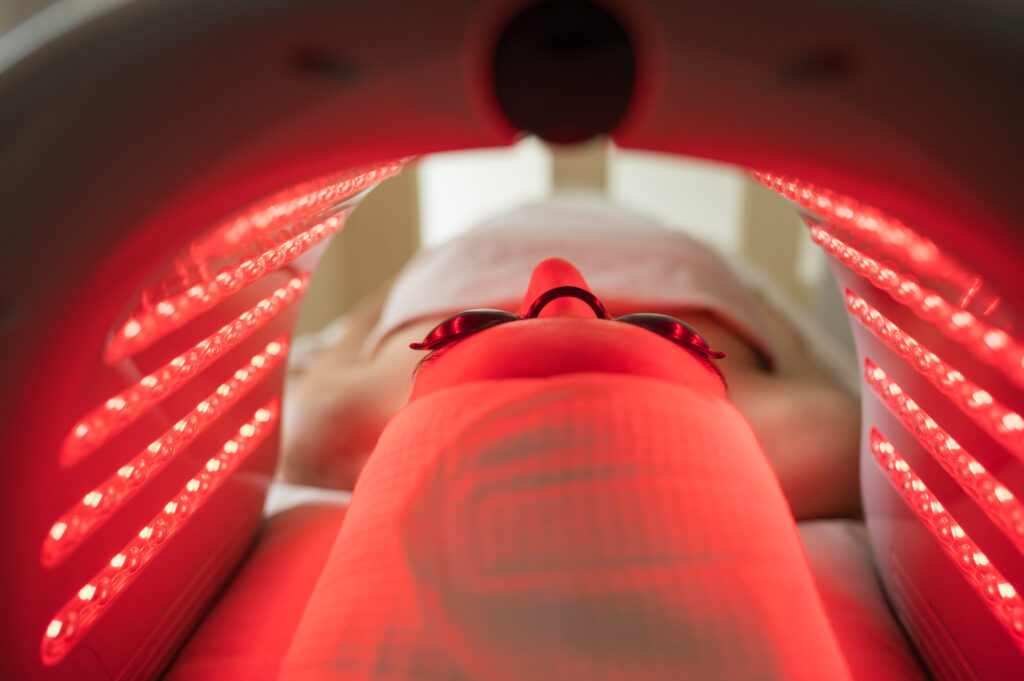
The mechanism behind red light therapy for skin centers on a process called photobiomodulation, where specific wavelengths of light interact with cells to influence their behavior.
One of the most cited studies on this topic examined a 660 nm pulsed LED light source and its effects on skin collagen metabolism. Researchers found a meaningful percent increase in type-1 procollagen levels alongside a decrease in MMP-1 following LED treatment. In the same study, more than 90% of individuals showed a reduction in wrinkle depth and surface roughness after a series of LED treatments, and the majority of participants saw a measurable reduction in wrinkle severity based on blinded clinical assessment.
That combination, more procollagen and less of the enzyme that breaks it down, is essentially the mechanism researchers point to when explaining how red light therapy for skin may help offset visible aging.
What the Clinical Research Shows
Beyond the lab-level mechanism, there’s also clinical outcome data worth looking at. A randomized controlled trial examined red (660 nm) and amber (590 nm) photobiomodulation treatments over a series of sessions across four weeks, measuring periocular wrinkle volume and skin hydration as outcomes.
Trials like this matter because they move beyond cell cultures and into measurable results on actual skin. While sample sizes in this area of research tend to be modest, the direction of the findings is consistent: red and near-infrared light exposure is associated with measurable improvements in wrinkle volume and skin texture over a period of weeks, not overnight.
Beyond Collagen: Supporting Skin Repair and Structure
This kind of treatment isn’t limited to collagen synthesis alone. Research on multispectral photobiomodulation has also shown effects on broader skin repair processes, including accelerated wound closure and improved dermal architecture.
In one study using a full-thickness skin wound model, daily LED treatment increased expression of several extracellular matrix-related genes, including genes directly responsible for collagen production. It’s worth noting that this particular study was conducted in an animal model rather than in humans, so it should be read as supportive mechanistic evidence rather than a direct guarantee of the same results in human skin. Still, it adds to a broader picture of how light-based treatments interact with skin structure at a cellular level.
Is Red Light Therapy for Skin Safe for Long-Term Use?
Safety is a reasonable question for any treatment used regularly over time. A systematic review evaluating the oncologic safety of low-level light therapy for skin rejuvenation found that current clinical and preclinical evidence supports its safety, with no clear evidence linking it to increased cancer risk, even among individuals previously treated for cancer.
That doesn’t mean every device or protocol is identical, and anyone with specific skin conditions or medical concerns should still check with a dermatologist before starting a new routine. But broadly speaking, the existing safety research is reassuring for people considering red light therapy for skin as part of a regular routine.
What Red Light Therapy for Skin Won’t Do
It’s worth being upfront here. Red light therapy for skin isn’t an instant fix, and it isn’t a replacement for a full skincare routine or sun protection.
Most of the research showing meaningful collagen and wrinkle improvements involved consistent treatment over multiple weeks, not a single session. Results also vary by individual, skin type, and how consistently the treatment is used. In the studies referenced above, meaningful changes generally appeared after a series of sessions spanning several weeks rather than after one-off use, so setting expectations around a realistic timeline matters just as much as choosing the treatment itself.
Red light therapy for skin works best as a complement to good skincare habits, not a standalone solution that replaces them entirely. Sunscreen, hydration, and a consistent skincare routine still do most of the heavy lifting when it comes to long-term skin health.
The Bottom Line
Red light therapy for skin has a reasonable, mechanism-backed case behind it when it comes to supporting collagen production. Research points to real increases in procollagen, reductions in collagen-degrading enzymes, and measurable improvements in wrinkle depth and skin texture with consistent use. It isn’t a miracle fix, but for people looking for a non-invasive addition to their skincare routine, the research so far is genuinely encouraging
Ready for your red light therapy device? Check out our product and brand reviews to help inform your decision, or look into using our comparison tool.