OVERALL
4.6
BEST FOR
Full-Body Sessions, Standing Treatment, Serious Recovery
$2,199 USD
WAVELENGTHS
630nm-850nm
IRRADIANCE
250 mW/cm² (no published distance)
COVERAGE AREA
Full body treatment
WEIGHT
18kg
Our Review
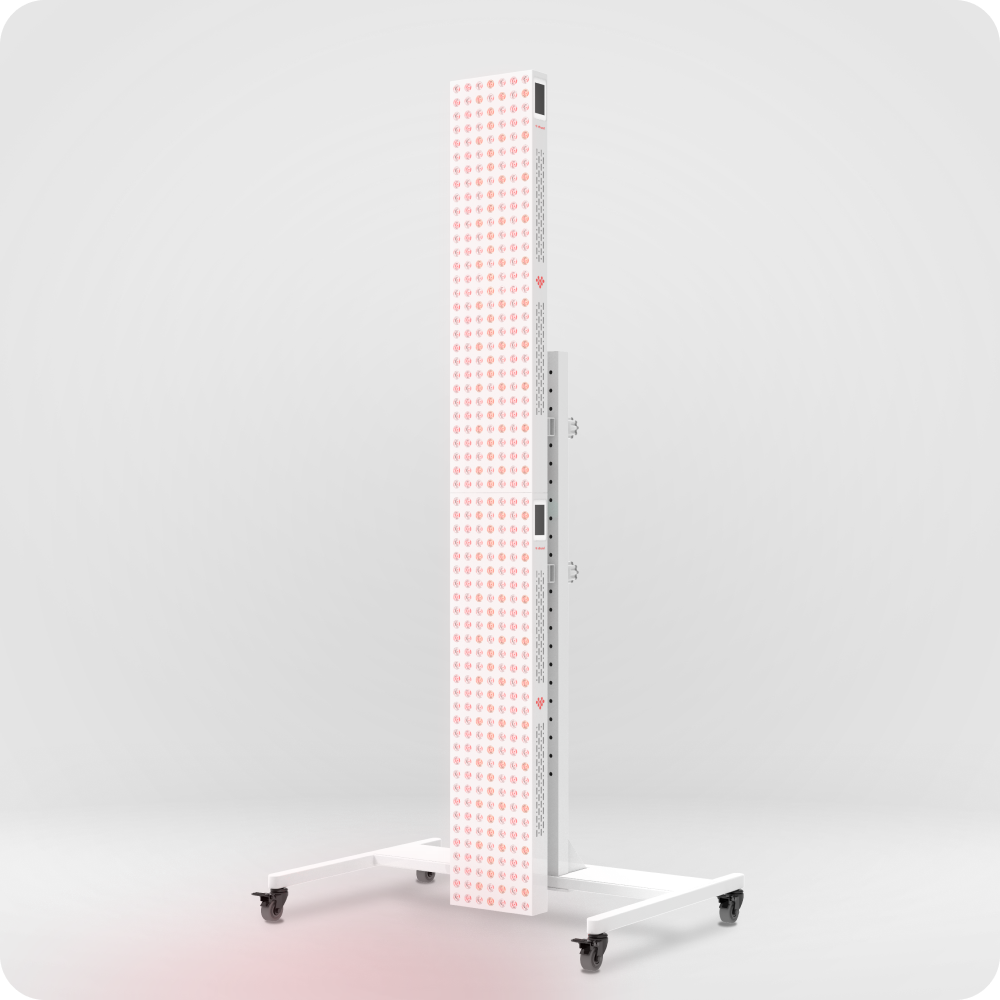
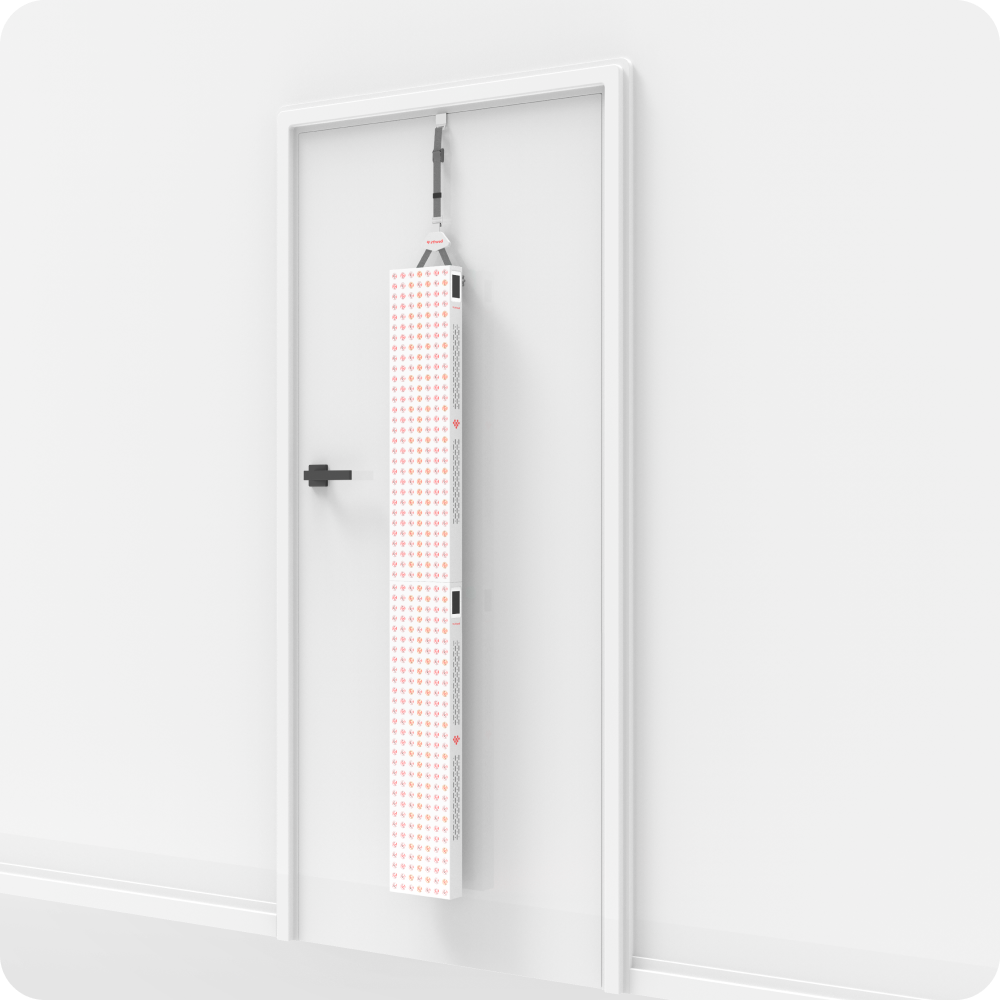
The Infraredi Pro Dual 2.0 is probably one of the first systems we’d look at if you know you want full-body red light therapy but don’t necessarily want your red light setup taking over an entire room. It gives you nearly six feet of vertical coverage, so instead of treating your upper body, moving the panel, and then starting again on your legs, you can stand in front of one system and cover much more of your body at once.
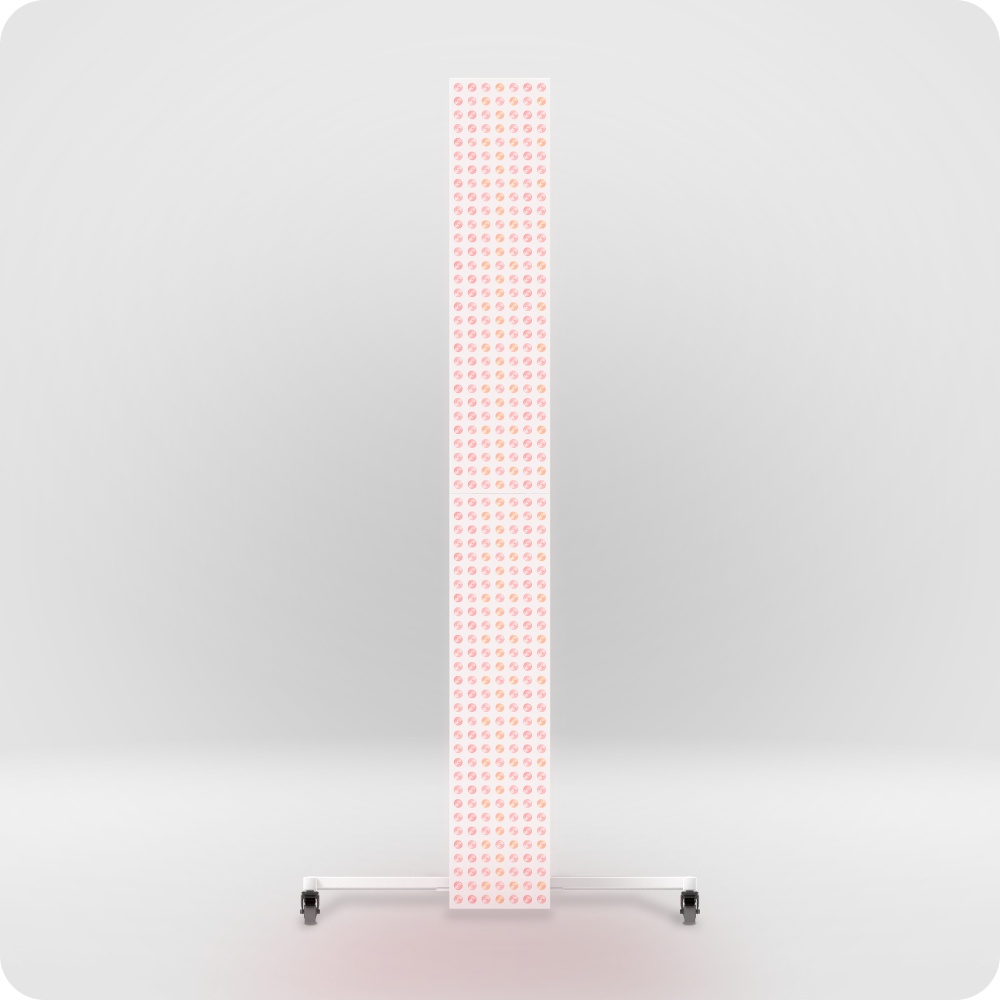
But there’s an important tradeoff we’d want you to notice before buying it. The Pro Dual is tall, but it’s only about 8.7 inches wide. That’s pretty narrow for something being sold as a full-body system. Whether that’s a problem really depends on what you expect from it. If your main frustration with a smaller panel is constantly moving it up and down, the Dual fixes a lot of that. If you want broad shoulder-to-shoulder coverage without shifting your body around, we’d look closely at Infraredi’s wider configurations before deciding this is the one.
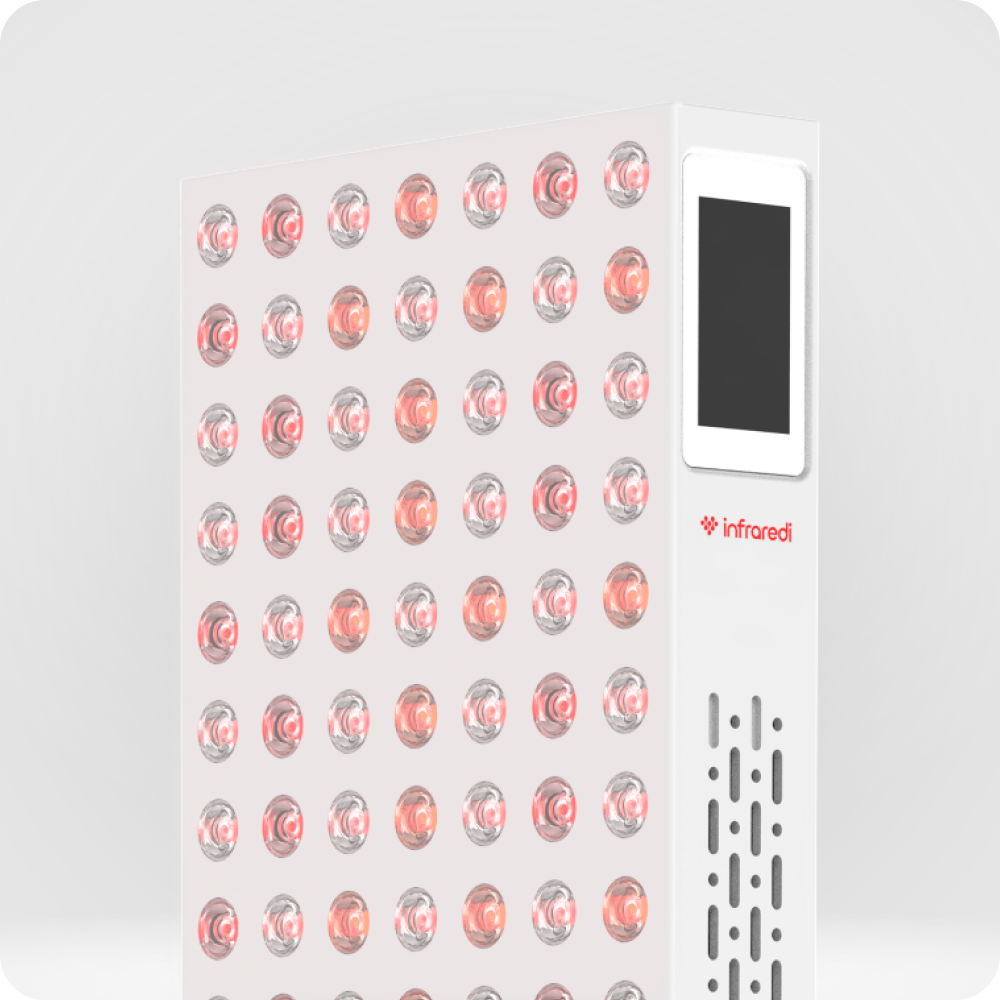
The Pro Dual 2.0 is made by stacking two Pro Max 2.0 panels vertically. Together, they create a treatment area approximately 71.5 inches tall and 8.7 inches wide. You get 420 dual-lens LEDs across the system, but honestly, the height is the number we’d care about most here. It’s what changes the experience compared with owning a single Pro Max.
With a smaller panel, a full-body routine can become surprisingly tedious. You treat one area, reposition the panel, treat another area, and keep going until you’ve covered everything you wanted. The Dual eliminates much of that vertical repositioning. Once it’s set up, you can stand in front of it and have light running from around head level down toward your legs at the same time.
The width is where we’d temper expectations. Eight or nine inches isn’t going to evenly cover everyone’s entire torso, shoulders, arms, and sides from one stationary position. You can step farther away to increase the spread of the light, but distance also changes the intensity reaching you. Depending on your build and what you’re trying to expose, some side-to-side repositioning may still be part of your routine.
That’s why we’d think of the Pro Dual as a convenient full-height system rather than assuming “full body” means every part of you is evenly covered at once. You’ll also still need to turn around if you want to treat your front and back. It solves the up-and-down problem very well. It doesn’t eliminate positioning altogether.
Once you have it set up somewhere permanent, using the Dual should be pretty simple. Infraredi recommends positioning yourself around 6 to 12 inches away, and sessions generally run around 10 to 20 minutes. You can stand, sit, or move slightly in front of the panels depending on what you’re trying to expose.
The Pro Dual uses Infraredi’s five-wavelength Pro Series setup, combining 630nm and 660nm red light with 810nm, 830nm, and 850nm near-infrared light. You also get adjustable brightness and pulsing, so you aren’t stuck using the same output every time.
We like having that control, but we wouldn’t overcomplicate it. If you’re new to red light therapy, seeing five wavelengths, different intensity settings, pulsing, presets, and Bluetooth can make it seem like you need to engineer the perfect session. You don’t need to use every setting just because Infraredi gives it to you. We’d rather see you find a routine that’s easy enough to repeat consistently.
Infraredi rates the Pro Dual at 250 mW/cm² irradiance. That’s a high advertised output, but we wouldn’t compare that number directly against another brand and assume whichever panel has the bigger number is automatically better. Testing distance, equipment, and methodology can all affect irradiance measurements. Coverage and how practical the system is for you matter just as much.
We think the Pro Dual has a pretty specific sweet spot. It’s for someone who wants full-body height but doesn’t necessarily want to pay for a much wider system.
Maybe you’ve already used a smaller panel and the thing that bothers you isn’t its width. It’s having to move it between your face, chest, abdomen, and legs. If that’s you, stacking two Pro Max panels solves the exact problem you’re having without forcing you several steps higher into Infraredi’s lineup.
It can also make sense if your treatment space is limited. Wider configurations obviously take up more wall and floor space. The Dual stays relatively slim while giving you nearly six feet of vertical treatment area, which could make it easier to work into a home gym, bedroom, or wellness area.
But if you’re already looking at the 8.7-inch width and thinking that sounds narrow, we’d listen to that instinct. Infraredi makes the Dual Plus specifically for someone who wants the same full-body height with substantially more width. We’d rather you compare the two now than spend more than $2,000 and immediately start thinking about upgrading.
One thing that makes that decision a little less stressful is Infraredi’s modular Pro Series design. The Pro Dual itself is simply two Pro Max 2.0 panels combined into one system, so you’re not buying one giant piece of equipment that can only ever be used in this exact configuration.
We like that because it gives you some flexibility if your needs change. If you’re unsure whether you even need a full-height system, you could start with one Pro Max 2.0 and expand later. If you already know you’re tired of treating your upper and lower body separately, buying the Dual configuration from the beginning saves you from building it piece by piece.
That’s also something we’d keep in mind when comparing value. You’re paying for two individual panels that work together, not just a larger enclosure with more LEDs inside it. For someone who likes having an upgrade path, that’s one of the more practical aspects of Infraredi’s Pro lineup.
The Infraredi Pro Dual 2.0 has a regular price of $2,199. Infraredi does run promotions, so you may see it listed for less, but we’d judge whether it’s right for you based on the regular price rather than letting a sale make the decision.
At more than $2,000, we’d want full-body treatments to actually be something you plan on doing regularly. If you’re mainly interested in your face, knee, shoulder, lower back, or another specific area, you don’t need nearly six feet of panel. One of Infraredi’s smaller Pro options would make much more financial sense.
If you’re using red light therapy several times a week across multiple areas, though, convenience starts carrying more weight. Not having to stop and reposition a shorter panel two or three times during every routine may not sound like a huge deal today, but over hundreds of sessions, those little annoyances are exactly what can make a device easier or harder to keep using.
We’d also compare the Dual with the Dual Plus before checking out. You’re essentially deciding whether saving money and space matters more to you than additional width. That’s a much more useful comparison than simply asking which one has more LEDs.
Infraredi includes free shipping with the Pro Dual 2.0, and the company ships from local warehouses using express courier. For a multi-panel system weighing around 40 pounds before considering your mounting setup, we’re glad shipping isn’t another expense added at checkout.
Infraredi offers different setup options, including a door hook, vertical stand, and horizontal stand. We’d choose based on how you’re genuinely going to use the system rather than which setup looks best in product photos.
If you want to stand in front of it every morning, make that experience as easy as possible. If you know you’d rather lie down during a session, plan around horizontal positioning. A red light system that’s slightly less aesthetically pleasing but takes ten seconds to start is probably going to get used more than one that requires rearranging the room every time.
At roughly 40 pounds across the two panels, the Dual is more manageable than Infraredi’s larger full-body configurations, but we still wouldn’t want to move it every day. We’d find somewhere it can stay set up most of the time.
The Pro Dual 2.0 comes with Infraredi’s 60-day risk-free trial and three-year warranty. The two-month trial is useful here because size and coverage are such an important part of deciding whether this particular configuration works for you.
Sixty days should give you enough time to figure out whether the narrow treatment area bothers you in actual use. That’s something that’s difficult to judge from measurements alone. An 8.7-inch-wide panel may be perfectly adequate for the way you move and position yourself, or you may realize fairly quickly that you would have preferred the Dual Plus.
We’d keep all of the packaging until you’ve made that decision. Returning two large panels isn’t going to be as simple as dropping a handheld device into a small shipping box, and we’d rather make a potential return as painless as possible.
The three-year warranty is decent, but we’d still like longer coverage at this price. If you’re spending more than $2,000 specifically because you plan to make red light therapy part of your routine for years, we’d like the warranty to reflect more of that expected ownership period.
Infraredi’s broader Pro Series feedback is overwhelmingly positive, with customers frequently praising the panels for feeling well built, being easy to operate, and delivering plenty of output. There is also verified feedback specifically from a Pro Dual 2.0 owner praising Infraredi’s customer support after experiencing delivery and stand-assembly issues, which is useful because those are exactly the kinds of practical problems that can matter with a larger setup.
That said, we’d still be careful with the overall star rating displayed alongside the Pro Dual. Infraredi combines reviews from multiple Pro Series products into the same review pool. You’ll see feedback from Pro Mini, Pro Max, Pro Max Plus, and other owners mixed together, so the roughly 4.9-star overall rating isn’t based exclusively on people who bought this exact two-panel configuration.
Some of that feedback is still relevant because the Pro Dual is built from Pro Max 2.0 panels. Comments about construction, controls, brightness, and ease of use can give you a reasonable idea of the underlying product experience. What we’d like to see more of is long-term feedback specifically addressing the Dual’s narrow full-body layout.
We’d particularly want to know whether owners still find the 8.7-inch width convenient after six months or a year, or whether they eventually wish they’d bought something wider. That’s the decision point we think matters most with this model, and there simply isn’t enough clearly separated long-term Dual-specific feedback to give you a definitive answer.
We’d also treat customer reports about pain, recovery, sleep, skin, or other results as individual experiences rather than promises about what the Dual will do for you. Those experiences can be useful context, but they shouldn’t be the reason you spend more than $2,000 on a system.
Before buying the Pro Dual 2.0, we’d forget about LED counts for a minute and look at your body and the space where you’ll actually use it. Is your biggest priority getting light from head to toe without moving a panel vertically? Or do you also want enough width that you can stand fairly still and comfortably expose your shoulders, arms, and torso?
If it’s mainly the first one, the Dual makes a lot of sense. You’re getting nearly six feet of treatment height while keeping the system relatively narrow, lighter, and less expensive than Infraredi’s larger configurations.
If it’s both, we’d seriously consider the Dual Plus before purchasing. It’s more expensive, but this is exactly the kind of purchase where saving money upfront doesn’t feel like much of a win if you’re already thinking about upgrading a few months later.
The Infraredi Pro Dual 2.0 ultimately makes the most sense for someone who wants to eliminate the constant up-and-down repositioning of a smaller panel without paying for coverage they don’t necessarily need. It gives you genuine head-to-toe height, plenty of customization, and the flexibility of Infraredi’s modular Pro Series while remaining one of the more approachable full-body configurations in the lineup.
Its narrow width is the compromise we’d want you to be completely comfortable with. If you’re expecting a broad wall of light that covers you shoulder to shoulder while you stand perfectly still, this isn’t that. If what you really want is a tall, streamlined setup that makes full-body sessions faster and easier while taking up less space than Infraredi’s wider systems, the Pro Dual 2.0 makes a much stronger case for itself. We’d choose it because that narrower design works for your routine, not simply because it’s the least expensive way to get “full body” in the Pro lineup.
Key Features
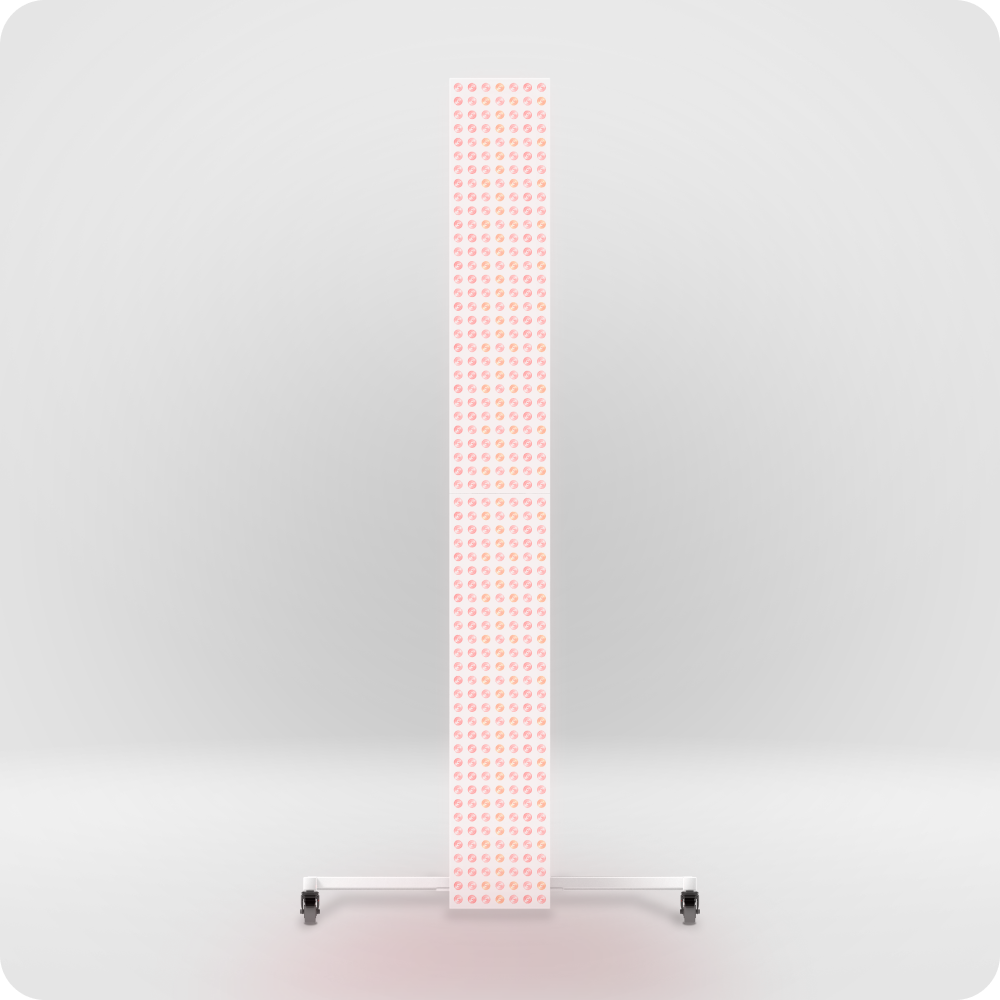
The nearly six-foot treatment height gives you head-to-toe exposure from one setup, reducing the need to move a smaller panel between your upper and lower body.
Built from two Pro Max 2.0 panels, the Dual gives you a full-height setup while keeping the flexibility to expand or reconfigure within Infraredi’s Pro Series.
The two-panel configuration uses 420 dual-lens LEDs across its treatment area for consistent red and near-infrared light distribution.
Combines 630nm, 660nm, 810nm, 830nm, and 850nm red and near-infrared wavelengths instead of relying on a standard two-wavelength combination.
Control brightness and pulsing based on your preferences rather than being limited to one fixed output for every session.
The Dual can be configured with different mounting options, including door-hook, vertical, and horizontal setups, so you can choose the positioning that works best for your routine.
Full Specifications
Wavelengths:
Final Verdict
4.6
Tec Specs
Wave Lengths
630nm-850nm
IRRADIANCE:
250 mW/cm² (no published distance)
Coverage Area:
Full body treatment
Overall Category Scores
Category
Score
Best Quality
Ease of Use
Features
Value
Support
Staying informed with the latest research and reviews.
10 Minute Read
10 Minute Read
10 Minute Read