Quick Answer
Early research on red light therapy for sleep has produced encouraging but mixed results. Small studies have reported improvements in perceived sleep quality, and one found higher melatonin levels. However, objective sleep measurements have not consistently improved. The evidence does not establish a universal treatment schedule or prove that every home device improves sleep.
Key Takeaway
Red light therapy for sleep is an emerging research topic. A red bedroom bulb and a therapy device deliver different kinds of exposure, and findings from one device cannot automatically be applied to another. Consistent sleep habits remain the foundation of a healthy bedtime routine.
Halloween has a way of turning a reasonable bedtime into a suggestion. There is another scary movie to watch, a costume to finish, or a party that somehow lasts well past midnight. The next morning, your alarm becomes the most frightening sound of the season.
If you have been looking into red light therapy for sleep, you have probably seen claims about melatonin, relaxation, and waking up refreshed. But which claims come from human research, and which go beyond what scientists have established?
Let’s examine the evidence, starting with what actually tells your body it is time for bed.
Your Body Has a Clock and a Growing Need for Sleep
Sleep depends partly on two systems working together.
Your circadian rhythm is your body’s roughly 24-hour schedule. Light and darkness help synchronize it with the world outside. Your brain receives light signals through your eyes and uses them to help regulate daily timing.
Sleep pressure is the drive to sleep that builds while you are awake. Adenosine, a chemical involved in this process, accumulates during waking hours. Caffeine can temporarily interfere by blocking its action.
The National Heart, Lung, and Blood Institute explains that the light-dark cycle also influences melatonin release. This hormone rises during biological nighttime and helps signal that sleep time is approaching.
Think of your circadian clock as the schedule and sleep pressure as the growing need to take a break. Melatonin contributes to the nighttime message, but it does not control the whole process.
That matters when evaluating red light therapy for sleep. A change in one hormone does not automatically establish better sleep overall.
👻 Who’s running your bedtime?
Pick a moment to explore your body’s bedtime crew.
Circadian clock
THE SCHEDULE
Biological night
Light through your eyes helps set its timing.
Sleep pressure
THE GROWING NEED
Built up while awake
Adenosine helps create the drive to sleep.
Melatonin
THE NIGHT SIGNAL
Usually rises at night
A timing signal, not an on/off sleep switch.
Your body clock and growing sleep need work together. Melatonin adds a nighttime cue.
Illustrative patterns for a typical daytime schedule. Shapes and dot counts are conceptual, not measurements. Individual timing varies.
How Does Light Affect Melatonin?
Your eyes do more than help you see. They also receive light information that influences your internal clock.
In a human light-exposure study, researchers tested different wavelengths and intensities. Their results showed that the effects on melatonin suppression and clock timing depended on wavelength and exposure duration.
The circadian system is particularly sensitive to blue-cyan wavelengths under many conditions. However, the biological effect of light also depends on how much reaches your eyes and when exposure occurs.
This is where discussions of red light therapy for sleep can become confusing. Light that suppresses melatonin less than another light source has not necessarily increased melatonin above its normal nighttime level. Those are separate claims requiring separate evidence.
A Red Bedroom Bulb and a Therapy Device Serve Different Purposes
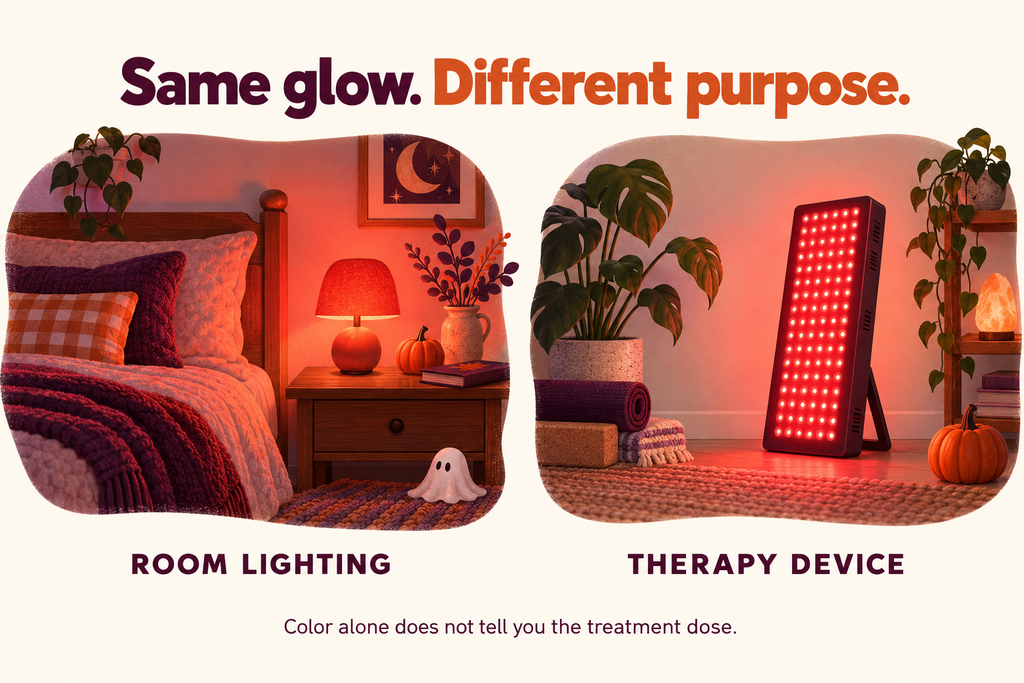
A red bulb illuminates your room. Photobiomodulation, the scientific term commonly used for red light therapy, delivers light to tissue using defined treatment parameters.
Research on photobiomodulation examines red and near-infrared wavelengths and their biological effects. A treatment is described by more than its visible color.
When reading a study about red light therapy for sleep, look for these details.
- Wavelength describes the light used, measured in nanometers.
- Irradiance describes the light power reaching a given area.
- Exposure time helps determine how much energy is delivered.
- Treatment location identifies where the light is applied.
- Timing describes when treatment occurs relative to bedtime.
A neck-worn device, a whole-body treatment system, and a red bedside lamp can produce very different exposures. Research findings need to stay connected to the setup tested.
A red glow can set a spooky mood. It cannot tell you the treatment dose.
What Have Studies Found About Red Light Therapy for Sleep?
Two small human studies help explain both the interest and the uncertainty.
The Study Involving Basketball Players
A 2012 study involved 20 female basketball players divided between red light treatment and a control condition. The treatment group received 30 minutes of whole-body red light exposure each night for 14 days.
Researchers assessed sleep using the Pittsburgh Sleep Quality Index, a questionnaire, and measured blood melatonin. They reported improved sleep quality and higher melatonin levels following treatment.
These findings helped generate interest in red light therapy for sleep. However, the study was small, brief, and limited to a specialized group of athletes. Its findings cannot establish what all adults should expect from a home panel.
The Study Involving Adults With Sleep Complaints
A 2023 trial enrolled 30 adults with self-reported sleep complaints but no diagnosed sleep disorder. After a baseline period, participants used either an active red and near-infrared light collar or a sham device every other night for three weeks.
Some self-reported sleep and relaxation outcomes improved among active users. However, actigraphy, which estimates sleep from movement, did not show differences between the groups. Both groups improved on an insomnia symptom questionnaire.
The study also received device-company funding, a relevant detail when assessing the evidence.
For red light therapy for sleep, this trial illustrates why the outcome measured matters. Perceived improvement and movement-based measurements can tell different stories. Neither should be presented as the other.
Why Scientists Are Interested in Cellular Effects
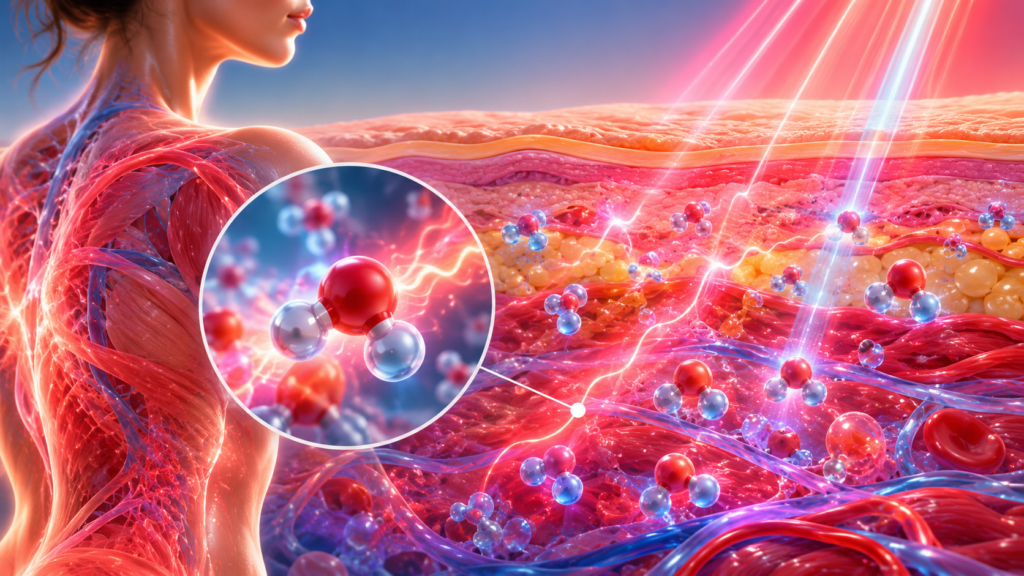
Photobiomodulation research also explores how light interacts with cells.
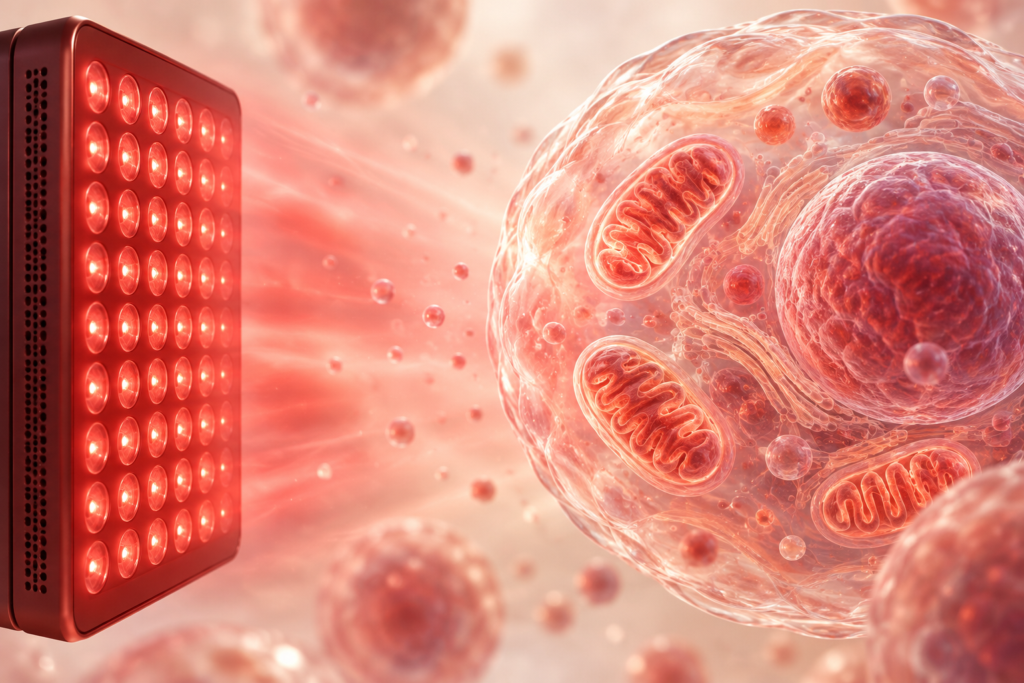
In a laboratory experiment involving isolated mitochondria, researchers investigated responses to 810-nanometer light. Mitochondria help cells produce ATP, a molecule used to power cellular work.
Experiments like this can help researchers investigate possible mechanisms. However, isolated mitochondria are a very different research setting from a person trying to sleep.
The proposed connection between cellular effects and red light therapy for sleep still needs clinical testing. A biological response in a laboratory cannot establish that a particular device helps people fall asleep faster or stay asleep longer.
Does Red Light Therapy Increase Melatonin?
The athlete study reported higher measured melatonin after treatment. That finding deserves further investigation, but it does not establish that every red light device produces the same response.
For red light therapy for sleep, the useful questions are specific. Which device was tested? What exposure did participants receive? Was melatonin measured? Did sleep improve as well?
Be cautious when a claim jumps from “red light may be less disruptive than some other evening lighting” to “this panel boosts your melatonin.” The first statement concerns the effect of light reaching the eyes. The second makes a treatment claim that requires its own evidence.
What Can You Realistically Expect From a Home Device?
The studies discussed here do not establish a standard home-panel protocol for red light therapy for sleep.
Copying a study’s session length is insufficient if your device has different output, wavelengths, positioning, or treatment coverage. Thirty minutes on one system does not equal thirty minutes on another.
If you choose to use a device, follow its instructions for distance, session duration, and eye protection. Do not stare into the LEDs or leave a treatment panel running while you sleep unless that use is explicitly supported by its instructions.
If you are considering red light therapy for sleep alongside care for an ongoing sleep problem, discuss that plan with your clinician. Persistent symptoms need attention beyond experimenting with a light routine.
Keep Your Halloween Bedtime Routine From Turning Into a Horror Story
Whatever your interest in red light therapy for sleep, make room for the basics.
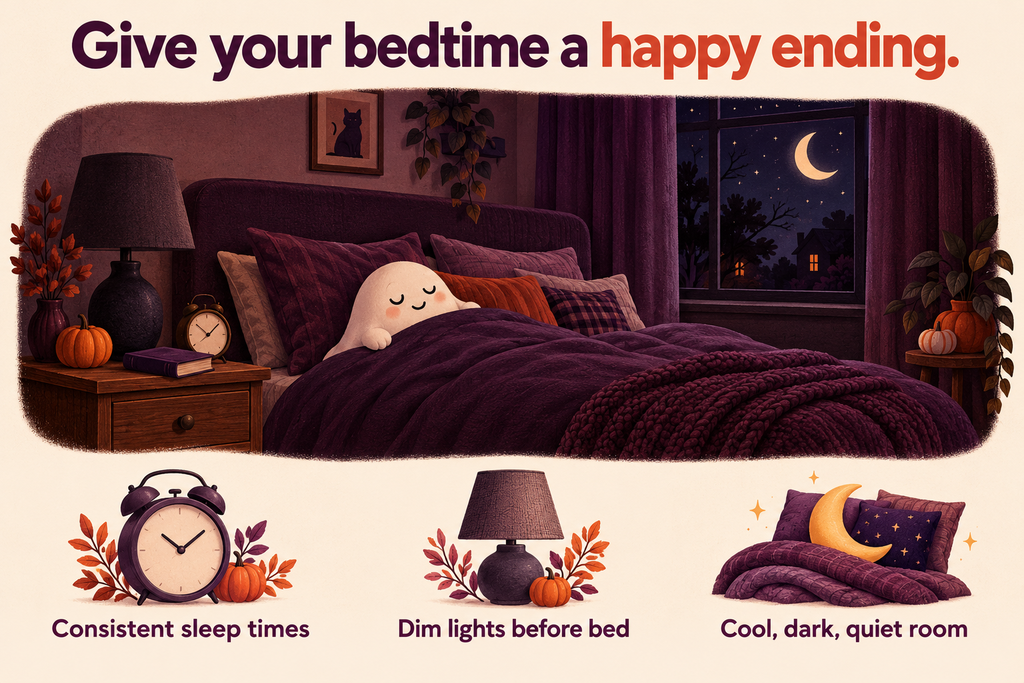
The NHLBI’s sleep guidance recommends consistent bedtimes and wake times, quiet time before bed, and a cool, dark, quiet bedroom. It also advises avoiding alcohol near bedtime and watching caffeine intake, including sources such as chocolate.
For Halloween, that might mean ending the movie marathon earlier, lowering bright room lighting during wind-down time, and returning to your usual schedule after a late night.
You can enjoy the festivities while still protecting time for sleep. Even vampires would struggle with a full calendar and an early alarm.
Where Vital Red Light Fits
If you are exploring at-home light therapy, Vital Red Light offers handheld, targeted, and larger panel formats. Comparing their size, positioning, and instructions can help you choose an option that fits your space and routine.
The research on red light therapy for sleep discussed here did not test those Vital devices. A responsible choice starts with understanding the product you are considering and keeping its features separate from outcomes demonstrated with other equipment.
For now, approach the sleep evidence with curiosity and realistic expectations. There are encouraging findings, important unanswered questions, and plenty of room for stronger research.
Let Halloween supply the suspense. Your bedtime routine can stay reassuringly predictable.
Frequently Asked Questions
Can red light therapy help you sleep?
Small studies suggest possible benefits, particularly for perceived sleep quality. However, red light therapy for sleep has not consistently improved objective measurements, and results cannot be assumed for every home device.
Does red light therapy increase melatonin?
One small athlete study reported higher melatonin after treatment. More research is needed to establish how reliably that occurs across people and devices.
Is a red bulb the same as a red light therapy device?
No. A red bulb provides room lighting. Therapy equipment delivers a defined exposure to tissue. Visible color alone does not establish a therapeutic dose.
Should you use red light therapy right before bed?
Some studies used evening treatments, but a universal bedtime protocol for red light therapy for sleep has not been established. Follow your device’s instructions rather than borrowing another system’s treatment schedule.
Can you leave a red light therapy panel on while sleeping?
Do not assume overnight use is appropriate. Follow the manufacturer’s stated session limits and operating instructions. A treatment panel should not automatically be used as a night-light.
How long does it take to improve sleep?
There is no established timeline for red light therapy for sleep. Small trials lasting weeks do not guarantee that an individual will benefit within that period.