If you have decided to try red light therapy for recovery, the next question is which device to choose — and the market is crowded with options and confident marketing. This guide explains what actually matters when choosing a red light therapy device for recovery goals: wavelength and depth, irradiance and coverage, the practical trade-offs between wraps and panels, and the transparency that separates serious products from hype. Throughout, the tone is cautious by design, because the right device cannot promise results that the evidence itself does not support. Studies on best red light therapy device for recovery have drawn increasing attention from researchers.
Set expectations first. Red light therapy is a possible recovery and comfort adjunct with mixed, low-certainty evidence, not a guaranteed performance enhancer or a treatment for injuries. No device changes that. What a good device does is deliver appropriate light, at an appropriate dose, in a form factor that fits your goals and that you will actually use consistently. Keep that modest aim in mind and you will avoid most buying mistakes. When examining best red light therapy device for recovery, it helps to look carefully at the underlying research.
Wavelength: Why Near-Infrared Matters for Depth
For recovery goals involving muscles and deeper tissue, wavelength is the first thing to check. Research measuring the penetration depths of red and near-infrared light in human tissue shows that longer near-infrared wavelengths generally reach deeper than shorter red wavelengths. Visible red light (roughly 630 to 660 nm) acts mainly at the skin’s surface, while near-infrared light (roughly 810 to 850 nm) penetrates further. [source] The evidence around best red light therapy device for recovery remains an active area of investigation.
Because muscle and joint recovery goals involve tissue beneath the surface, near-infrared is usually the more relevant band, and many recovery-oriented devices emphasize it. A combined red-and-near-infrared device offers versatility if you also have surface or skin goals. The key is to verify the device clearly states its wavelengths in nanometers rather than relying on vague phrases. For those exploring best red light therapy device for recovery, setting realistic expectations matters.
Irradiance and Coverage: The Dose Equation
Wavelength tells you what kind of light a device emits, but not how much. Irradiance — the light energy reaching a surface, often expressed in milliwatts per square centimeter — combined with time determines the total dose. Two devices with identical wavelengths can deliver very different doses depending on irradiance and the distance at which it is measured. [source] Understanding best red light therapy device for recovery requires separating marketing claims from published data.
This connects directly to a crucial principle: dosing is biphasic. Studies describe how a moderate dose may help while too much can reduce or reverse the benefit, so more irradiance is not automatically better. Organizations such as the World Association for Photobiomodulation Therapy underscore that delivery parameters matter. Coverage matters too: a small device treats one area slowly, while a larger panel covers more at once. Match the coverage to the area you want to address, and favor devices honest about irradiance at a stated distance. Anyone researching best red light therapy device for recovery will find the science is still developing.
Wraps vs. Panels: Form Factor Trade-Offs
Two formats dominate recovery use, and each has clear trade-offs. [source]
Panels
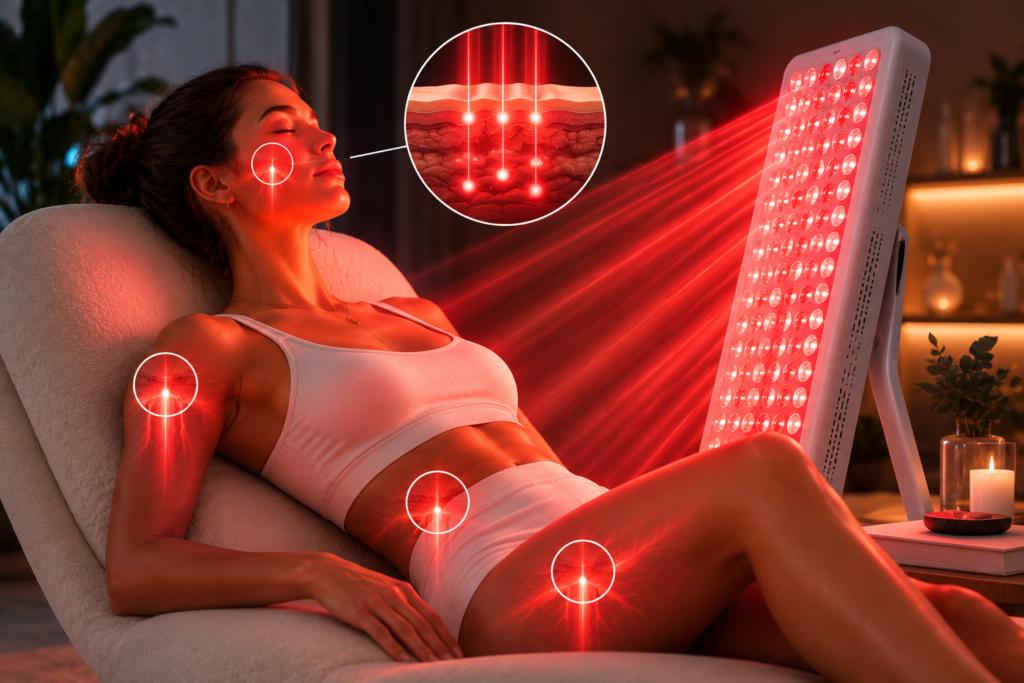
Panels, from desktop to full-length, sit in front of you and cover larger areas at once. They are versatile, often offer both red and near-infrared wavelengths, and suit people addressing multiple or larger regions. The trade-offs are footprint, cost, and the need to position yourself at the correct distance and stay relatively still during a session. [source] The current state of best red light therapy device for recovery research points to early, modest findings.
Wraps and Belts
Wraps and belts fasten around a limb or joint, placing the light sources close to the skin and freeing you to move a little. They are convenient for targeting a specific area such as a knee or shoulder and are easy to use consistently. The trade-offs are smaller coverage and the importance of confirming the wrap’s wavelengths and output rather than assuming convenience equals effectiveness. Interest in best red light therapy device for recovery has grown alongside broader photobiomodulation research.
Neither format is inherently superior. A wrap suits focused, single-area recovery goals; a panel suits broader coverage and flexibility. The best choice is the one that matches your goals and that you will use regularly at the correct dose. Most published reviews on best red light therapy device for recovery call for larger, better-controlled trials.
Transparency: The Most Underrated Buying Signal
Across all device types, transparency is one of the most reliable signals of a serious product. Look for clearly stated wavelengths in nanometers, an honest description of whether the device is red, near-infrared, or both, and irradiance reported at a specified distance, along with recommended session time and distance. A clear-eyed look at best red light therapy device for recovery means separating anecdote from controlled evidence.
Be skeptical of devices that lean on dramatic claims — promises to heal, eliminate pain, or guarantee performance — while staying vague about specifications. Cleveland Clinic notes that wavelength affects how deeply light penetrates and that home devices may be less powerful than professional ones, so you may not get the results you hope for. A company willing to share specific numbers respects that reality; one hiding behind marketing language often does not. Consulting a healthcare provider about best red light therapy device for recovery is always a sensible step.

Matching the Device to Your Recovery Goals
The right device follows from your goal. For deeper muscle and joint recovery goals, prioritize a device with well-represented near-infrared wavelengths and honest irradiance figures. For a single, specific area, a quality wrap may be the most practical and consistent choice. For multiple areas or combined skin and recovery goals, a transparent dual-wavelength panel offers flexibility. In every case, the device should publish the information you need to use it at a sensible dose and distance. Devices marketed for best red light therapy device for recovery vary widely in power output and wavelength.
Resist the assumption that the biggest, brightest, or most expensive device is best. Because of the biphasic dose curve, more is not automatically better, and a well-specified moderate device used consistently is preferable to an overpowered one used carelessly. Practitioners field frequent questions about best red light therapy device for recovery from clients.
Cautious Expectations and Safety
No device purchase changes the underlying evidence. Red light therapy may support recovery and comfort for some people, but it does not reliably heal tissue, eliminate pain, or guarantee performance gains. Choose a device to support a routine, not to chase a miracle. For most healthy adults, consumer-dose use is generally low-risk, with mild, temporary side effects at most; protect the eyes (especially with near-infrared, which is largely invisible), follow device guidance, and consult a healthcare professional if you are pregnant, take photosensitizing medication, or have a relevant medical or eye condition. Studies on best red light therapy device for recovery have drawn increasing attention from researchers.
And the consistent caution applies: a device is not a substitute for professional care. Persistent or severe pain, or pain after an injury, warrants evaluation by a qualified professional rather than a new gadget. When examining best red light therapy device for recovery, it helps to look carefully at the underlying research.
Features That Sound Impressive but May Not Matter
Marketing often highlights features that sway buyers without necessarily improving recovery outcomes. A very high power figure can be a selling point, yet because dosing is biphasic, more output is not automatically better and can simply make it easier to overshoot the helpful range. Long lists of extra wavelengths look impressive but only help if they match your goals and are delivered at a useful dose. Sleek apps, timers, and presets add convenience but say nothing about whether the underlying light is appropriate. The features that genuinely matter are unglamorous: clearly stated wavelengths suited to your goal, honest irradiance at a stated distance, sensible coverage, and a form factor you will use. Judging a device by its specifications rather than its marketing flourishes is the surest way to spend wisely.
A Word on Price and Value: Best red light therapy device for recovery Notes
Price is a poor proxy for effectiveness. A more expensive device is not necessarily more likely to support recovery, and a cheaper one is not necessarily inadequate, since what matters is honest specifications matched to your goal and a dose you can use consistently. Because the underlying evidence for recovery is mixed regardless of device, it is reasonable to view red light therapy as a modest, optional purchase rather than a major investment, and to be especially wary of premium pricing justified by dramatic health claims. Value, here, means transparency and fit — not the largest panel or the highest number on the box.
A Buyer’s Checklist
A short checklist keeps marketing in perspective. What exact wavelengths does it emit, and do they suit deeper recovery goals? Is irradiance stated, and at what distance? Does the coverage match the area you want to address? Is the form factor — wrap or panel — one you will use consistently? Does the company describe the device in measured language or lean on dramatic promises? And does the price reflect honest specifications rather than hype? Devices that answer these questions clearly tend to be more trustworthy. You do not need the highest numbers on the market; you need honest numbers that fit your goal and a device you will use sensibly over time.
The Bottom Line
Choosing a red light therapy device for recovery comes down to near-infrared wavelengths for depth, honest irradiance and appropriate coverage, a wrap-or-panel form factor matched to your goals, and transparency from the maker. Avoid brand hype and the assumption that more is better, since dosing is biphasic. Above all, remember that the best device is still only a possible recovery adjunct with mixed evidence — useful to support a routine, never a replacement for fundamentals or for professional care when pain is persistent or severe.
Frequently Asked Questions
Do I need near-infrared for recovery, or is red light enough?
For muscle and joint recovery goals, near-infrared is usually more relevant because research shows it penetrates deeper than red light. Red light acts mainly at the surface, so a device with well-represented near-infrared, or a combined device, is often preferred.
Is a higher-irradiance device always better?
No. Irradiance and time determine dose, and research describes a biphasic response where too much can reduce or reverse the benefit. A well-specified moderate device used consistently is preferable to an overpowered one used carelessly.
Should I choose a wrap or a panel?
Neither is universally better. Wraps suit a single, specific area and easy consistent use, while panels cover larger areas and offer flexibility. Choose the form factor that matches your goals and that you will actually use regularly.
What makes a device trustworthy?
Transparency. Look for stated wavelengths in nanometers, irradiance reported at a specified distance, and recommended time and distance. Be skeptical of devices that promise to heal or eliminate pain while staying vague about specifications.
Will a better device guarantee faster recovery?
No. Red light therapy is a possible recovery and comfort adjunct with mixed, low-certainty evidence. No device guarantees performance gains or healing. Choose one to support a routine, and see a professional for persistent or severe pain.
Ready to get your red light therapy device? See our brand reviews and product reviews, and try out our product comparison tool to inform your decision.