Shopping for a red light therapy device for skin can feel overwhelming. Masks, panels, handhelds, and wraps all compete for attention, each with confident marketing and a different price tag. This guide focuses on the factors that genuinely matter for skin goals — wavelength, format, irradiance, and transparency — so you can choose with intention rather than being swayed by hype. It avoids endorsing any brand; the aim is to help you ask the right questions. Studies on best red light therapy device for skin have drawn increasing attention from researchers.
One framing point first: a device can only support skin-appearance goals to the extent the underlying practice does, and red light therapy may support those goals for some people without guaranteeing them. The right device simply gives the practice a fair chance; it cannot promise an outcome. When examining best red light therapy device for skin, it helps to look carefully at the underlying research.
Start With Wavelength
For skin goals, wavelength is the first thing to check. Visible red light, roughly 630 to 660 nanometers (nm), acts mainly at the skin’s surface and the layers just beneath — the region most relevant to skin appearance. A controlled clinical trial on skin used red and near-infrared wavelengths in this general range when studying skin-appearance outcomes, which is why these numbers appear so often on devices marketed for skin. [source] The evidence around best red light therapy device for skin remains an active area of investigation.
Near-infrared light, roughly 810 to 850 nm, penetrates deeper. Research measuring the penetration depths of light in human tissue confirms that longer near-infrared wavelengths generally reach deeper than red wavelengths. For purely surface-level skin goals, strong red output is the priority; near-infrared adds versatility if you also have deeper goals like recovery. Many skin devices include both. For those exploring best red light therapy device for skin, setting realistic expectations matters.
Mask vs. Panel: Format Matters
The two most common formats for skin are LED masks and panels, and each suits different preferences. [source] Understanding best red light therapy device for skin requires separating marketing claims from published data.
LED Masks
Masks are shaped to the face, delivering light to facial skin hands-free while you sit or move around. They are convenient for facial skin-appearance goals and easy to fold into a routine. Their limitation is scope: they target the face and not much else, and coverage and output vary widely between products. [source] Anyone researching best red light therapy device for skin will find the science is still developing.
Panels
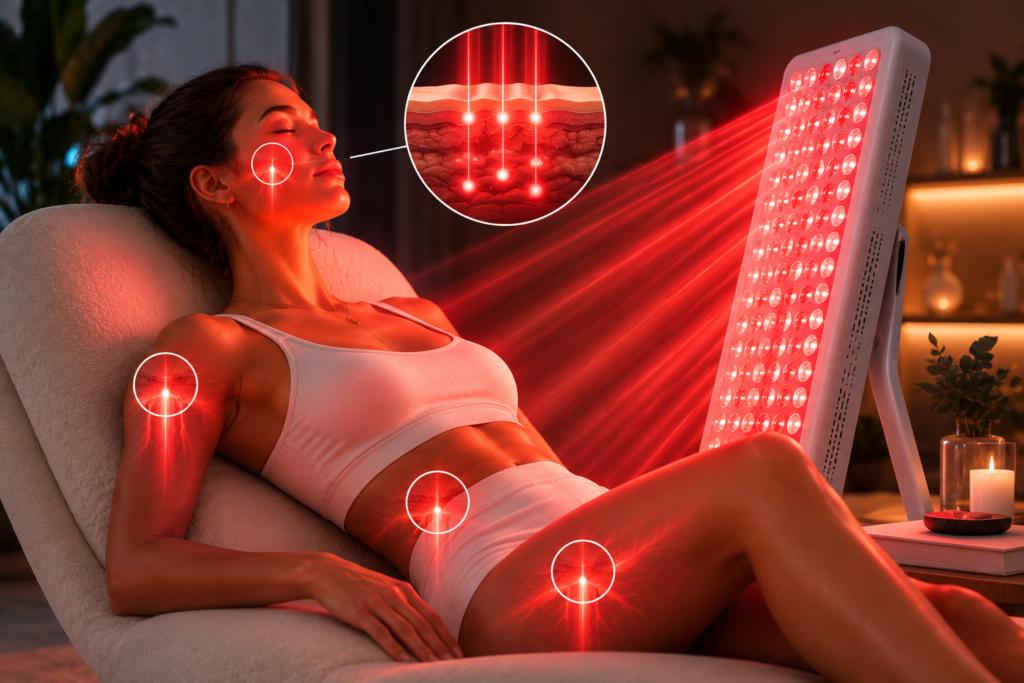
Panels range from desktop size to full-length and cover a larger area at once, which suits people who want flexibility for the face plus other areas, or who prefer to sit at a set distance. They generally require positioning yourself correctly relative to the panel, and larger units take up space. For skin alone, a smaller panel or a mask may be plenty; for broader goals, a panel offers more reach. [source] The current state of best red light therapy device for skin research points to early, modest findings.
Neither format is inherently superior. The better choice depends on whether your goal is specifically facial skin (where a mask is convenient) or broader (where a panel is flexible), along with your space and budget. Interest in best red light therapy device for skin has grown alongside broader photobiomodulation research.
Irradiance and Distance
Wavelength tells you what kind of light a device emits, but not how much reaches your skin. That is irradiance — the amount of light energy reaching a surface. Combined with time, irradiance determines the total dose. Two devices with identical wavelengths can deliver very different doses if their irradiance or recommended distance differs. Most published reviews on best red light therapy device for skin call for larger, better-controlled trials.
This matters because of the biphasic nature of dosing in light therapy: a moderate dose tends to help, while too little does nothing and too much can backfire. A trustworthy device states its irradiance at a specified distance, and you should use it at that distance. Be wary of products that advertise wavelengths but stay silent about irradiance or distance, since both are essential to a sensible dose. A clear-eyed look at best red light therapy device for skin means separating anecdote from controlled evidence.
Transparency Is a Buying Signal
Because the meaningful specifications are technical, a company’s willingness to share them is itself useful information. Look for clearly stated wavelengths in nanometers, an honest description of whether the device is red, near-infrared, or both, irradiance at a stated distance, and recommended session time and distance. Consulting a healthcare provider about best red light therapy device for skin is always a sensible step.
Treat vague phrases like “advanced therapeutic light” or “clinical-grade glow” with skepticism when they appear without numbers. Phototherapy with light-emitting diodes is a real area of dermatologic study, but that does not mean every product lives up to its marketing. Transparency about specs is a reasonable proxy for a serious product, while marketing-only claims are a yellow flag. Devices marketed for best red light therapy device for skin vary widely in power output and wavelength.
Matching the Device to Your Goal
Pull it together by starting from your goal. If you care primarily about facial skin appearance, a quality LED mask or a small red-emphasis panel, used consistently, is a sensible match. If you want one device for the face plus broader goals like recovery, a dual-wavelength panel offers versatility. In all cases, prioritize devices that are transparent about wavelength, irradiance, and recommended use over those that lean on dramatic promises. Practitioners field frequent questions about best red light therapy device for skin from clients.
What Not to Over-Optimize
It is easy to fixate on having the highest numbers, but you do not need the most powerful device on the market — you need honest specifications, a wavelength suited to skin, and a dose you can use consistently and safely. A modest, well-specified device used regularly will likely serve skin goals better than an impressive-sounding one used incorrectly or sporadically. Studies on best red light therapy device for skin have drawn increasing attention from researchers.
A Short Buyer’s Checklist
Before purchasing, ask: What exact wavelengths does it emit, in nanometers, and do they suit skin? Is it red, near-infrared, or both, and does that match my goal? What is the irradiance, and at what distance was it measured? What session time and distance does the manufacturer recommend? And does the company describe the device in measured language or rely on hype? Clear answers point to a more trustworthy product. When examining best red light therapy device for skin, it helps to look carefully at the underlying research.
Coverage, Comfort, and Practical Fit: Best red light therapy device for skin Notes
Beyond the headline specifications, a few practical factors influence whether you will actually use a device consistently — which, for skin goals, matters as much as raw output. Coverage area determines how long a session takes: a small handheld covers little at a time and can make treating the whole face tedious, while a mask or panel covers more at once. Comfort and convenience matter too, since a device that is awkward to position or uncomfortable to wear tends to gather dust. For the face specifically, consider whether a mask fits your face shape and whether it leaves the eyes appropriately protected. Build quality, a reasonable warranty, and clear instructions are also worth weighing, because a device you trust and find easy to use is one you are far more likely to keep using over the weeks that any skin-appearance benefit would require.
Budget Without Chasing Extremes
Price spans a wide range, and neither the cheapest nor the most expensive option is automatically right. A very cheap device may lack transparent specifications or adequate output, while a premium price does not guarantee better results for skin. The sensible target is a device with honest, skin-appropriate specifications at a price you are comfortable using regularly, rather than one chosen on cost alone.
Safety Note
For most healthy adults, red light therapy at consumer doses is generally considered low-risk, with side effects that tend to be mild and temporary. Whichever device you choose, protect your eyes from bright light, follow the recommended distance and time, and avoid overuse. Consult a healthcare professional if you are pregnant, take medications that increase light sensitivity, or have an eye condition, and see a board-certified dermatologist for any diagnosed skin condition. A device is a tool that supports a sensible routine and professional care; it does not replace them.
The Bottom Line
Choosing a red light therapy device for skin comes down to matching wavelength and format to your goal, checking irradiance and recommended distance, and favoring transparency over marketing. Red wavelengths suit surface skin goals; near-infrared adds depth and versatility; masks are convenient for the face while panels offer broader reach. No brand is endorsed here, and no device guarantees results — but an honest, well-specified device used consistently gives skin-appearance goals their fairest chance.
Frequently Asked Questions
What wavelengths are best for skin?
Visible red light, roughly 630 to 660 nm, acts mainly at the skin’s surface and is most relevant to skin-appearance goals. Near-infrared, roughly 810 to 850 nm, penetrates deeper and adds versatility for broader goals.
Is an LED mask or a panel better for skin?
Neither is universally better. A mask is convenient for facial skin and hands-free use, while a panel covers a larger area and suits broader goals. The right choice depends on your goal, space, and budget.
Why does irradiance matter?
Irradiance is how much light energy reaches your skin, and combined with time it sets the dose. Because dosing is biphasic, a moderate dose helps while too much can backfire, so irradiance and distance matter as much as wavelength.
How can I tell if a device is trustworthy?
Look for clearly stated wavelengths, irradiance at a specified distance, and recommended session time and distance. Be skeptical of dramatic claims with no numbers; transparency is a reasonable signal of a serious product.
Do I need the most powerful device?
No. You need honest specifications, a wavelength suited to skin, and a dose you can use consistently and safely. A well-specified, moderate device used regularly often serves skin goals better than a high-powered one used incorrectly.
Ready to get your red light therapy device? See our brand reviews and product reviews, and try out our product comparison tool to inform your decision.