Melatonin is often called the sleep hormone, and light is its master switch. If you have ever felt wide awake after scrolling on a bright phone late at night, you have experienced this relationship firsthand. Understanding how light influences melatonin helps explain a great deal of modern sleep advice, and it also clarifies a question many people ask about red light therapy: does red light suppress melatonin the way bright blue light appears to? This article walks through the science in plain terms and places red light honestly within it. Studies on light and melatonin have drawn increasing attention from researchers.
The short version is that light, especially bright light rich in blue wavelengths, can reduce melatonin and signal the brain that it is daytime. Red wavelengths appear to have a comparatively minimal suppressive effect. That distinction is interesting, but the evidence connecting red light devices to better sleep is very limited, so expectations should stay modest. When examining light and melatonin, it helps to look carefully at the underlying research.
What Melatonin Actually Does
Melatonin is a hormone produced mainly by the pineal gland in the brain. Its levels are low during the day and rise in the evening, helping signal that it is time to wind down. Melatonin does not force sleep like a sedative; rather, it is part of the body’s internal timing system, nudging the body toward rest as night approaches. The timing of melatonin release is closely tied to your circadian rhythm, the roughly 24-hour internal clock that governs sleep, wakefulness, and many other processes. [source] The evidence around light and melatonin remains an active area of investigation.
Because melatonin is a timing signal, anything that shifts its release can shift when you feel sleepy. Light is the single most powerful influence on this system. For those exploring light and melatonin, setting realistic expectations matters.
How Light Reaches the Body Clock
The eyes do more than let you see. Special light-sensitive cells in the retina detect brightness and send that information to the brain’s central clock, which in turn helps regulate melatonin. When these cells sense bright light, the brain interprets it as daytime and suppresses melatonin. When light fades, melatonin is allowed to rise. According to the Sleep Foundation, this is why light exposure, especially in the evening, has such a strong effect on sleep timing and quality. [source] Understanding light and melatonin requires separating marketing claims from published data.
Crucially, this pathway responds most strongly to certain qualities of light, particularly brightness and color. That is where the conversation about blue versus red light begins. Anyone researching light and melatonin will find the science is still developing.
Why Blue Light Gets So Much Attention
Not all light affects melatonin equally. The light-sensitive cells that signal the body clock are especially responsive to short-wavelength blue light, the kind emitted abundantly by phones, tablets, computer screens, and many LED bulbs. Harvard Health notes that blue light can be beneficial during the day, boosting attention and mood, but at night it may be disruptive because of its capacity to suppress melatonin and shift the body clock. [source] The current state of light and melatonin research points to early, modest findings.
The Sleep Foundation similarly describes blue light as having a powerful effect on the circadian system, which is why so much evening sleep advice focuses on dimming screens and reducing bright blue light before bed. The concern is not that blue light is inherently harmful, but that exposure at the wrong time of day can work against sleep. Interest in light and melatonin has grown alongside broader photobiomodulation research.
Brightness Matters, Not Just Color
Color is only part of the story. Overall brightness matters too. Research by Gooley and colleagues found that exposure to ordinary room light before bedtime suppressed melatonin in most people and shortened the duration of melatonin production compared with dim light. In other words, even typical indoor lighting, not just screens, can blunt the evening melatonin rise. [source] Most published reviews on light and melatonin call for larger, better-controlled trials.
This finding reinforces a simple, practical takeaway: dim, warm light in the hours before bed is gentler on melatonin than bright light, regardless of the exact source. It also helps put red light therapy devices into context, because the question becomes not only what color they emit but how bright they are and when they are used. A clear-eyed look at light and melatonin means separating anecdote from controlled evidence.
Where Red Light Fits In
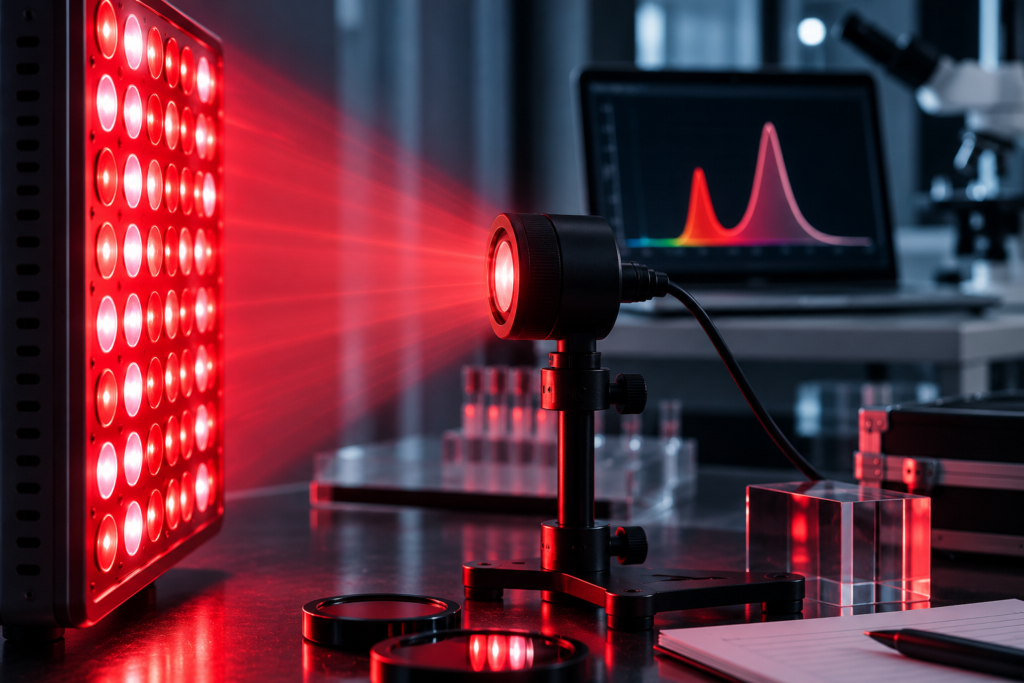
Here is the part many people are curious about. Red light sits at the long-wavelength end of the visible spectrum, far from the short-wavelength blue light that most strongly signals the body clock. Because of this, red wavelengths appear to have a comparatively minimal suppressive effect on melatonin relative to bright blue light. In principle, that makes red light a less disruptive color to encounter in the evening than bright blue light. Consulting a healthcare provider about light and melatonin is always a sensible step.
It is important to be precise about what this does and does not mean. A minimal effect on melatonin is not the same as a sleep benefit. The fact that red light may interfere less with melatonin does not establish that a red light therapy device will help you fall asleep, stay asleep, or sleep more deeply. Direct evidence on red light therapy and sleep is very limited. Devices marketed for light and melatonin vary widely in power output and wavelength.
The Evidence Is Genuinely Limited
One small randomized controlled trial, conducted in Chinese female basketball players, reported improvements in sleep quality after a two-week course of red light exposure. While intriguing, a single small study in a specific group of athletes cannot support broad claims for the general population. The result is best viewed as preliminary. More research is needed before anyone can say red light therapy reliably supports sleep, and results almost certainly vary from person to person. Practitioners field frequent questions about light and melatonin from clients.
Three Different Things People Call Light Therapy
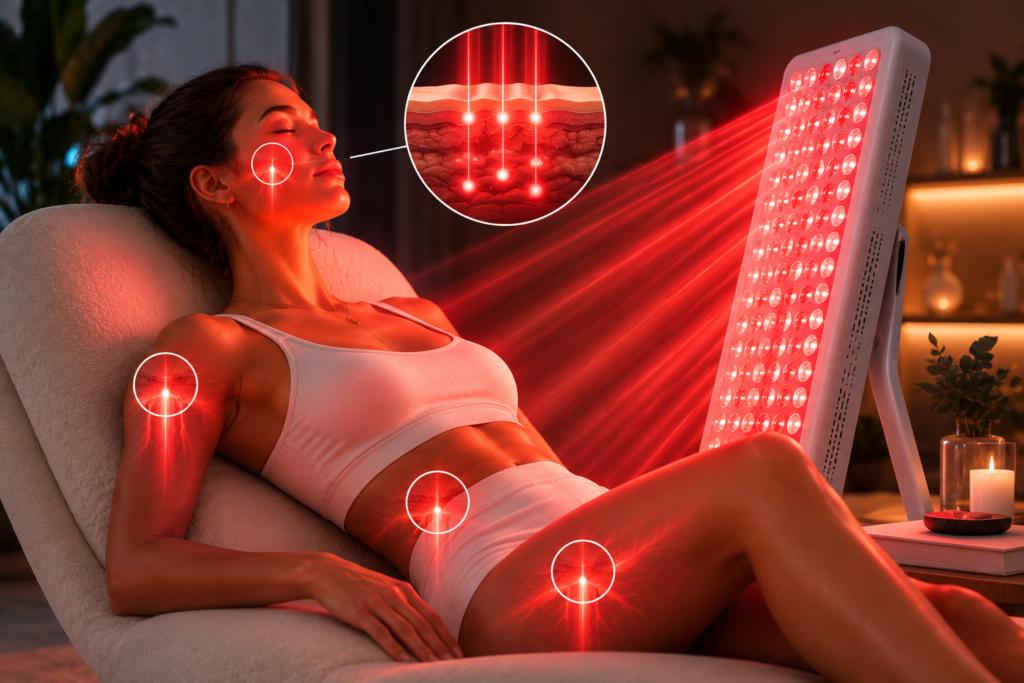
Much confusion comes from lumping different practices together. It helps to separate three distinct ideas. First, red and near-infrared photobiomodulation devices deliver specific wavelengths to the skin or body, and that is what red light therapy usually refers to. Second, evening light hygiene means dimming lights and avoiding bright blue light at night to protect melatonin, a behavior rather than a device. Third, bright light therapy boxes deliver intense light to the eyes, typically in the morning, to influence circadian timing or seasonal mood. These are not interchangeable, and the melatonin science above applies to them differently. Studies on light and melatonin have drawn increasing attention from researchers.
Putting It Together Sensibly
The melatonin story leads to a balanced conclusion. Light is a powerful regulator of melatonin and sleep timing, bright and blue-rich light in the evening can suppress melatonin, and red wavelengths appear to do so minimally by comparison. From a light-hygiene standpoint, favoring dim, warm light at night is well supported. Whether a dedicated red light therapy device adds anything beyond that is not established, and any such device should be regarded as an optional experiment rather than a proven sleep aid. When examining light and melatonin, it helps to look carefully at the underlying research.
A Note of Caution: Light and melatonin Notes
Red light therapy is not a treatment for insomnia or any sleep disorder, and it does not guarantee better sleep. If you regularly struggle to fall asleep or stay asleep, wake unrefreshed, or suspect a sleep disorder, speak with a healthcare professional. Persistent sleep problems can have underlying causes that deserve proper evaluation, and no light device is a substitute for medical care. For most healthy adults, encountering dim red light in the evening is low-risk, but it should be seen as one small element of a wind-down routine, not a solution on its own.
The Bottom Line
Light controls melatonin, and the body clock is most sensitive to bright, blue-rich light. That is why evening light hygiene focuses on dimming screens and warm, low lighting. Red wavelengths appear to suppress melatonin minimally compared with blue light, which is an interesting distinction, but the evidence that red light therapy improves sleep is very limited and comes largely from one small trial. Treat red light as a possible, low-risk addition to a wind-down routine, keep expectations realistic, and see a professional for ongoing sleep concerns.
Frequently Asked Questions
Does light really control melatonin?
Yes. Light detected by the eyes is the strongest influence on melatonin and the body clock. Bright light, especially blue-rich light in the evening, can suppress melatonin and signal the brain that it is daytime.
Does red light suppress melatonin like blue light?
Red wavelengths appear to have a comparatively minimal suppressive effect on melatonin relative to bright blue light. However, a minimal effect on melatonin is not the same as a proven sleep benefit.
Can red light therapy improve my sleep?
The evidence is very limited. One small trial reported improved sleep quality in athletes, but that cannot support broad claims. Red light therapy may support a wind-down routine for some people, but it is not proven to improve sleep and results vary.
Is ordinary room light enough to affect melatonin?
It can be. Research found that exposure to ordinary room light before bedtime suppressed melatonin in most people and shortened its duration compared with dim light, so brightness, not just screens, matters.
Should I use red light therapy instead of seeing a doctor for insomnia?
No. Red light therapy is not a treatment for insomnia or any sleep disorder and does not replace medical care. If you have ongoing sleep problems, consult a healthcare professional.
Ready to get your red light therapy device? See our brand reviews and product reviews, and try out our product comparison tool to inform your decision.