As red light therapy devices have grown more sophisticated, some have added a feature called pulsing — the ability to switch the light on and off rapidly rather than emitting it steadily. Marketing sometimes presents pulsing as an advanced upgrade, the kind of detail that separates a serious device from a basic one. But does pulsing actually matter? This guide compares pulsed vs continuous red light therapy, explains what pulsing actually does, and explores what today’s research says about each approach.
The honest short answer is that the research is mixed and still developing. Pulsing may make a difference in some situations, but it has not been established as reliably superior to continuous light for general use. That nuance is worth understanding before paying extra for the feature.
Pulsed vs Continuous Red Light Therapy Explained
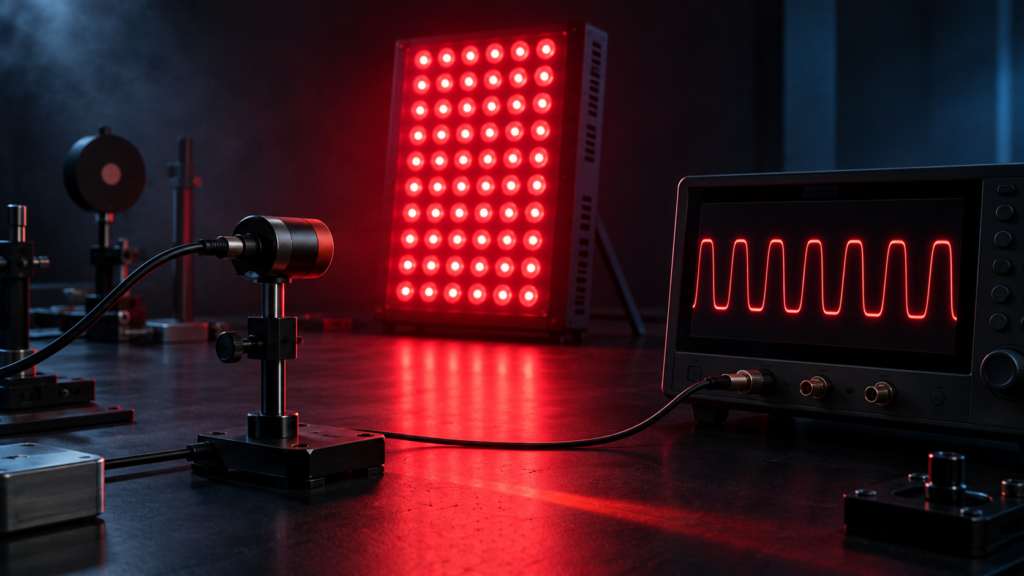
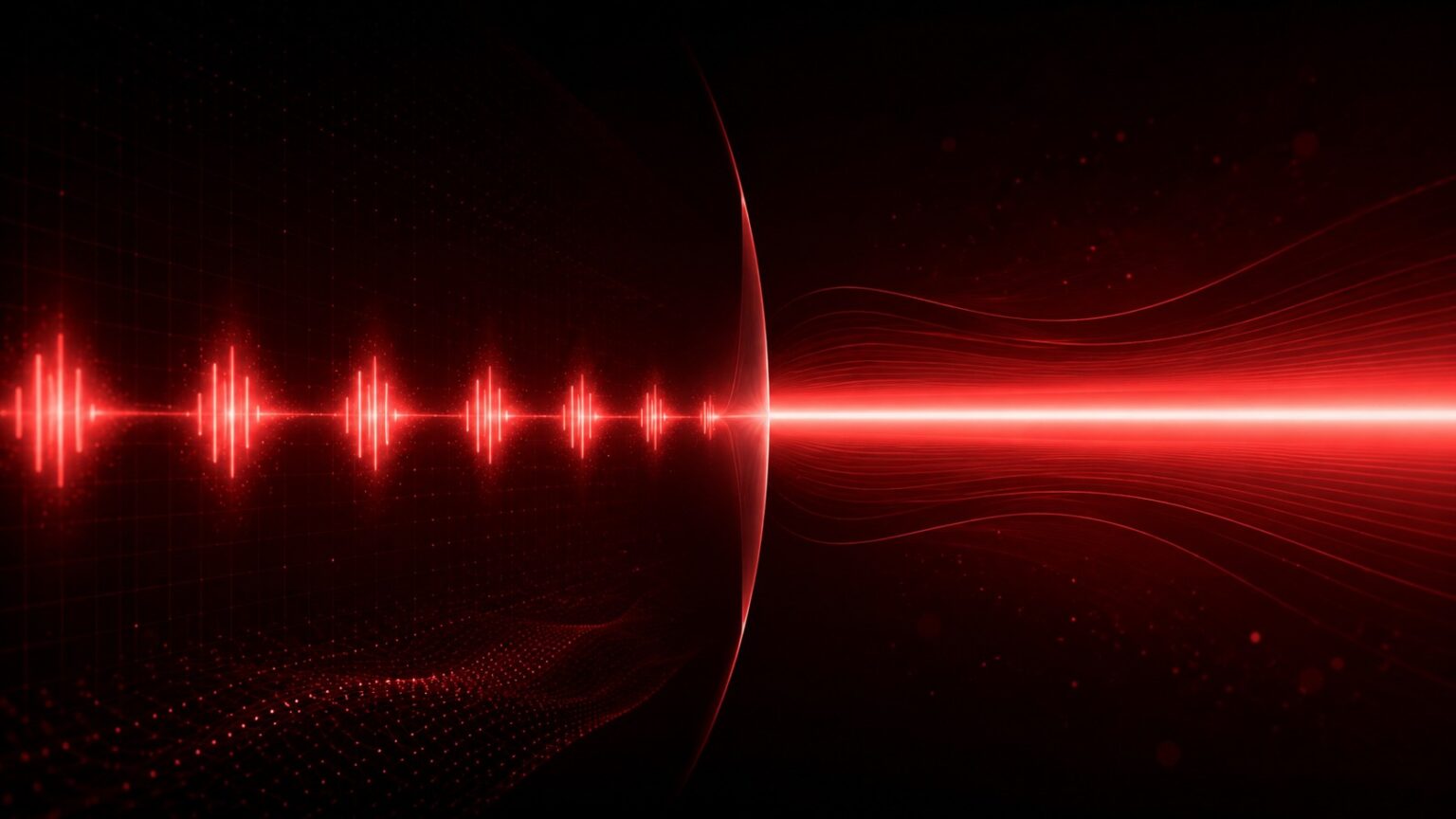
Continuous wave light is exactly what it sounds like: the device emits a steady stream of light for the duration of the session. Pulsed light, by contrast, flickers on and off very rapidly — often many times per second — at a defined frequency. The pulses can be too fast for the eye to perceive, so a pulsed device may look much like a continuous one.
Two settings define a pulse: the frequency (how many times per second the light cycles on and off) and the duty cycle (the proportion of each cycle the light is actually on). These parameters can be varied widely, which is part of why studying pulsing is complicated — there are many possible combinations, not a single “pulsed mode.” A device pulsing at ten cycles per second with the light on half the time delivers energy very differently from one pulsing at a thousand cycles per second with a brief on-period, even if both are labeled simply “pulsed.”
Because the total energy delivered depends on both the peak output and how much of the time the light is actually on, two pulsed settings can produce quite different doses over the same session length. This is one reason that comparing pulsed and continuous light is not as simple as flipping a switch: the underlying dose, not just the on-off pattern, may be changing at the same time.
Pulsed vs Continuous Red Light Therapy: The Theory
Why might pulsing matter at all? Several hypotheses have been proposed. Pulsing changes how energy is delivered over time, which could in principle affect how tissue responds, how heat builds up, or how cellular signaling is triggered. Some researchers have suggested that certain pulse frequencies might interact with biological rhythms or allow tissue brief recovery intervals between pulses. These are plausible ideas worth investigating.
However, a plausible mechanism is not the same as a demonstrated benefit. The theoretical case explains why pulsing is studied, not why it should be assumed to work better.

Pulsed vs Continuous Red Light Therapy Research
A systematic review examining the effect of pulsing in low-level light therapy concluded that pulsed light can produce different effects than continuous light in some studies, and that in certain cases pulsed light appeared more effective — but the picture is far from uniform. Results varied considerably depending on the condition studied, the pulse parameters used, and the overall study design. The review highlighted that the evidence was limited and that more research was needed to draw firm conclusions.
In other words, pulsing is not nothing, but it is also not a clear, across-the-board winner. The studies that exist used different frequencies, duty cycles, and targets, which makes it difficult to say that any particular pulsed setting is reliably better than continuous light for a given goal. A frequency that appeared promising in one study for one purpose cannot be assumed to carry over to a different purpose or a different device.
This kind of inconsistency is common in emerging areas of research, and it calls for humility rather than bold marketing. When the published findings themselves disagree depending on the parameters and conditions tested, it is premature to present any pulsed setting as a proven upgrade. The most accurate summary is that pulsing can change how light therapy behaves, that the direction and size of that change are not yet predictable, and that further well-designed studies are needed to clarify when, if ever, pulsing offers a meaningful advantage.
Why Pulsed vs Continuous Red Light Therapy Isn’t Settled
Several factors keep this question open. First, the sheer number of possible pulse parameters means that two “pulsed” devices may behave very differently, so findings from one setting do not necessarily generalize. Second, dose still matters: research describes a biphasic response in which a moderate dose may help while too much or too little is less useful, and pulsing changes how the total dose is delivered, adding another variable to an already complex picture. Third, much of the supporting work is preliminary, with small studies and inconsistent protocols.
Because of this, responsible sources describe pulsing with caution. It is an interesting and legitimate area of research, not a proven feature that buyers should prioritize above the fundamentals.
The Case for Continuous Light
Continuous wave light should not be dismissed as outdated. Much of the foundational research on photobiomodulation — including studies underpinning the proposed mitochondrial mechanism — used continuous light, and many devices that people report positive experiences with are continuous. The proposed mechanism of action, centered on light absorption by mitochondrial targets such as cytochrome c oxidase, does not depend on pulsing.
For most general-wellness users, a quality continuous-wave device used at an appropriate dose remains a perfectly reasonable choice. Continuous light is simpler, well studied, and free of the added uncertainty that pulse parameters introduce.
Choosing Between Pulsed vs Continuous Red Light Therapy
If you are weighing a device that offers pulsing, treat the feature as a potential extra rather than a deciding factor. The fundamentals — appropriate wavelengths, honest irradiance figures, adequate coverage for your goal, sensible build quality, and a dose you can apply consistently — matter more than whether the device can pulse. A device that is excellent on the fundamentals and also offers pulsing is fine; a device that leans heavily on pulsing as a marketing hook while staying vague about wavelength and irradiance deserves more skepticism.
It is also worth being wary of specific frequency claims marketed as targeting particular conditions or outcomes. The evidence does not support confident, condition-specific pulse recommendations, and such claims often outrun the science.
A Practical Takeaway on Pulsed vs Continuous Red Light Therapy
If your device offers both modes and you are curious, there is little harm in experimenting with pulsed settings within the manufacturer’s guidance, since red light therapy at consumer doses is generally considered low-risk for healthy adults. Just keep expectations modest and do not assume pulsing is doing something dramatic. Track your routine, stay consistent over weeks, and judge the device on your overall experience rather than on the presence of a pulse mode. If your device is continuous-only, you are not missing a proven benefit.
Safety Still Applies
Whether pulsed or continuous, the usual precautions hold. Follow the recommended distance and session time, use eye protection where appropriate, and remember that near-infrared light is largely invisible and does not trigger the eye’s natural aversion reflex. Anyone who is pregnant, takes photosensitizing medication, or has a relevant eye or skin condition should consult a healthcare professional first. Red light therapy is a complement to good health habits, not a replacement for medical care.
The Bottom Line
When comparing pulsed vs continuous red light therapy, current evidence suggests pulsing may behave differently in some situations, but it has not been shown to be consistently superior for general use. But the evidence is mixed, the parameters are many, and pulsing has not been established as reliably superior for general use. Prioritize the fundamentals, treat pulsing as an optional extra, and keep your expectations grounded while the research continues to mature.
Ready to get your red light therapy device? See our brand and product reviews, and try out our product comparison tool to inform your decision.
Frequently Asked Questions
Is pulsed red light therapy better than continuous?
Not reliably. Some studies suggest pulsed light can behave differently from continuous light and may help in certain cases, but the evidence is mixed and parameter-dependent. It is not an established, across-the-board advantage.
What does pulsing mean in a red light device?
Pulsing means the light switches on and off rapidly at a set frequency rather than emitting steadily. It is defined by frequency (cycles per second) and duty cycle (the share of each cycle the light is on).
Should I pay extra for a pulsing feature?
Treat it as an optional extra rather than a deciding factor. Wavelength, irradiance, coverage, and build quality matter more. A device that leans on pulsing as a marketing hook while staying vague on fundamentals deserves skepticism.
Is continuous light outdated?
No. Much foundational photobiomodulation research used continuous light, and the proposed cellular mechanism does not depend on pulsing. A quality continuous-wave device used at an appropriate dose is a reasonable choice.
Are specific pulse frequencies proven for specific conditions?
The evidence does not support confident, condition-specific frequency recommendations. Claims that a particular frequency targets a particular outcome generally outrun the current science.
This article is for general educational purposes only and is not medical advice. Red light therapy is not a substitute for professional care. Talk with a qualified healthcare professional about your individual situation.