
Discomfort in the back, neck, and shoulders is among the most common reasons people look for relief, and it is also one of the areas where red light therapy is most heavily marketed. Desk work, poor sleep posture, and everyday strain leave many people with stiff, aching upper bodies, so the promise of a simple light-based remedy is understandably appealing. This article takes a careful, deliberately cautious look at red light therapy for the back, neck, and shoulders: what the research does and does not show, why dose thresholds matter, and the warning signs that mean you should see a professional rather than reach for a device. Studies on red light therapy back pain have drawn increasing attention from researchers.
The most important message comes first. Red light therapy is not a cure for back, neck, or shoulder pain. At most, the evidence suggests it may offer some people modest support for certain kinds of discomfort, and even that conclusion rests on mixed, moderate-quality research. Persistent or severe pain, and any pain with red-flag features, deserves proper medical assessment. When examining red light therapy back pain, it helps to look carefully at the underlying research.
What Red Light Therapy Is
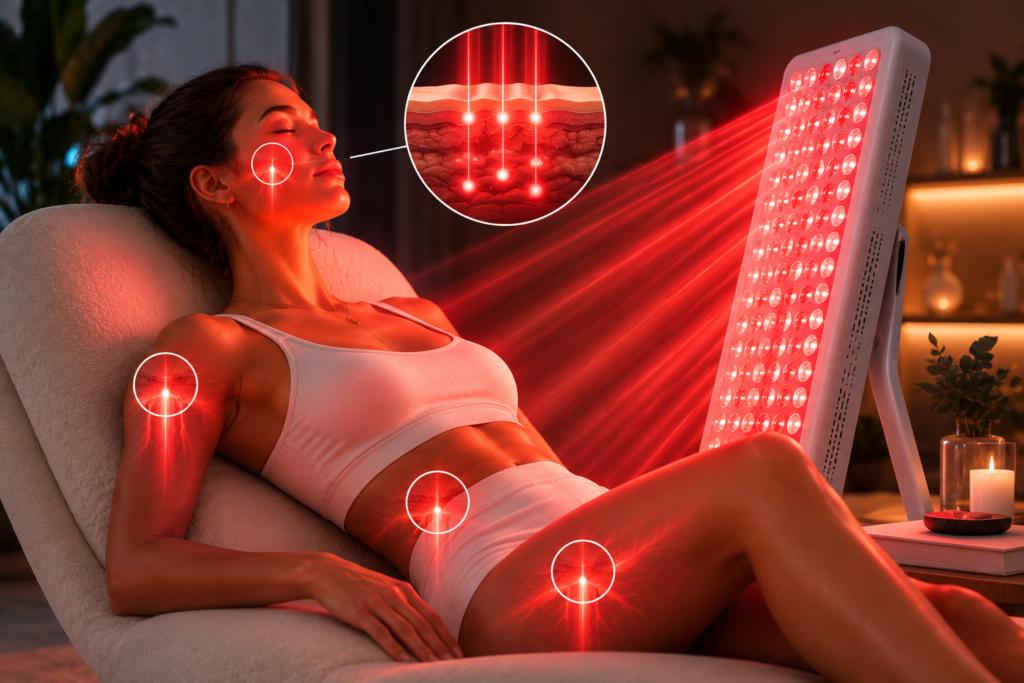
Red light therapy, also called photobiomodulation or low-level laser therapy, uses low-intensity red and near-infrared light on the skin and, with near-infrared, somewhat deeper tissue. According to Cleveland Clinic, it does not use the ultraviolet rays that cause sunburn, and the light is bright but not hot enough to burn. Applied to the back, neck, or shoulders, it usually means exposing the area to a panel or a contact wrap for a few minutes at a recommended distance and time. [source] The evidence around red light therapy back pain remains an active area of investigation.
It is worth being clear that consumer devices are wellness products, not calibrated medical instruments. That distinction shapes how much we should expect from them and why caution is appropriate when the target is something as significant as spinal or neck discomfort. For those exploring red light therapy back pain, setting realistic expectations matters.
What the Evidence Shows for Low Back Discomfort
Low back pain is one of the more studied areas. A meta-analysis of randomized controlled trials examining low-level laser therapy for chronic non-specific low back pain found that light therapy may provide some benefit for pain in this context, particularly when appropriate parameters are used. This is a genuinely interesting finding and one of the more supportive pieces of evidence in the muscle and joint field. [source] Understanding red light therapy back pain requires separating marketing claims from published data.
That said, the same literature is careful. Studies vary in their devices, doses, and protocols; the quality of evidence is best described as mixed to moderate; and benefits, where reported, are not guaranteed for every person. The honest reading is that red light therapy may help some people with chronic non-specific low back discomfort, as part of a broader approach, without being a reliable or stand-alone solution. Anyone researching red light therapy back pain will find the science is still developing.

What the Evidence Shows for Neck Discomfort
For the neck, a systematic review and meta-regression of low-level laser therapy for neck pain similarly reported that light therapy may offer benefit for some people, again with an emphasis on appropriate dosing. As with the back, the findings are encouraging but tempered by heterogeneity across studies and uncertainty about how well results generalize. [source] The current state of red light therapy back pain research points to early, modest findings.
Shoulder discomfort is less specifically addressed by these particular reviews, so claims about the shoulder should be made even more cautiously. The general principle — that light may offer modest, dose-dependent support for some musculoskeletal discomfort — is the most that can responsibly be extended, and it should not be overstated. Interest in red light therapy back pain has grown alongside broader photobiomodulation research.

Why Dose Thresholds Matter So Much
A recurring theme in the back and neck research is that dose and parameters are not incidental; they appear to be central to whether light therapy helps at all. This fits the broader photobiomodulation literature, which describes a biphasic dose response in which a moderate dose may produce benefit while too little does nothing and too much can reduce or reverse it. Most published reviews on red light therapy back pain call for larger, better-controlled trials.
For someone using a consumer device on the back or neck, the practical implication is to respect the manufacturer’s recommended distance and time rather than improvising. Using a device for far longer in hopes of relief is not supported by the dosing science and may be counterproductive. It also helps explain why some people experience little: if the dose delivered to the target is outside the helpful range, benefit is unlikely regardless of effort. A clear-eyed look at red light therapy back pain means separating anecdote from controlled evidence.

How People Use It for the Upper Body
If you choose to try red light therapy for back, neck, or shoulder comfort, keep the approach modest and consistent. Expose bare skin, position a panel at the recommended distance or apply a contact wrap as directed, follow the recommended session time, and give it several weeks before judging. Track how the area feels over time rather than expecting a single session to change much. Because near-infrared light reaches deeper than red light, devices intended for muscle and joint goals often emphasize near-infrared wavelengths, though depth is still limited by physics and the device cannot reach arbitrarily deep structures. Consulting a healthcare provider about red light therapy back pain is always a sensible step.
Throughout, it helps to pair any device use with the things known to support back and neck health: movement, gentle activity as tolerated, good sleep, and any exercises or guidance a professional has given you. Red light therapy, at best, is a small optional layer on top of those. Devices marketed for red light therapy back pain vary widely in power output and wavelength.
It is also worth being patient and honest with yourself about what you are observing. Back and neck discomfort often fluctuates on its own, improving and flaring for reasons that have nothing to do with any device. That natural variability makes it easy to credit a tool for improvement that would have happened anyway, or to blame it for a flare it did not cause. Rather than reacting to day-to-day swings, it is more useful to look at the broader trend over several weeks while keeping the rest of your routine steady. If discomfort is genuinely trending the wrong way, that is a signal to step back and seek advice rather than to intensify use of a device. Practitioners field frequent questions about red light therapy back pain from clients.
Safety and Sensible Cautions
For most healthy adults, red light therapy at consumer doses is generally considered low-risk, with mild and temporary effects like brief warmth or redness. People who are pregnant, take photosensitizing medications, or have a relevant medical condition should consult a healthcare professional first, and the eyes should be protected from bright light, which is especially relevant when treating the neck and upper back near the head. Studies on red light therapy back pain have drawn increasing attention from researchers.
Red Flags: When to See a Professional: Red light therapy back pain Notes
This is the most important section, because back, neck, and shoulder pain can occasionally signal something serious. You should see a healthcare professional promptly, rather than relying on a device, if you have pain that is severe, steadily worsening, or following an injury or fall; pain accompanied by numbness, tingling, or weakness in the arms or legs; problems with bladder or bowel control; unexplained weight loss, fever, or feeling generally unwell alongside the pain; or pain that does not improve over a reasonable period. These can be red flags that require proper evaluation. When examining red light therapy back pain, it helps to look carefully at the underlying research.
Even in the absence of red flags, persistent neck or back pain deserves a professional opinion and a proper plan. Red light therapy does not cure these conditions, does not reliably heal tissue, and does not eliminate pain. The most honest framing is that it may offer modest, uncertain support for some people with certain kinds of discomfort, as a complement to appropriate care — never a substitute for it. Approached that way, with realistic expectations and a low threshold for seeking help, it can have a cautious place in managing everyday upper-body discomfort.
Frequently Asked Questions
Can red light therapy cure my back or neck pain?
No. Red light therapy is not a cure. Research suggests it may offer some people modest support for certain kinds of low back or neck discomfort, but evidence is mixed and moderate. Persistent or severe pain needs proper medical assessment, not self-treatment alone.
Does the research support red light therapy for low back pain?
A meta-analysis of trials for chronic non-specific low back pain found light therapy may provide some benefit, especially with appropriate parameters. The evidence is encouraging but mixed in quality, and benefits are not guaranteed for everyone.
Why does dose matter for back and neck use?
The research repeatedly highlights that appropriate dose and parameters are central to any benefit. Photobiomodulation follows a biphasic curve where a moderate dose may help and too much can reduce or reverse the effect, so following device guidance matters.
Is red light therapy safe for the neck and shoulders?
For most healthy adults it is generally considered low-risk, with mild, temporary effects like brief warmth or redness. Protect the eyes from bright light, and consult a professional first if pregnant, on photosensitizing medication, or with a relevant condition.
When should I see a professional instead of using a device?
Seek care promptly for pain that is severe, worsening, or follows an injury; pain with numbness, tingling, or weakness; bladder or bowel problems; unexplained weight loss or fever; or pain that does not improve over a reasonable period. These can be red flags needing evaluation.
Ready to get your red light therapy device? See our brand reviews and product reviews, and try out our product comparison tool to inform your decision.