“Dull,” “tired,” and “lackluster” are among the most common ways people describe skin that simply does not look as fresh as they would like. Unlike a specific condition such as acne, dullness is more of an overall impression — skin that seems flat, uneven, or lacking in the soft glow associated with healthy, well-rested skin. This guide explores red light therapy dull skin research, what scientists actually know about skin radiance, and how to keep your expectations realistic.
The honest summary: red light therapy may support a fresher, more even-looking complexion for some people, partly through its possible effects on skin cells and microcirculation, but “radiance” is a subjective appearance goal rather than a measurable medical outcome, and results vary.
Understanding Red Light Therapy Dull Skin Concerns
Dullness is usually a combination of factors rather than a single cause. Skin may look dull when dead surface cells accumulate and scatter light unevenly, when texture is rough, when tone is uneven, or when fine lines and dehydration flatten the skin’s natural light reflection. Fatigue, poor sleep, stress, dehydration, and sun damage can all contribute to that “tired” appearance. Because so many factors feed into it, no single product reliably “fixes” dullness for everyone.
It also helps to define “radiance.” In everyday and marketing language, radiant skin generally means skin that looks smooth, even-toned, and luminous — reflecting light in a soft, healthy way. It is an aesthetic impression, not a clinical measurement, which is exactly why claims about boosting radiance should be read with care.
How Red Light Therapy Helps Dull Skin
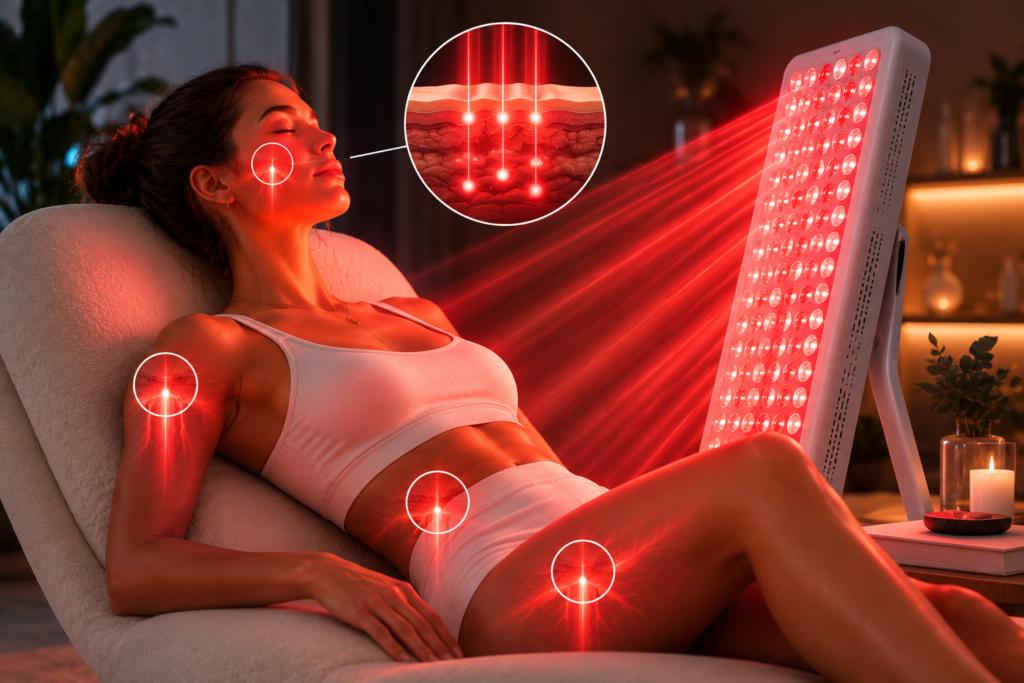
Red light therapy uses low-intensity red and near-infrared light, which Cleveland Clinic describes as influencing skin cells without the ultraviolet radiation that damages skin. Two mechanisms are most often connected to a fresher appearance.
Red Light Therapy Dull Skin and Cellular Energy
The leading hypothesis is that red and near-infrared light is absorbed by mitochondria in skin cells, potentially supporting cellular energy and the activity of cells involved in maintaining healthy skin. A review on phototherapy with light-emitting diodes in dermatology discusses how LED-based red light is used for skin rejuvenation goals and may influence processes tied to skin texture and appearance.
Red Light Therapy Dull Skin and Microcirculation
A second commonly cited mechanism involves microcirculation — the flow of blood through the tiny vessels near the skin’s surface. The review by Avci and colleagues on low-level light therapy in skin notes that light exposure may influence local microcirculation. Because healthy blood flow is associated with a fresher complexion, improved microcirculation is a plausible part of why some people feel their skin looks more “awake” after consistent use. This remains an area where more research is needed, and the visible impact varies between individuals.
What Red Light Therapy Dull Skin Research Shows
Research on red light therapy for skin rejuvenation is encouraging but should be read carefully. Studies and reviews suggest that red and near-infrared light, at appropriate doses, may help with the appearance of skin texture and tone for some people. However, much of this research focuses on measurable parameters like fine lines or collagen rather than the subjective quality of “glow,” which is harder to study objectively.
In other words, when a device promises “instant radiance,” it is making a marketing claim that outpaces the evidence. A more accurate statement is that red light therapy may, over weeks of consistent use, contribute to a smoother, more even-looking complexion for some users — which many people would describe as looking fresher or more radiant.
Realistic Red Light Therapy Dull Skin Expectations
If a brighter, less tired look is your goal, keep a few realities in mind. Effects are typically gradual, not instant, and tend to be subtle. Results vary widely depending on your starting skin, age, lifestyle, and consistency. And because dullness has many causes, red light therapy addresses only some of them. It will not compensate for chronic sleep deprivation, dehydration, or sun damage on its own.
The biphasic dose-response principle from the photobiomodulation literature is relevant here too: using a device for longer than recommended will not produce a brighter glow and is not advisable. An appropriate, moderate dose used consistently is the sensible approach.
Why Dull Skin Has More Than One Cause
Part of why no single product reliably revives dull skin is that “dullness” is the visible end point of many separate processes. On the surface, a buildup of dead skin cells can scatter light unevenly so that skin looks flat rather than luminous. In the deeper layers, the gradual, natural decline in collagen and elastin described by the National Institute on Aging can soften the skin’s structure and the way it catches light.
Add dehydration, which makes fine lines more apparent, and uneven pigmentation from sun exposure, and you have several different contributors layered on top of one another. Red light therapy, at most, may influence some of these — for instance, through possible effects on skin cell activity and microcirculation — but it does not address all of them, which is another reason to keep expectations measured and to pair it with broader skin-healthy habits.
Red Light Therapy Dull Skin Limitations
Red light therapy is not a substitute for the basics that most strongly influence a fresh complexion: adequate sleep, hydration, a balanced diet, gentle exfoliation as appropriate for your skin, and diligent sun protection. It is also not a treatment for underlying skin or medical conditions that can cause a dull or sallow appearance. If your skin looks persistently dull, gray, or unwell, that may reflect something beyond cosmetics, and a healthcare professional or board-certified dermatologist is the right person to evaluate it. Red light therapy is not sun protection and does not replace sunscreen.
Safety and When to Check With a Professional
At consumer doses, red light therapy is generally considered low-risk for healthy adults, with side effects that are usually mild and temporary. Protect your eyes from bright light, and consult a healthcare professional before starting if you are pregnant, take photosensitizing medication, or have a skin condition or sensitive, reactive skin. Anyone with a persistent skin concern should see a board-certified dermatologist rather than relying on a wellness device.
Building a Red Light Therapy Dull Skin Routine
To give red light therapy a fair trial for radiance goals, start with clean, bare skin so the light is not blocked by makeup or sunscreen. Follow the device’s recommended distance and time, and use it consistently — often several times a week — over several weeks. Pair it with the genuine drivers of a fresh complexion: sleep, hydration, and sun protection. Many people find that the combination of healthy habits plus a consistent red light routine does more for how “awake” their skin looks than any single step alone. Taking occasional progress photos in similar lighting can help you judge subtle changes honestly.
The Bottom Line
For dull or tired-looking skin, red light therapy is a reasonable, low-risk option to explore, with a plausible mechanism involving skin cell activity and microcirculation. It may support a smoother, more even, fresher-looking complexion for some people over time — but “radiance” is a subjective goal, results vary, and the effect is gradual rather than instant. Treat it as one supportive habit alongside sleep, hydration, and sun protection, not a stand-alone cure for dullness, and see a dermatologist for any persistent skin concern.
Ready to get your red light therapy device? See our brand and product reviews, and try out our product comparison tool to inform your decision.
Frequently Asked Questions
Can red light therapy give my skin a glow?
It may support a smoother, more even-looking complexion for some people over weeks of consistent use, which many describe as looking fresher or more radiant. “Glow” is subjective, however, and results vary; instant-radiance claims outpace the evidence.
How does red light therapy affect dull skin?
Researchers propose it may support skin cell activity and microcirculation, both of which are associated with a fresher appearance. More research is needed, and the visible impact differs from person to person.
How quickly will my skin look brighter?
Generally not instantly. Effects tend to be gradual and subtle, with studies reporting benefits after several weeks of regular use. Some people notice little change.
Will red light therapy fix tired-looking skin caused by poor sleep?
No. Red light therapy cannot replace adequate sleep, hydration, and sun protection, which strongly influence how tired skin looks. It may complement those habits but is not a substitute for them.
Should I see a dermatologist about persistently dull skin?
Yes, if dullness is persistent or your skin looks unwell, a board-certified dermatologist can evaluate whether something beyond cosmetics is involved. Red light therapy is a wellness option, not a medical treatment.
This article is for general educational purposes only and is not medical advice. Red light therapy is not a substitute for professional care. Talk with a qualified healthcare professional about your individual situation.