
Inflammation is one of the most talked-about ideas in wellness, and red light therapy is often promoted as a way to influence it. Because inflammation is closely tied to medical conditions, this article takes a very cautious, research-focused approach: it explains the anti-inflammatory mechanisms researchers have proposed for red and near-infrared light, why most of that evidence is early or laboratory-based, and why red light therapy is not a treatment for inflammatory disease. As with red light therapy inflammation, more research is ongoing.
The careful summary is that laboratory and early research suggests red light therapy may influence some signals involved in inflammation, but this is largely preliminary, the certainty of real-world benefit is limited, and it should not be understood as a treatment for any inflammatory condition. Research on red light therapy inflammation continues to evolve.
What Inflammation Actually Is
Inflammation is the body’s natural response to injury, stress, or infection. In its acute form, it is protective: blood flow and immune activity increase to begin repair, often producing warmth, redness, swelling, or discomfort. Problems arise when inflammation is excessive or persistent. Because inflammation is a normal and necessary process, the goal of any intervention is generally balance, not simply switching it off. [source] As with red light therapy inflammation, more research is ongoing.
This context matters. Claims that a device “reduces inflammation” can be misleading, because inflammation is not inherently bad and because influencing it meaningfully and safely is a medical matter. As with red light therapy inflammation, more research is ongoing.
Acute Versus Chronic Inflammation
It also helps to distinguish two very different situations that the single word inflammation can describe. Acute inflammation is short-lived and usually helpful: it is the response to a sprained ankle or a hard workout, and it typically resolves on its own as healing proceeds. Chronic inflammation is prolonged and is associated with a range of medical conditions; it is a clinical concern that belongs in the hands of healthcare professionals. These are not interchangeable, and a wellness device has no business being framed as a way to manage the chronic, medical kind. Keeping the two separate prevents the leap from “light may influence some inflammatory signals in a lab” to the unfounded claim that “light treats inflammatory disease.” [source] As with red light therapy inflammation, more research is ongoing.
What Red Light Therapy Is
Red light therapy, also called photobiomodulation (PBM) or low-level light therapy (LLLT), uses low-intensity red and near-infrared light. According to Cleveland Clinic, it applies low levels of red or near-infrared light to influence cells without ultraviolet radiation and without burning heat. The interest in inflammation comes from how this light is thought to interact with cells. [source] As with red light therapy inflammation, more research is ongoing.
Proposed Anti-Inflammatory Mechanisms
Researchers have described several ways red and near-infrared light might influence inflammatory signaling. A review of the mechanisms and applications of the anti-inflammatory effects of photobiomodulation outlines how light absorbed by cells may affect signaling molecules, immune cell activity, and pathways associated with inflammation, potentially nudging an overactive inflammatory response toward balance under certain conditions. As with red light therapy inflammation, more research is ongoing.
Complementary work on the mechanisms and mitochondrial redox signaling in photobiomodulation describes how light absorbed by the mitochondrial enzyme cytochrome c oxidase may influence cellular energy and the production of small signaling molecules, which in turn could affect inflammation-related pathways. These are biologically plausible mechanisms — but they are mechanisms, not proof of clinical benefit. Studies on red light therapy inflammation have drawn increasing attention from researchers.

Why Most of This Evidence Is Early
A crucial caveat runs through this topic: much of the anti-inflammatory evidence comes from laboratory studies, cell cultures, and animal models rather than large, high-quality human trials. Findings from a dish or an animal model do not automatically translate into reliable effects in people, where light must pass through skin to reach tissue and where individual biology varies widely. When examining red light therapy inflammation, it helps to look carefully at the underlying research.
Where human studies exist, they are often small and varied, and reviewers consistently call for larger, standardized trials. The proposed anti-inflammatory effects of red light therapy should therefore be described as early and uncertain, not established. The evidence around red light therapy inflammation remains an active area of investigation.
Why Lab Findings Do Not Automatically Apply to People
The gap between laboratory promise and real-world benefit is worth dwelling on, because it is where much marketing quietly overreaches. In a controlled experiment, researchers can deliver a precise dose of light directly to cells and measure a specific signaling change. In a living person, that same light must travel through skin of varying thickness and pigmentation to reach tissue, the dose actually delivered is uncertain, and the body’s many overlapping systems can blunt or alter the response. A change measured in a dish is a hint worth investigating, not evidence that a home device will produce a comparable effect in your body. This is the central reason that responsible sources hedge their language and that strong anti-inflammatory claims are not yet justified. For those exploring red light therapy inflammation, setting realistic expectations matters.
What This Means for Swelling and Soreness
People sometimes hope red light therapy will reduce visible swelling or the inflammatory component of post-exercise soreness. Some research on recovery touches on markers associated with muscle stress, and the anti-inflammatory mechanism literature offers a theoretical basis for an effect. However, the evidence that red light therapy reliably reduces swelling or inflammation in everyday situations is limited and mixed. Understanding red light therapy inflammation requires separating marketing claims from published data.
It is more accurate to say red light therapy may influence some inflammation-related signals for some people than to claim it reduces swelling. Individual responses vary, and the practical effect, if any, is uncertain. Anyone researching red light therapy inflammation will find the science is still developing.

Not a Treatment for Inflammatory Disease
This point deserves emphasis. Conditions involving chronic or significant inflammation — such as inflammatory arthritis and many others — are medical conditions that require diagnosis and management by healthcare professionals. Red light therapy is not a treatment for these conditions, does not replace prescribed care, and should never be used to self-manage a suspected inflammatory disease. The current state of red light therapy inflammation research points to early, modest findings.
Using a consumer light device in place of medical evaluation could delay appropriate treatment. The responsible framing is that red light therapy is a general wellness tool with early, uncertain evidence regarding inflammation — nothing more. Interest in red light therapy inflammation has grown alongside broader photobiomodulation research.
How People Use It, and Dose Cautions
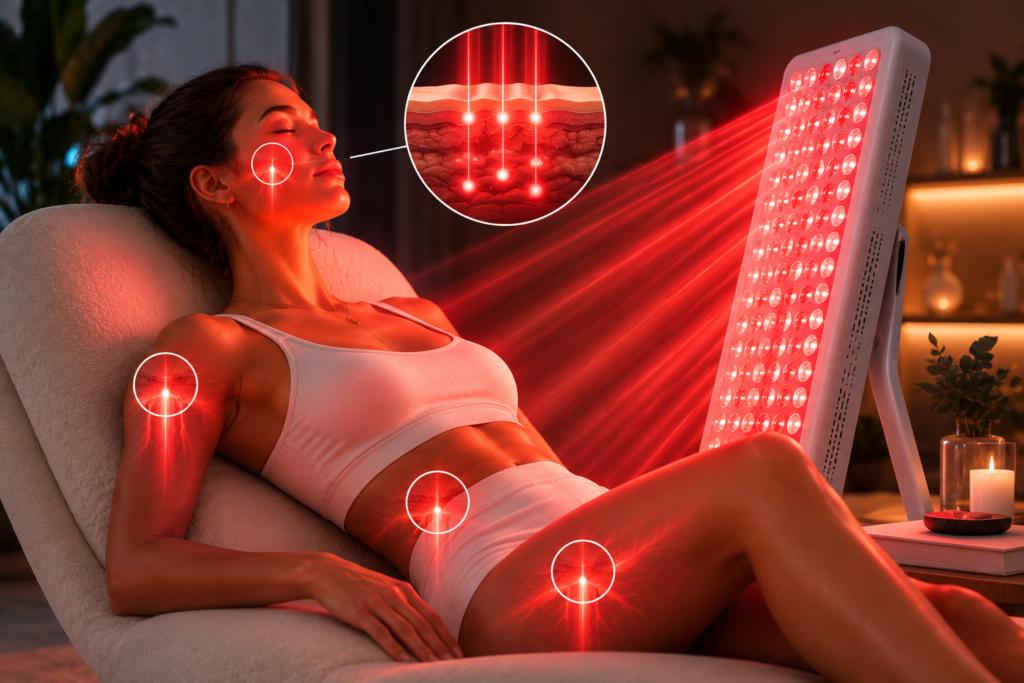
In practice, people who explore red light therapy for comfort apply a panel or wrap to the target area for several minutes, several times a week, often emphasizing near-infrared wavelengths. Research describes a biphasic dose response, meaning a moderate dose may help while too much can reduce or reverse an effect, so following device guidance on distance and time is sensible and more is not better.

When to See a Professional: Red light therapy inflammation Notes
Persistent swelling, significant or worsening pain, warmth and redness over a joint, fever, or symptoms that follow an injury all warrant evaluation by a healthcare professional. So does any suspicion of an inflammatory condition. A clinician can determine the cause and recommend appropriate care. Red light therapy is not a substitute for that assessment, and signs of significant or ongoing inflammation should be taken seriously rather than self-treated with a device.
Who Should Be Cautious
For most healthy adults, red light therapy at consumer doses is generally considered low-risk, with mild and temporary side effects such as brief warmth or redness. People who are pregnant, who take medications that increase light sensitivity, or who have a relevant medical or eye condition should consult a healthcare professional before use. Eye protection from bright light is a sensible precaution.
The Bottom Line
Research suggests red light therapy may influence some signals involved in inflammation, but this evidence is largely early, laboratory-based, and low in certainty. Red light therapy is not a treatment for inflammatory disease and does not reliably reduce swelling. Approach the topic with caution, keep expectations modest, and see a healthcare professional for persistent swelling, significant pain, or any suspected inflammatory condition rather than relying on a light device.
Frequently Asked Questions
Does red light therapy reduce inflammation?
Laboratory and early research suggests it may influence some signals involved in inflammation, but the evidence is largely preliminary and low-certainty. It does not reliably reduce inflammation in everyday situations.
Can it treat inflammatory conditions like arthritis?
No. Inflammatory conditions are medical conditions requiring professional diagnosis and management. Red light therapy is not a treatment for them and should not be used to self-manage a suspected inflammatory disease.
Why is the anti-inflammatory evidence considered weak?
Much of it comes from cell and animal studies rather than large human trials, and human studies that exist are often small and varied. Findings in the lab do not automatically translate into reliable effects in people.
Will it bring down swelling after an injury?
The evidence that red light therapy reliably reduces swelling is limited and mixed. Swelling after an injury, especially if significant or persistent, should be evaluated by a healthcare professional.
Is red light therapy safe to try for general comfort?
At consumer doses it is generally considered low-risk for healthy adults, with mild, temporary side effects. Protect your eyes, follow device guidance, and consult a professional if pregnant, taking photosensitizing medication, or managing a medical condition.
Ready to get your red light therapy device? See our brand reviews and product reviews, and try out our product comparison tool to inform your decision.