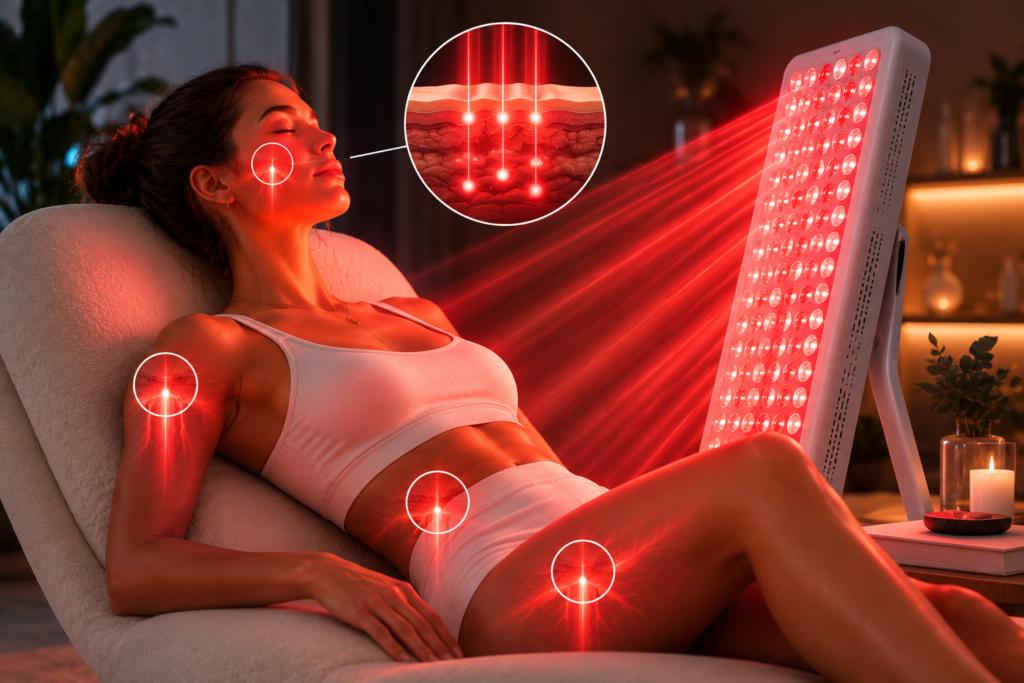
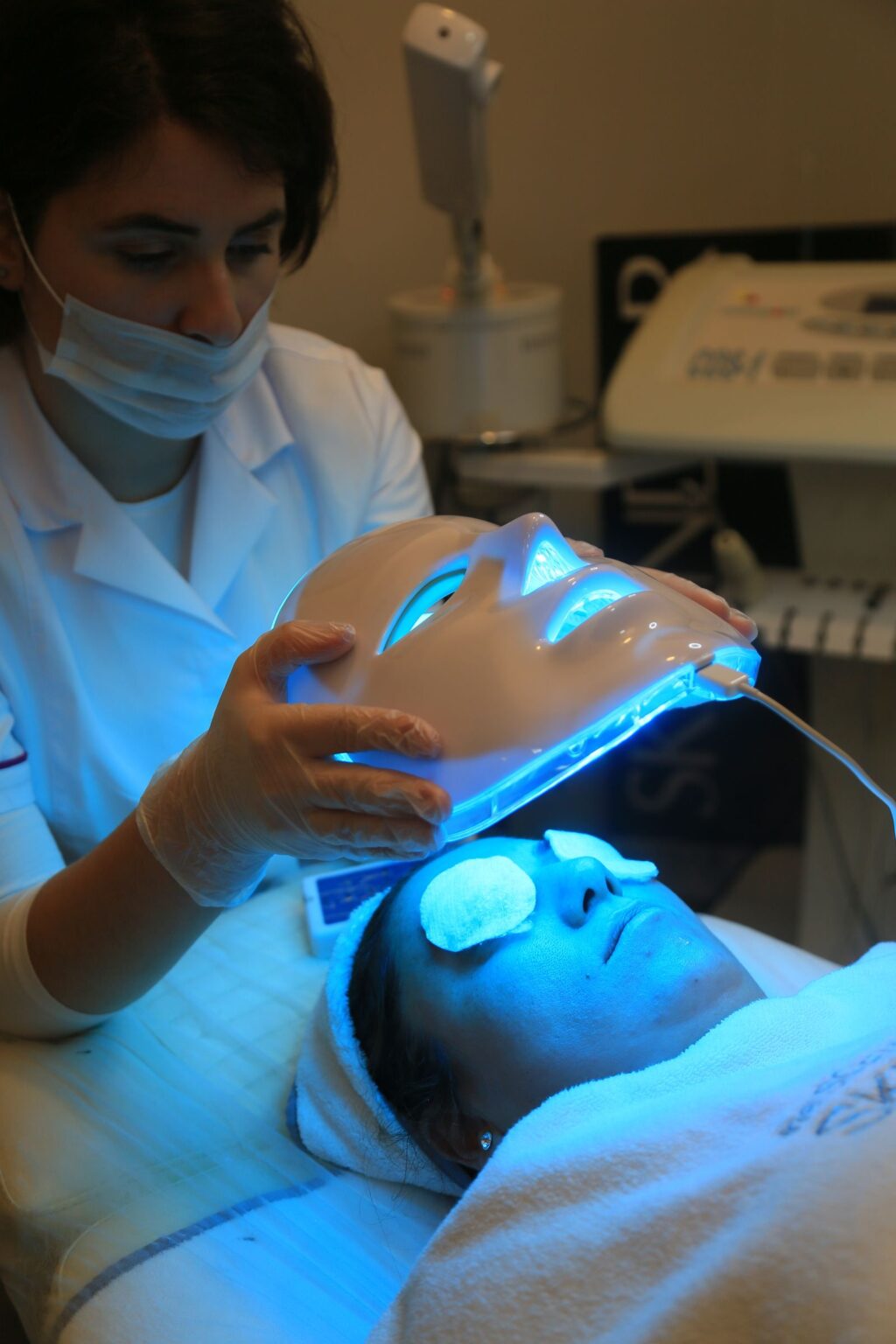
Red light therapy masks — the face-shaped LED devices that have become a familiar sight in skincare routines — promise a convenient, hands-free way to bring light therapy home. They are popular because they are easy to use: you put the mask on, sit back for a set number of minutes, and carry on with your day. This guide explains how a red light therapy mask works, which wavelengths it uses, what you can realistically expect, and how to use one safely.
The honest framing matters. A red light therapy mask may support skin-appearance goals for some people, but it is not a cure; it does not reverse aging, and results vary. Understanding what is happening under the hood makes it easier to use a mask sensibly and to keep expectations grounded.
How a Red Light Therapy Mask Works
An LED face mask is essentially a contoured shell studded with small light-emitting diodes (LEDs) positioned to sit close to the face. When switched on, the LEDs emit specific wavelengths of light onto the skin’s surface. Because the mask holds the lights at a fixed, close distance and conforms to the face, it can deliver light fairly evenly across the cheeks, forehead, and chin without you having to hold anything in place.
This LED approach has clinical roots. A review of phototherapy with light-emitting diodes in dermatology describes the use of LED-based light for a range of skin-related goals, which is the same general principle a home mask applies in a consumer-friendly form. The mask format does not change the underlying science; it simply packages it conveniently.
Red Light Therapy Mask Wavelengths
Most red light masks emphasize visible red light, often around 630 to 660 nanometers, because red light acts mainly at the skin’s surface — which is exactly where facial-appearance goals live. Some masks also include near-infrared light, around 810 to 850 nanometers, which is largely invisible and reaches somewhat deeper. A number of masks add other colors, such as blue, aimed at different skin goals.
Wavelength matters because it determines how light interacts with the skin. Research measuring the penetration depths of red and near-infrared light in human tissue shows that longer near-infrared wavelengths generally reach deeper than shorter red wavelengths. For a face mask focused on surface-level appearance, a strong red output is well matched to the goal, while any near-infrared component is aimed at slightly deeper tissue.
What Red Light Therapy Mask Research Shows
The most relevant clinical evidence for facial red light comes from controlled research. A controlled trial by Wunsch and Matuschka examined red and near-infrared light treatment and reported improvements in measures related to skin appearance and feeling, with the treatment described as well tolerated. This supports the idea that red and near-infrared light, delivered consistently, may support how skin looks for some people.
It is important to read these findings as they are written: measured improvements in appearance, not dramatic transformation. The effects reported in research tend to be gradual and modest, and they emerge over repeated sessions rather than instantly. Results also vary considerably from person to person.
Realistic Red Light Therapy Mask Expectations
Setting expectations is the most useful thing a mask user can do. Where benefits occur, they are typically subtle improvements in the appearance of the skin — the look of fine lines, texture, or tone — that develop gradually with consistent use over weeks. A mask will not erase wrinkles, reverse aging, or deliver a visible change after a single session, and any product promising guaranteed results should be viewed skeptically.
It also helps to remember that a mask is one habit among many. Sun protection, overall skincare, sleep, and general health all influence how skin looks. A red light mask may complement these, but it does not override them, and for some people the change will be minimal.
Using a Red Light Therapy Mask Consistently
Two practical factors shape whether a mask is worthwhile: dose and consistency. Masks are designed to be used for a set number of minutes per session, and following that guidance matters. According to Cleveland Clinic, red light therapy uses low levels of light to influence cells without damaging the skin, and the research on light therapy describes a response in which a moderate, appropriate dose is the goal rather than “more is better.” Wearing a mask far longer than recommended is not a shortcut to results.
Consistency is the other half. Most research reporting benefits involves repeated sessions over weeks, so using a mask regularly — as the manufacturer advises — gives it a fair chance, whereas occasional use does not. Building the mask into an existing routine, such as an evening wind-down, helps make that consistency realistic.
Red Light Therapy Mask Safety
Because a mask sits directly over the face, eye comfort deserves attention. Many masks include eye openings or are designed to be used with the eyes closed; following the manufacturer’s eye-safety guidance is sensible, and protecting the eyes from bright light is a reasonable precaution generally. The light should feel bright but not hot enough to be uncomfortable.
At appropriate doses, red light therapy is generally considered low-risk for healthy adults, with side effects that tend to be mild and temporary, such as brief redness or warmth. It is not automatically right for everyone, however. People who are pregnant, who take medications that increase light sensitivity, or who have a relevant skin or eye condition should consult a healthcare professional before using a mask.
How Masks Compare to Other Red Light Formats
A mask is one of several ways to deliver red light, and its main advantage is convenience and fit. Because it is contoured to the face and holds the LEDs at a fixed distance, it makes hands-free, consistent facial sessions easy, which is often the deciding factor for skincare-focused users.
Larger panels, by contrast, can cover more of the body and suit goals beyond the face, while small handheld units are better for spot use. None of these formats is inherently superior; they simply suit different goals. For someone whose interest is specifically facial appearance, a mask’s convenience can make it easier to stay consistent — and consistency, as the research suggests, is what gives any red light routine a fair chance.
Limitations to Keep in Mind
Masks have real limitations worth acknowledging. They are designed for the face, so they do not address concerns elsewhere on the body. Consumer masks can vary widely in their output and quality, so the experience with one device may not match another. And because effects are subtle and gradual, a mask requires patience and may simply not do much for some users. None of this makes masks worthless; it just means they should be judged honestly rather than against marketing hype.
When to See a Dermatologist
A red light mask is a cosmetic-appearance device, not medical care. Persistent acne, ongoing irritation, a new or changing spot, a mole that looks different, or any skin concern that worries you should be evaluated by a board-certified dermatologist rather than addressed with a mask. A dermatologist can diagnose the underlying issue, recommend evidence-based options, and advise whether a light-based device is reasonable for your skin.
The Bottom Line
Red light therapy masks deliver red — and sometimes near-infrared — light to the face through an array of LEDs held close to the skin. Controlled research suggests this kind of light, used consistently, may support the appearance of the skin for some people, with a favorable safety profile at appropriate doses. A mask will not reverse aging, erase wrinkles, or guarantee results, and outcomes vary. Used with sensible dosing, consistency, attention to eye comfort, and realistic expectations, a mask can be a reasonable supportive habit — but it is not a substitute for good skincare basics or the care of a board-certified dermatologist.
Ready to get your red light therapy device? See our brand and product reviews, and try out our product comparison tool to inform your decision.
Frequently Asked Questions
How does a red light therapy mask actually work?
It is a face-shaped shell of LEDs that sit close to the skin and emit specific wavelengths of light onto the surface. The light is thought to be absorbed by targets inside skin cells, which may support skin-appearance goals for some people.
What wavelengths do LED face masks use?
Most emphasize visible red light, often around 630 to 660 nanometers, which acts at the skin’s surface. Some also include near-infrared light around 810 to 850 nanometers, which reaches deeper, and a number add other colors such as blue.
What results can I realistically expect from a mask?
Where benefits occur, they tend to be subtle improvements in the appearance of fine lines, texture, or tone that develop gradually over weeks of consistent use. A mask will not erase wrinkles or reverse aging, and results vary from person to person.
How long and how often should I wear a red light mask?
Follow the manufacturer’s recommended session time and frequency. Research describes a moderate dose as the goal rather than more being better, so wearing it longer than advised is not a shortcut. Consistency over weeks matters most.
Do I need to protect my eyes when using a mask?
Eye comfort matters because the mask sits over the face. Follow the manufacturer’s eye-safety guidance, which may include eye openings or using the device with eyes closed, and protect your eyes from bright light as a general precaution.
This article is for general educational purposes only and is not medical advice. Red light therapy is not a substitute for professional care. Talk with a qualified healthcare professional about your individual situation.