
Few wellness topics attract as much overstatement as red light therapy mental health myths. Scroll through enough posts, and you will see claims that a panel can banish depression, replace therapy, or work exactly like the light boxes used for seasonal mood changes. Most of these claims collapse under a little careful scrutiny. This article calmly separates myth from fact, using cautious, evidence-based framing, so you can think clearly about what red light therapy can and cannot do for mental wellness.
A grounding statement before we begin: red light therapy is not a treatment or cure for any mental illness, and it is not a replacement for professional mental health care. With that anchor in place, let us look at the most common myths.
Myth 1: Red Light Therapy Cures Depression
Red light therapy mental health myths do not get bigger than this one: the claim that a panel can cure depression. Red light therapy does not cure depression. It does not treat, cure, or prevent depression or any other mental illness, and it does not guarantee any improvement in mood.
The confusion often traces back to a real but very early research area: transcranial photobiomodulation, which studies light delivered to the head. A review of current perspectives on this approach for depression describes it honestly as preliminary, based on small, clinic-based studies, with many open questions and a clear need for larger, rigorous trials. Early signals are not proof, and this research does not justify claims that any red light device can resolve depression. The National Institute of Mental Health is clear that depression is a real condition best addressed with established, professional care — not a consumer gadget.
Myth 2: A Home Panel Is the Same as the Brain Studies
Red light therapy mental health myths get murkier when marketing blurs the line between a home panel and the specialized devices used in brain research.
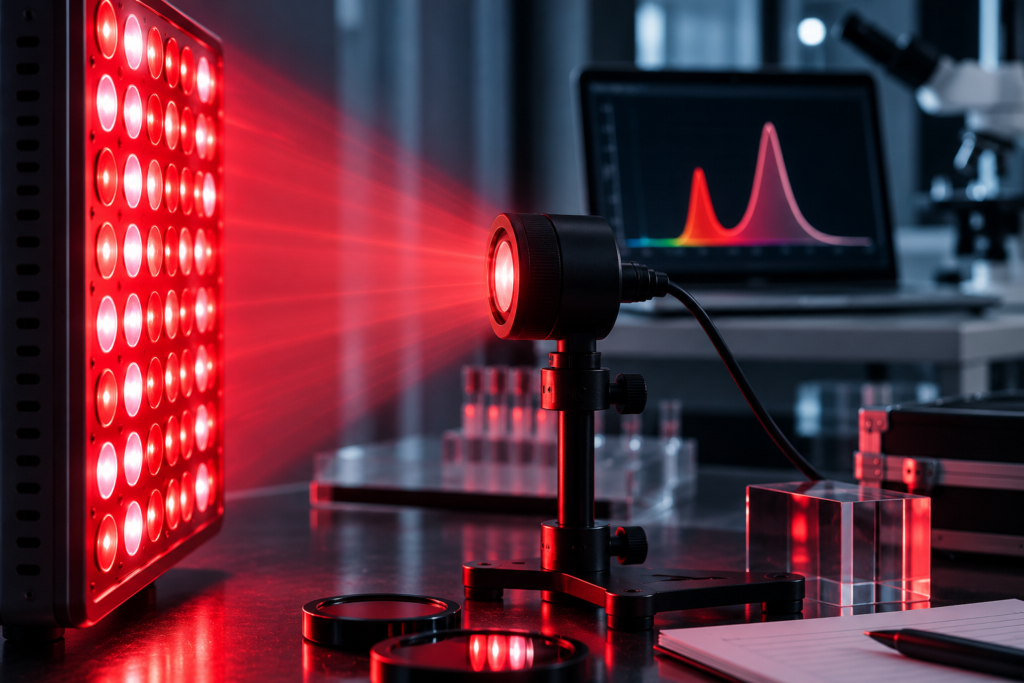
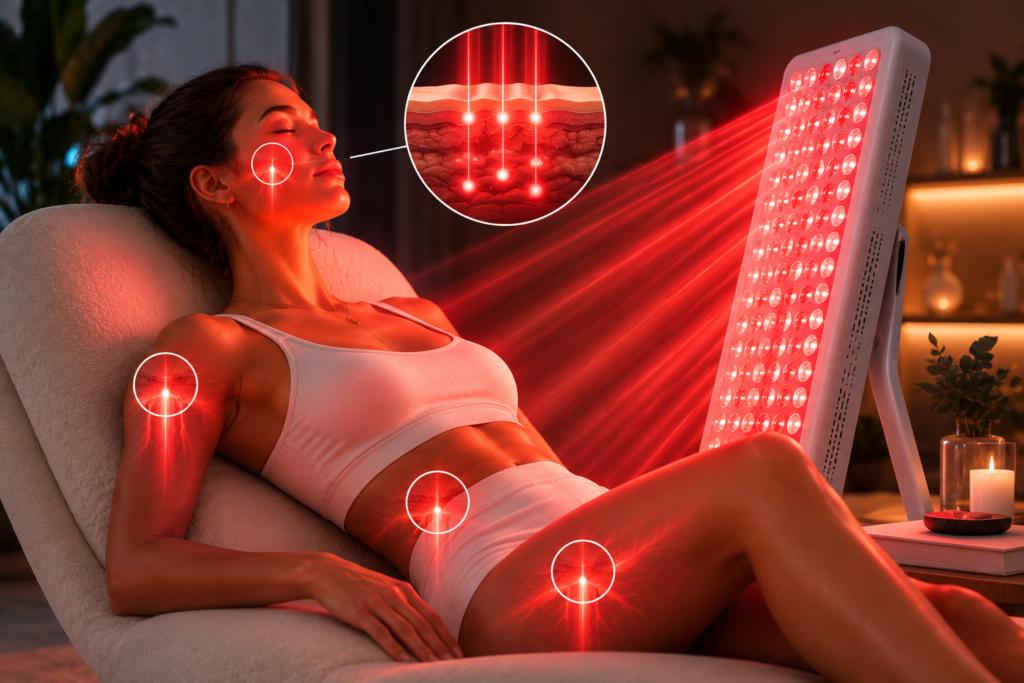
The transcranial studies described above use particular, clinic-based devices and protocols under research conditions, designed to deliver light to the head in specific ways. A consumer panel you place across the room for skin or muscle recovery is a general wellness product, as Cleveland Clinic describes red light therapy more broadly. Treating the two as interchangeable — assuming that buying a panel gives you access to whatever the brain studies are exploring — is a mistake. The fact that researchers are investigating light and mood in controlled settings says nothing about what a home device will do for your mental health.
Myth 3: Red Light Therapy Is the Same as a SAD Light Box
Another of the most persistent red light therapy mental health myths is that a panel works the same way as an SAD light box. Light boxes used for seasonal patterns of depression deliver bright, broad-spectrum visible light, usually in the morning, and work primarily through the eyes to influence the body’s internal clock. The National Institute of Mental Health describes this kind of bright light therapy in the context of seasonal affective disorder, where it is used under appropriate guidance.
Red light therapy is different in nearly every respect. It uses red and near-infrared wavelengths aimed at the skin and tissues, not bright visible light directed toward the eyes to reset circadian rhythm. So a red light panel is not a seasonal-affective light box, and the two should not be assumed to do the same job. If you are considering light for a seasonal mood pattern, that is a conversation to have with a healthcare professional about the appropriate kind of light therapy, not a reason to point a skincare panel at yourself.

Myth 4: Red Light Therapy Can Replace Therapy or Medication
Red light therapy mental health myths around medication and therapy replacement are some of the most dangerous to leave unchallenged. Talk therapy, medication, and other evidence-based treatments are supported by extensive research and tailored to individual needs by trained professionals. A relaxing light routine, however pleasant, is not in the same category and cannot do the same work.
The National Institute of Mental Health, in its guidance on caring for your mental health, frames wellbeing as a combination of healthy habits and, when needed, professional treatment. A calming routine can sit among the supportive habits; it cannot stand in for treatment. If anyone suggests that a panel lets you skip therapy or stop prescribed medication, treat that as a serious red flag, and never change a treatment plan without talking to the professional who prescribed it.
Myth 5: If It Is Low-Risk, the Bold Claims Must Be Fine
One quieter red light therapy mental health myth is that because the device is low-risk, bold mood claims must be harmless too. It is true that, according to Cleveland Clinic, red light therapy is generally low-risk for most healthy adults at consumer doses, with side effects that tend to be mild and temporary. But being low-risk physically is not the same as being effective for mood, and it does not make exaggerated mental health claims harmless.
The real risk with overblown claims is not usually the light itself; it is what the claims encourage people to do. Believing a panel will fix depression can lead someone to spend money they cannot spare, feel like a failure when nothing changes, or — most seriously — delay effective care. A gentle, low-risk relaxation habit is fine. A gentle habit dressed up as a cure is not.

Myth 6: More Light Means More Benefit for Mood
Red light therapy mental health myths also include the idea that more light automatically means more mood benefit. This reasoning does not hold. Red light therapy is generally used at a moderate, as-directed dose, and overusing a device does not unlock hidden mental health benefits; it simply increases the chance of irritation or eye strain without any added upside. The brain-focused research that inspires this idea uses carefully controlled, clinic-based protocols, not improvised home use, and it remains preliminary regardless. Treat any urge to escalate as a cue to step back rather than push harder, and follow the manufacturer’s guidance.
Why These Myths Spread
It helps to understand why red light therapy mental health myths circulate so widely. Mental health struggles are common and painful, and the hope for a simple, drug-free solution is deeply human. Add a kernel of real science — the genuine, if early, research into light and the brain — and it becomes easy for marketing and well-meaning enthusiasm to stretch that kernel far beyond what it supports. Recognizing this pattern is not about cynicism; it is about compassion for yourself. Understanding why a claim is appealing makes it easier to hold it at arm’s length and to keep your hopes anchored to what actually helps.

What Is Actually Fair to Say
After clearing away the myths, a modest and honest picture remains. Some people find a few quiet minutes with a warm red glow relaxing, and relaxation can be a small, supportive part of a wellbeing routine, much like other calming rituals. Research into light and the brain is genuinely interesting, but early, preliminary, and clinic-based. And none of this changes the central fact that mental health conditions are real, common, and treatable with professional care.
Holding those truths together is the clearest way to think about red light therapy mental health myths and what the evidence can and cannot support.
A Reminder About Real Support
Because myths in this area can quietly discourage people from getting help, it bears repeating: red light therapy is not a replacement for professional mental health care. If you are struggling, please reach out to a doctor, therapist, or counselor. In the United States, the 988 Suicide and Crisis Lifeline offers free, confidential support by call or text at 988, any time of day or night, including for emotional distress. Seeking help is a strong and healthy choice.
The Bottom Line
The biggest red light therapy mental health myths — that it cures depression, that a home panel equals the brain studies, that it is the same as a seasonal light box, or that it can replace therapy — do not hold up to honest scrutiny. What survives is a small, fair claim: a calming light routine may help some people relax. Keep that distinction clear, stay skeptical of bold promises, and keep professional care at the center of your mental health.
Ready to get your red light therapy device? See our brand and product reviews, and try out our product comparison tool to inform your decision.
Frequently Asked Questions
Does red light therapy cure depression?
No. Red light therapy does not treat, cure, or prevent depression or any mental illness, and it does not guarantee mood improvement. Understanding red light therapy mental health myths starts here: depression is best addressed with professional care, not a consumer device.
Is a home red light panel the same as the devices in brain studies?
No. Studies on light and mood use specialized, clinic-based devices and protocols under research conditions. A consumer skincare or recovery panel is a general wellness product and should not be treated as equivalent.
Is red light therapy the same as a light box for seasonal depression?
No. Seasonal light boxes use bright visible light through the eyes to influence the body clock, while red light therapy uses red and near-infrared light aimed at the skin and tissues. For seasonal mood patterns, consult a healthcare professional.
This is one of the most common red light therapy mental health myths, assuming two very different tools do the same job.
Can red light therapy replace therapy or medication?
No. No wellness device replaces evidence-based treatments like therapy or medication. A calming routine can be a supportive habit, but it cannot do the work of professional care, and you should never change a treatment plan without your provider.
If red light therapy is low-risk, are the bold mood claims harmless?
Being physically low-risk does not make exaggerated claims harmless. Overblown promises can lead people to waste money, feel discouraged, or delay effective care. Enjoy a calming habit, but do not mistake it for a cure.
This article is for general educational purposes only and is not medical advice. Red light therapy is not a substitute for professional care. Talk with a qualified healthcare professional about your individual situation.