
For people with packed schedules, recovery often loses out. Between work, family, and everything else, the idea of an elaborate recovery regimen can feel unrealistic, so it gets skipped entirely. Red light therapy is sometimes marketed as a quick fix that busy people can squeeze in, and a short session does have appeal. This article offers a realistic, time-respecting look at how red light therapy might fit into a busy person’s recovery routine — while being honest that the real drivers of recovery are not gadgets at all. Studies on red light therapy recovery routine have drawn increasing attention from researchers.
The guiding principle throughout is simple: consistency beats intensity, and fundamentals beat add-ons. A short red light session you actually do a few times a week is more reasonable than an ambitious routine you abandon. But even the most faithful light routine cannot replace sleep, nutrition, and sensible training. Keeping that hierarchy clear is what makes a busy-person routine both efficient and honest. When examining red light therapy recovery routine, it helps to look carefully at the underlying research.
First, Define What Recovery Actually Is
Recovery is the body’s process of adapting to and bouncing back from physical stress. The biggest levers are not exotic. Adequate sleep, reasonable nutrition and hydration, managing total training load, and simply allowing time between hard efforts do the vast majority of the work. These are unglamorous and free, which is precisely why they get neglected in favor of devices that feel more active and modern. [source] The evidence around red light therapy recovery routine remains an active area of investigation.
A review of photobiomodulation in the context of sport performance and recovery discusses light as a possible aid for some recovery-related outcomes, while making clear that evidence varies by protocol and that results are not uniform. In other words, even the research that explores light as a recovery tool frames it as a possible adjunct, not a centerpiece. For a busy person, that is liberating: you do not need to fit in a long, complicated protocol to recover well. For those exploring red light therapy recovery routine, setting realistic expectations matters.
Where Red Light Therapy Might Fit
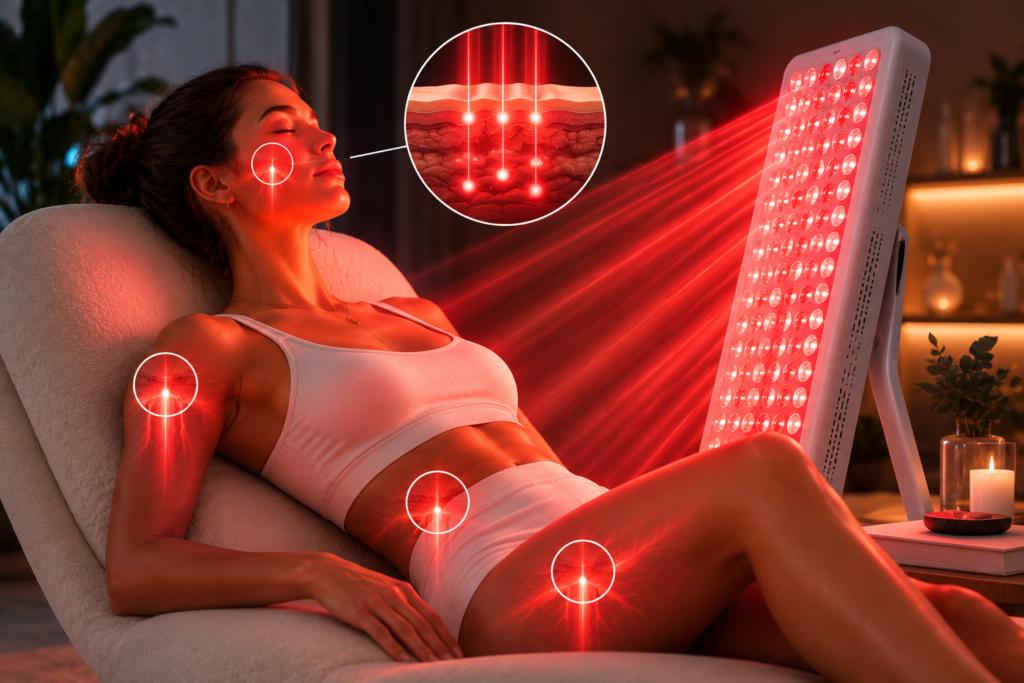
If you want to try red light therapy as part of a recovery routine, the realistic role is small and supportive. People typically use it for short sessions — often somewhere in the range of a few to roughly twenty minutes depending on the device — a few times a week. Some use it after training as part of a wind-down; others fold it into an existing habit, like a few minutes during a morning or evening routine. [source] Understanding red light therapy recovery routine requires separating marketing claims from published data.
It is worth stating plainly that red light therapy may support recovery or comfort for some people, but it is not guaranteed to, and it will not compensate for poor sleep or chronic overtraining. Treat it as the optional last layer of a routine, added only after the fundamentals are in place. Anyone researching red light therapy recovery routine will find the science is still developing.

Consistency Over Intensity
One of the most useful research-backed ideas for any light therapy routine is the biphasic dose response. Studies on dosing describe how a moderate dose may help, while too little does nothing and too much can reduce or even reverse the benefit. For busy people, this is good news twice over: there is no advantage to marathon sessions, and a sensible short session done regularly is exactly the right approach. [source] The current state of red light therapy recovery routine research points to early, modest findings.
So resist the temptation to think a longer or more frequent session will accelerate results. It will not, according to the dosing literature, and it may backfire. Follow your device’s guidance on time and distance, and aim for a rhythm you can sustain rather than a heroic burst you cannot. Interest in red light therapy recovery routine has grown alongside broader photobiomodulation research.
A Realistic Weekly Routine
Here is what an honest, time-respecting routine might look like for someone with a full schedule. The non-negotiables come first: a consistent sleep schedule aiming for adequate rest, reasonable meals and hydration, and training that includes easier days rather than going hard every session. These are the engine of recovery. Most published reviews on red light therapy recovery routine call for larger, better-controlled trials.
The Optional Layer
Layered on top, optionally, a short red light session a few times a week after training or during an existing routine. Bare skin exposed to the light, eyes protected, device used at the recommended distance and time. That is the whole routine. Its power, such as it is, comes from being simple enough to actually repeat — and from the fact that the fundamentals beneath it are doing the real work. A clear-eyed look at red light therapy recovery routine means separating anecdote from controlled evidence.
Sleep and Nutrition: The Unskippable Foundation
It is worth dwelling on the fundamentals because they are so easy to shortchange when time is tight. Sleep is when much of physical recovery happens, and skimping on it undermines training, mood, and resilience. Nutrition supplies the raw materials for repair, and hydration supports nearly every bodily process. No light device, however well designed, can substitute for these. Consulting a healthcare provider about red light therapy recovery routine is always a sensible step.
A practical reframe for busy people: if your sleep and nutrition are inconsistent, that is where the highest-value effort lies — not in adding a gadget. Red light therapy is a reasonable thing to explore once the foundation is solid, but it is a poor first investment of limited time and attention. Devices marketed for red light therapy recovery routine vary widely in power output and wavelength.
Cautious Expectations and Safety
Approach any recovery tool with measured expectations. Red light therapy is a possible comfort and recovery adjunct supported by mixed, low-certainty evidence, not a proven accelerator of healing or a guarantee of better performance. Effects, when noticed, tend to be subtle. For most healthy adults, consumer-dose use is generally low-risk, with mild, temporary side effects at most, but it is still wise to protect the eyes and to consult a healthcare professional if you are pregnant, take photosensitizing medication, or have a relevant medical condition. Practitioners field frequent questions about red light therapy recovery routine from clients.
And the recurring caution applies here too: persistent or severe pain is a reason to see a professional, not to add more recovery sessions. A light routine is for everyday wear and tear, not for injuries. Studies on red light therapy recovery routine have drawn increasing attention from researchers.
Common Time-Saving Traps to Avoid
Busy people are especially prone to a few shortcuts that quietly undermine a recovery routine. The first is treating through clothing to save a step; because fabric blocks much of the light, this can leave a session delivering little usable dose, so exposing bare skin is worth the few seconds it takes. The second is stacking a long session on a rare free day to “make up” for missed ones, which runs against the biphasic dosing principle and offers no catch-up benefit. The third is letting a recovery gadget crowd out the basics — spending limited time fiddling with a device while sleep stays short. The most efficient move is almost always to protect sleep first and treat the light routine as the final, optional layer. When examining red light therapy recovery routine, it helps to look carefully at the underlying research.

How to Tell If It Is Doing Anything: Red light therapy recovery routine Notes
Because effects from red light therapy tend to be subtle, busy people often struggle to judge whether a routine is worthwhile. A sensible approach is to give a consistent routine several weeks before forming an opinion, while keeping the fundamentals steady so you are not crediting the device for gains that come from better sleep or smarter training. Pay attention to how you feel during everyday activity rather than expecting a dramatic change, and be willing to conclude that it offers little for you. There is no obligation to keep using a tool that is not earning its place, and dropping it costs you nothing, since the fundamentals carry your recovery regardless.
Making It Stick
The hardest part of any routine is doing it consistently, so design for your real life. Attach red light therapy to a habit you already have so it does not require a separate slot in your day. Keep the device somewhere visible and easy to reach. Lower the bar to something genuinely sustainable, even on busy weeks. And remember that missing a session is trivial — the fundamentals, not the gadget, carry your recovery. A routine you can keep loosely and forgive yourself for skipping is far more valuable than a strict one that collapses under a busy week.
The Bottom Line
For busy people, a good recovery routine is built on sleep, nutrition, hydration, and sensible training load — the parts that are free and proven. Red light therapy can be a small, optional adjunct layered on top, used in short, consistent sessions at the recommended dose, with realistic expectations and an understanding that more is not better. It may support recovery and comfort for some, but it does not replace the fundamentals or professional care for persistent or severe pain. Keep it simple, keep it consistent, and keep it in its place.
Frequently Asked Questions
Can a quick red light session replace proper recovery?
No. Sleep, nutrition, hydration, and managing training load do the bulk of recovery. Red light therapy is, at most, a small optional adjunct and cannot compensate for neglected fundamentals.
How long should a recovery session be?
People typically use short sessions of a few to roughly twenty minutes depending on the device, following its guidance. Longer is not better, since research describes a biphasic dose where too much can reduce the benefit.
How often should I use red light therapy for recovery?
A few times a week is common. Consistency matters more than intensity or frequency, and overusing it offers no added benefit while potentially being counterproductive.
Will red light therapy improve my performance?
It is not a guaranteed performance booster. Evidence for recovery-related uses is mixed and of low certainty, so it should be viewed as a possible adjunct rather than a reliable enhancer.
Is it safe to use after every workout?
For most healthy adults, consumer-dose use is generally low-risk, but more is not better. Protect your eyes, follow device guidance, and consult a professional if you are pregnant, take photosensitizing medication, or have a medical condition.
Ready to get your red light therapy device? See our brand reviews and product reviews, and try out our product comparison tool to inform your decision.