
Scars are deeply personal. Whether from acne, surgery, an injury, or another cause, they can affect how people feel about their skin, and it is natural to look for ways to soften their appearance. Red light therapy is sometimes mentioned in this context, which raises a fair question: can it actually change how scars look? This guide explores red light therapy scars research, what current evidence suggests about scar appearance, and why realistic expectations are essential.
The headline is measured: some research is interested in whether red light may influence the appearance of scars and the quality of skin around them, but evidence is limited and mixed, results vary widely from person to person, and red light therapy is not a guaranteed scar treatment. For scar concerns, a dermatologist is the right professional to guide you.
Understanding Red Light Therapy Scars
A scar forms as part of the body’s natural repair process after the skin is injured. As a wound heals, the body produces collagen to close and strengthen the area, but the new tissue is structured differently from the surrounding skin. This is why scars can look and feel different — they may be flatter or raised, lighter or darker, smoother or more textured than the skin around them.
Scars vary widely. Some are flat and fade over time on their own; others, such as raised or thickened scars, are more persistent. Acne scarring is its own category, ranging from shallow marks to deeper indentations. Because scars differ so much, no single approach works the same way for everyone, and what helps one scar may do little for another.
Why People Use Red Light Therapy for Scars
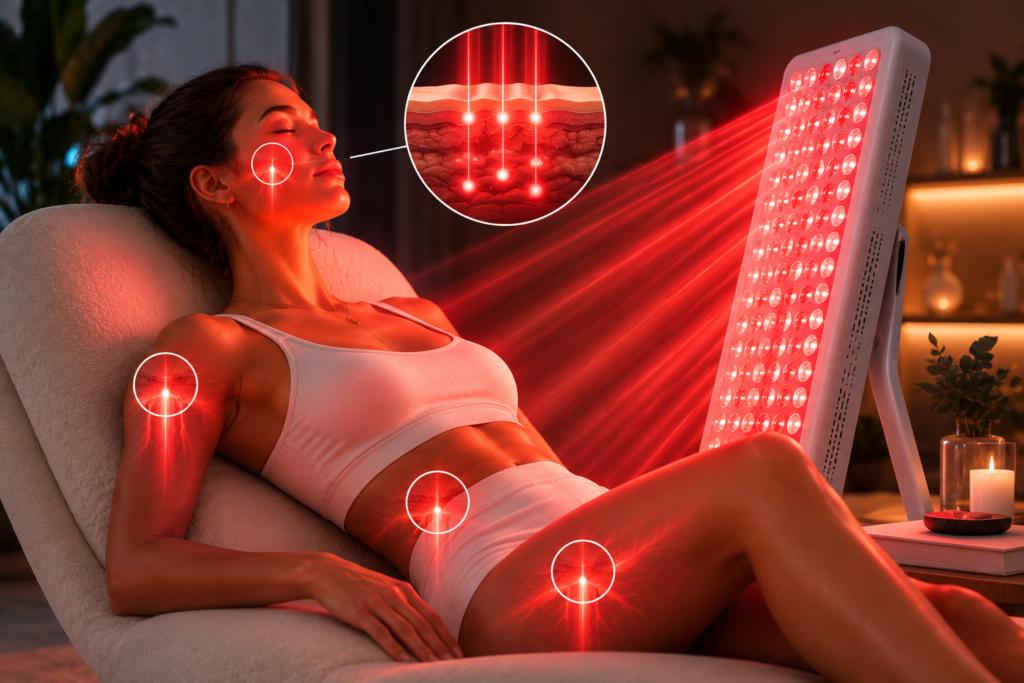
The interest in red light for scars connects to how the therapy is thought to work. Red light therapy, or photobiomodulation, delivers red and near-infrared light that, according to Cleveland Clinic, interacts with skin cells using low levels of light rather than ultraviolet radiation. Reviews of low-level light therapy in skin, such as the work by Avci and colleagues, describe red light’s potential role in stimulating skin cells and processes associated with skin quality.
Because scar appearance is partly about the texture, tone, and quality of skin in and around the scar, the reasoning goes that anything that may support healthier-looking skin might influence how a scar appears. This is an appearance-level, possibility-based rationale — not evidence that red light removes or erases scars.
What Red Light Therapy Scars Research Shows
Research on light-based approaches and skin includes interest in the look and quality of scarred or healing skin. Reviews of LED phototherapy in dermatology support red light’s general involvement in skin-related goals, and the broader low-level light therapy literature explores its effects on skin cells and tissue quality. Some studies and reviews report encouraging signals regarding the appearance of skin in repair-related contexts.
However, the limitations are significant and must be stated plainly. Studies are often small, use different devices, settings, and protocols, focus on different types of scars, and report mixed results. High-quality, standardized evidence specifically demonstrating that red light therapy reliably improves scar appearance is limited. The responsible conclusion is that red light may support the appearance of skin for some people, results vary, and more rigorous research is needed.
Red Light Therapy Scars and Acne Scarring
Because acne is so common, acne scarring comes up frequently. It is important to distinguish between active acne, post-inflammatory marks (the temporary discoloration left after a breakout), and true acne scars (textural changes in the skin). The American Academy of Dermatology discusses light-based approaches in the context of acne and notes that results vary and that such approaches often work best alongside other treatments rather than on their own.
For acne scarring specifically, the cautious view is that red light therapy might play a supportive role in overall skin appearance for some people, but it is not a proven, standalone solution for textural acne scars. A dermatologist can assess whether what you are seeing is discoloration that may fade or genuine scarring that may benefit from established professional treatments.

Realistic Red Light Therapy Scars Expectations
If you decide to explore red light therapy with the look of a scar in mind, the right mindset is patience and realism. Any change tends to be gradual and subtle, emerging over weeks of consistent use rather than appearing quickly, and many people may notice little difference. Crucially, red light therapy does not erase or remove scars; at most, it may support the appearance of the surrounding skin for some individuals. Established scars, in particular, are persistent by nature, and no at-home device should be expected to eliminate them.
Setting expectations this way protects you from disappointment and from products that overpromise. Genuine, lasting changes to a scar’s structure are generally the domain of professional dermatological treatments, not consumer light devices.
Why Red Light Therapy Scars Results Vary
It also helps to recognize that no single expectation fits every scar. A flat, relatively new mark left after a healed blemish behaves very differently from a raised, thickened scar that has been present for years, and both differ from the indented texture changes associated with some acne scarring. Newer discoloration sometimes softens on its own over time, which can make any concurrent routine look more effective than it truly is, while well-established structural scars are inherently stubborn.
Because of this range, it is unwise to assume that a result someone else reports — whether glowing or disappointing — will match your own. The type, age, depth, and cause of a scar all shape what is realistic, which is one more reason that an individualized assessment from a dermatologist is more useful than any blanket promise about what red light therapy will or will not do for scars in general.
When to See a Dermatologist for Red Light Therapy Scars
Scar treatment is an area where professional guidance genuinely matters. A dermatologist can identify the type of scar you have, explain which approaches have evidence behind them for that specific scar type, and help you avoid wasting time on options unlikely to help. Established scar treatments handled by professionals can include a range of procedures and prescription options that are simply outside what a home light device can offer.
A dermatologist can also flag situations that need attention — for instance, a scar that is changing, growing, painful, or otherwise concerning should be evaluated rather than self-treated. Red light therapy is a wellness practice that may support appearance goals; it is not a medical scar treatment.
Red Light Therapy Scars Safety
For most healthy adults, red light therapy at consumer doses is generally considered low-risk, with side effects that tend to be mild and temporary, such as brief warmth or redness. As always, it is sensible to protect the eyes from bright light and to follow device guidance on distance and time. Importantly, do not use red light therapy on a wound that has not fully healed, or on any open or serious wound, without medical guidance — scar-focused use is for skin that has already healed. Anyone who is pregnant, has a light-sensitive condition, takes photosensitizing medication, or has a concerning or changing scar should consult a healthcare professional before use.
The Bottom Line
Red light therapy scars research suggests red light may support the appearance of scarred skin for some people, but it does not remove scars, and the evidence remains limited and mixed. Some research is interested in whether red light may support the appearance and quality of skin in repair-related contexts, but evidence specific to scars is limited and mixed, results vary widely, and red light therapy does not erase or remove scars. For scar concerns — including acne scarring — a dermatologist is the right resource to identify the scar type and recommend evidence-based options. Approached with realistic expectations and professional guidance, red light therapy may be a modest supportive habit, not a guaranteed scar solution.
Ready to get your red light therapy device? See our brand and product reviews, and try out our product comparison tool to inform your decision.
Frequently Asked Questions
Can red light therapy remove or erase scars?
No. Red light therapy does not remove or erase scars. At most, some research suggests it may support the appearance of the skin around a scar for some people, but results vary and it is not a guaranteed scar treatment.
Does red light therapy help acne scars?
It might play a modest supportive role in overall skin appearance for some people, but it is not a proven standalone solution for textural acne scars. A dermatologist can tell whether you have fading discoloration or true scarring that needs established treatment.
What does the research actually show about scars and red light?
Research interest exists, but studies are often small, vary in methods and devices, and report mixed results. High-quality evidence specific to improving scar appearance is limited, so the honest position is that more rigorous research is needed.
How long would it take to see any change in a scar’s appearance?
Any change tends to be gradual and subtle, appearing over weeks of consistent use, and many people may notice little difference. Established scars are persistent, so dramatic at-home results should not be expected.
Should I see a dermatologist about my scars?
Yes, a dermatologist is the right resource for scar concerns. They can identify the scar type, recommend evidence-based options, and evaluate any scar that is changing, growing, or painful. Red light therapy is not a medical scar treatment.
This article is for general educational purposes only and is not medical advice. Red light therapy is not a substitute for professional care. Talk with a qualified healthcare professional about your individual situation.