Skin elasticity is one of those qualities most people never think about until it begins to change. Young skin tends to snap back quickly when pressed or stretched; over time, that springiness gradually fades, and skin can look looser or less firm. It is no surprise, then, that “firmer, more elastic skin” is a popular promise in skincare marketing — including marketing for red light therapy. This guide explores red light therapy skin elasticity research, what scientists actually measure, and how to keep your expectations realistic.
The short, careful answer is this: some research suggests red light therapy may support the appearance of firmer, more elastic-looking skin for certain people, but it is not a guaranteed treatment, results vary, and it is not a medical procedure or a substitute for professional skincare advice.
Understanding Red Light Therapy Skin Elasticity
Elasticity refers to the skin’s ability to stretch and then return to its original shape. It is closely tied to two proteins in the dermis, the layer beneath the surface: collagen, which provides structure and firmness, and elastin, which provides the recoil that lets skin bounce back. A supportive network of these fibers, along with adequate hydration, helps skin look plump, smooth, and resilient.
According to the National Institute on Aging, skin changes with age are natural and expected. Over time the dermis produces less collagen and elastin, fibers become less organized, and skin can lose some of its firmness and elasticity. Sun exposure, smoking, and other lifestyle factors can accelerate these visible changes. This is normal aging, not a disease — an important distinction when weighing what any product can realistically do.
How Red Light Therapy Skin Elasticity May Work
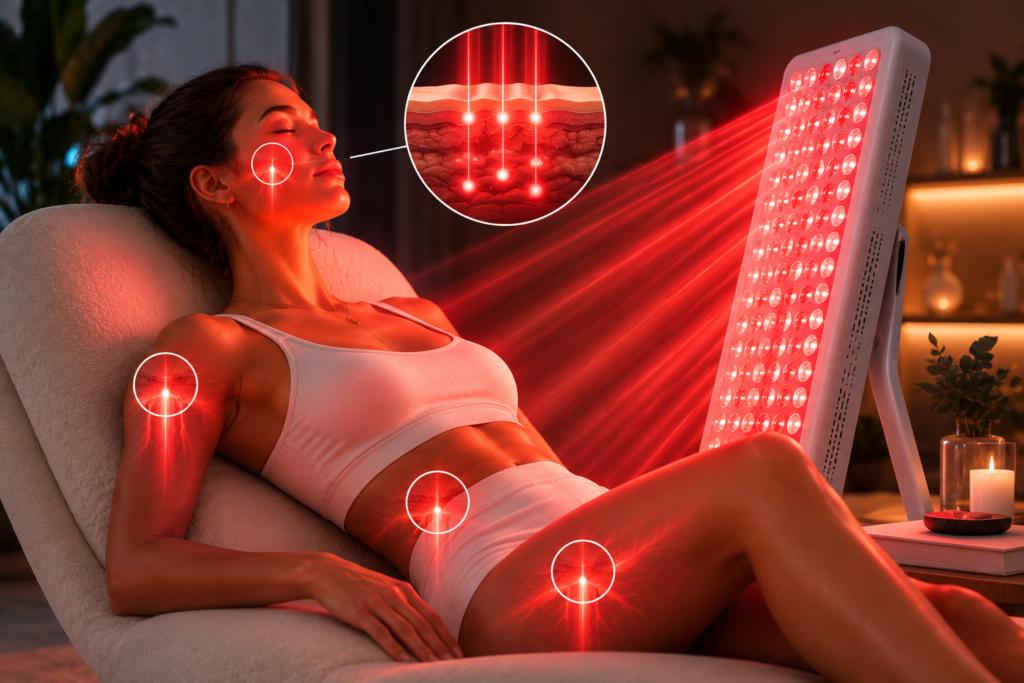
Red light therapy, also called photobiomodulation, delivers low-intensity red and near-infrared light to the skin. Researchers, including Michael Hamblin and colleagues, propose that this light is absorbed by mitochondria in skin cells, where it may support cellular energy production and signaling. The hypothesis relevant to elasticity is that better-supported skin cells, particularly fibroblasts, may be encouraged to maintain or produce more of the structural proteins that keep skin firm.
A review by Avci and colleagues on low-level light therapy in skin describes how red and near-infrared light may stimulate fibroblast activity and influence the extracellular matrix — the scaffolding of collagen and elastin that gives skin its mechanical properties. This is a plausible mechanism, and it is the basis for the interest in elasticity. It is not, however, the same as proof that any given device will visibly firm your skin.
What Red Light Therapy Skin Elasticity Research Measures
It helps to understand what scientists look at when they study skin “firmness” and “elasticity,” because the terms used in studies are more specific than the language in advertisements.
Red Light Therapy Skin Elasticity Clinical Research
A controlled trial by Wunsch and Matuschka examined red and near-infrared light treatment for skin appearance. Participants treated over a series of sessions showed improvements in measures such as skin complexion and skin feeling, along with changes assessed by ultrasound and profilometry — tools that estimate aspects of skin structure and surface. The authors reported improvements in the appearance of the skin and intradermal collagen density as measured in the study. This is encouraging, but it reflects averaged results in a specific study population using specific devices and settings.
Red Light Therapy Skin Elasticity Mechanisms
Other research, including work on reversing visible signs of skin aging through red light photobiomodulation, has explored how light exposure may influence skin cells and the proteins associated with firmness and elasticity. These findings support the underlying idea, but mechanistic and laboratory results do not automatically translate into a predictable cosmetic outcome for every individual at home.
Realistic Red Light Therapy Skin Elasticity Expectations
If you are considering red light therapy with elasticity in mind, a measured outlook serves you best. Some research suggests it may support the look of firmer, more elastic skin, and many users find it a low-effort addition to a skincare routine. At the same time, several points deserve emphasis.
First, effects, when they occur, tend to be gradual and modest rather than dramatic. Most studies that report benefits involve weeks of consistent use, not a single session. Second, results vary from person to person, and factors like age, sun history, genetics, and overall skin health all play a role. Third, red light therapy cannot undo the structural changes of advanced skin laxity the way a medical or surgical procedure might; it is best understood as a possible support for appearance, not a lift or a cure.
Red Light Therapy Skin Elasticity Limitations
It is worth being candid about limitations. Significant sagging — the kind influenced by substantial collagen loss, fat redistribution, and gravity over many years — is unlikely to be meaningfully reversed by light alone. Marketing that promises a “non-surgical facelift” from a home device oversells what the evidence supports. The biphasic dose-response principle described in the photobiomodulation literature also reminds us that more light is not better; an appropriate, moderate dose is the goal, and overdoing sessions will not accelerate firmness.
Red light therapy may complement, but does not replace, the fundamentals that support skin elasticity: sun protection, not smoking, good hydration, sleep, and a sensible skincare routine. Of these, protecting skin from ultraviolet exposure is especially important, since sun damage is a major driver of lost elasticity over time. Red light therapy is not sun protection and does not replace sunscreen.
Who Should Be Cautious or Seek Advice
For most healthy adults, red light therapy at consumer doses is generally considered low-risk, with side effects that tend to be mild and temporary, such as brief warmth or redness. Even so, it is sensible to protect your eyes from bright light and to talk with a healthcare professional if you are pregnant, take medications that increase light sensitivity, or have a skin condition. If you have noticeable or rapidly changing skin laxity, or you are weighing cosmetic procedures, a board-certified dermatologist can offer guidance grounded in your individual skin and medical history. Persistent or concerning skin changes always warrant professional evaluation rather than self-treatment.
Using Red Light Therapy Thoughtfully for Firmness Goals
If you decide to try it, a few habits make for a fair and safe trial. Expose clean, bare skin, since makeup and clothing block much of the light. Follow the manufacturer’s guidance on distance and session length rather than improvising longer sessions. Be consistent over several weeks before judging results, and consider taking simple progress photos in similar lighting so you can assess changes more objectively than memory allows. Above all, treat red light therapy as one supportive habit within a broader routine, not as a standalone solution to skin laxity.
The Bottom Line
Red light therapy has a plausible mechanism for supporting the proteins linked to skin firmness, and some controlled research reports improvements in the appearance of treated skin. That makes it a reasonable, low-risk option to explore for elasticity-related appearance goals — with realistic expectations. It may support firmer-looking skin for some people, but it does not guarantee results, does not reverse significant sagging, and does not replace sun protection or professional medical care. For persistent concerns or before pursuing cosmetic procedures, a board-certified dermatologist remains the best resource.
Ready to get your red light therapy device? See our brand and product reviews, and try out our product comparison tool to inform your decision.
Frequently Asked Questions
Can red light therapy make my skin firmer?
It may support the appearance of firmer, more elastic-looking skin for some people, according to some research, but results vary and it is not guaranteed. Effects tend to be gradual and modest rather than dramatic.
Does red light therapy boost collagen and elastin?
Researchers propose that red and near-infrared light may support fibroblast activity and the proteins linked to firmness, and one controlled trial reported changes in collagen density. The mechanism is plausible, but individual cosmetic results vary.
Can red light therapy replace a facelift or skin-tightening procedure?
No. Significant sagging from long-term structural changes is unlikely to be meaningfully reversed by light alone. Red light therapy may support appearance but is not a substitute for medical or surgical procedures.
How long until I might see a difference in firmness?
Studies reporting benefits typically involve several weeks of consistent use. Patience and regular sessions matter more than any single session, and some people may notice little change.
Is red light therapy enough to protect skin elasticity on its own?
No. Protecting elasticity depends largely on sun protection, not smoking, hydration, and overall skin health. Red light therapy is not sun protection and does not replace sunscreen; it is at most a complementary habit.
This article is for general educational purposes only and is not medical advice. Red light therapy is not a substitute for professional care. Talk with a qualified healthcare professional about your individual situation.