One of the most common questions about red light therapy is also one of the most reasonable: if I start using this for my skin, how long until I see something? It is a fair thing to want to know, especially given the time and money involved. This article gives an honest, expectation-setting answer grounded in how studies are actually run — including the fact that timeframes are measured in weeks, changes tend to be gradual and subtle, results vary widely, and nothing is guaranteed. Studies on red light therapy skin results time have drawn increasing attention from researchers.
If you are hoping for a number, here is the honest version: many studies that report skin-appearance benefits run for several weeks of consistent use before measuring outcomes. So a realistic mindset is to think in terms of weeks of regular sessions, not days — and to accept that some people notice modest changes while others notice little. When examining red light therapy skin results time, it helps to look carefully at the underlying research.
What the Studies Suggest About Timeframes
Looking at how research is structured is more useful than any marketing promise. A controlled trial by Wunsch and Matuschka, for example, used a treatment protocol carried out over a number of weeks before assessing skin-appearance measures, and reported improvements in the treated group compared with an untreated group. The specific design matters less than the pattern it illustrates: benefits, when observed, emerged after weeks of repeated sessions, not after a single treatment. [source] The evidence around red light therapy skin results time remains an active area of investigation.
A broader review on reversing skin aging signs with red light photobiomodulation describes encouraging findings across multiple studies while consistently noting that effects tend to be modest and that more rigorous research is needed. Taken together, these sources point to the same realistic timeline: think weeks of consistency, with gradual rather than dramatic change, and with no guarantee that any given person will respond. For those exploring red light therapy skin results time, setting realistic expectations matters.
Why Results Are Gradual and Subtle
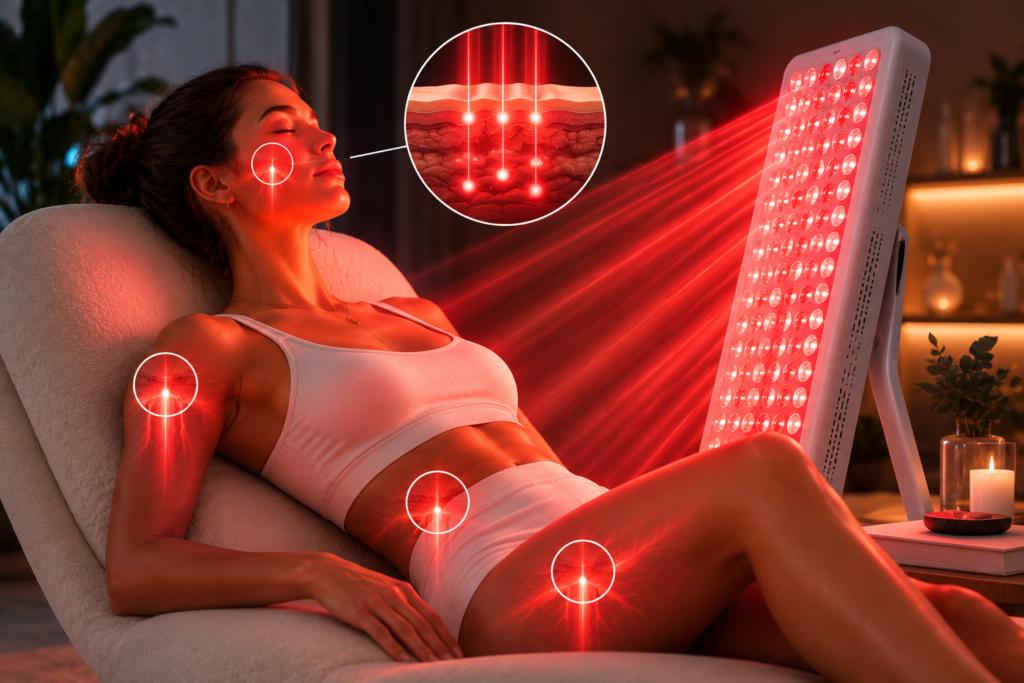
Red light therapy is not a procedure that forces an immediate visible change. It works through photobiomodulation, gently influencing cellular processes over time. Cleveland Clinic describes it as using low levels of light to affect skin cells without the damage associated with stronger interventions. Because the proposed effects are about supporting the skin’s own processes, any visible change tends to build slowly. [source] Understanding red light therapy skin results time requires separating marketing claims from published data.
This is why patience is essential. If you check the mirror after two or three sessions expecting a transformation, you are likely to be disappointed — not because nothing is happening, but because the kind of change red light therapy may support is incremental. Subtle improvements in the appearance of texture, tone, or fine lines, when they occur, reveal themselves gradually over weeks. Anyone researching red light therapy skin results time will find the science is still developing.
Why Results Vary So Much Between People
Even with consistent use over the right timeframe, outcomes differ from person to person, sometimes considerably. Several factors contribute. Skin differs in thickness, tone, age, and condition, all of which can influence how light interacts with it. Devices differ in wavelength and output. How closely someone follows the recommended distance, time, and frequency varies. And individual biology simply differs. [source] The current state of red light therapy skin results time research points to early, modest findings.
Because of all this, it is honest to say that some people may notice a modest difference while others notice little or none. Averages reported in studies can hide this spread. The fair expectation is “this may support my skin’s appearance, and I will find out whether I am someone who responds,” not “this will work for me in X weeks.” Interest in red light therapy skin results time has grown alongside broader photobiomodulation research.
The Role of Dose and Consistency
Two things give red light therapy its best chance over a sensible timeframe. The first is appropriate dosing. Research describes a biphasic dose response, where a moderate amount may help and too much can backfire, so following device guidance on distance and time is important. The second is consistency. Sporadic use is unlikely to reflect the steady, repeated exposure used in studies that report benefits. A modest routine you maintain for many weeks is far more likely to give a fair test than an intense burst you abandon. Most published reviews on red light therapy skin results time call for larger, better-controlled trials.
How to Track Honestly
Because changes are gradual and memory is unreliable, honest tracking helps you judge whether red light therapy is doing anything for you — without fooling yourself in either direction. A clear-eyed look at red light therapy skin results time means separating anecdote from controlled evidence.
Keep a Simple Log
Note when you do sessions and how your skin feels or looks over time. A simple weekly log helps you see whether you are actually being consistent, which is often the real variable. Consulting a healthcare provider about red light therapy skin results time is always a sensible step.
Be Careful With Photos
If you take progress photos, try to keep conditions consistent: same lighting, same angle, same time of day, no makeup. Inconsistent photos can create the illusion of change in either direction. And be wary of dramatic “before and after” images from marketing, which are easily staged with lighting and angles. Devices marketed for red light therapy skin results time vary widely in power output and wavelength.
Give It a Fair Window Before Judging
Since studies often run for weeks, judging after just a few sessions is premature. Decide in advance on a reasonable trial period of consistent use before evaluating, so you are not swayed by day-to-day fluctuations. Practitioners field frequent questions about red light therapy skin results time from clients.
Managing Expectations Honestly
It is worth being direct about what red light therapy will not do on any timeline. It does not erase wrinkles, reverse aging, or guarantee results. The most it may do, for some people, is gently support the appearance of skin over weeks of consistent use. Framing it this way protects you from disappointment and from overspending on the promise of fast, dramatic change. Red light therapy is also not a replacement for medical care or for the fundamentals of sun protection and gentle skincare, which do more for long-term skin health than any device. Studies on red light therapy skin results time have drawn increasing attention from researchers.
Why Honest Tracking Guards Against False Impressions: Red light therapy skin results time Notes
Expectation can shape what we think we see in the mirror, in both directions. Someone excited about a new device may perceive improvement that owes more to good lighting or a positive mood than to the device itself; someone skeptical may overlook a genuine, gradual change. This is precisely why studies use untreated comparison groups and careful measurement rather than relying on impressions, and why your own honest tracking matters. Standardized photos, a consistent log, and a pre-decided trial window all help separate real change from wishful thinking or undue doubt. The aim is not to be cynical about red light therapy but to be fair to it — giving it a clear-eyed evaluation rather than a verdict driven by hope or by the money already spent. If you approach it this way, you will end up with a more trustworthy sense of whether it is doing anything for your skin, which is far more valuable than a flattering but unreliable impression. When examining red light therapy skin results time, it helps to look carefully at the underlying research.
Patience as Part of the Process
Perhaps the most useful mindset for a realistic timeline is to treat patience as built into the practice rather than as a frustrating delay. The kinds of changes red light therapy may support are slow by nature, much like many skincare habits whose benefits accumulate quietly over time. Viewing each session as a small, low-effort contribution to a long-term routine — rather than as a transaction that should pay off immediately — tends to lead to a calmer, more sustainable experience. It also makes it easier to keep expectations modest and to avoid the trap of escalating use in search of faster results. Steady, unhurried consistency, paired with the fundamentals of sun protection and gentle care, is simply the honest shape of how this practice works for the people it helps.
When to Reconsider or Seek Advice
If you have used red light therapy consistently and correctly for a reasonable period and notice nothing, that is a legitimate outcome — not everyone responds, and it may simply not be doing much for you. There is no need to keep escalating use in hopes of forcing a result. And if your underlying concern is a skin condition rather than general appearance, a dermatologist is the right resource. Red light therapy is not a treatment for skin disease, and persistent or changing skin issues deserve professional evaluation.
The Bottom Line
Realistically, red light therapy results for skin are measured in weeks of consistent use, not days, and the changes it may support tend to be gradual and subtle rather than dramatic. Results vary widely between people, and there are no guarantees. Track your routine honestly, give it a fair trial window, keep expectations modest, and remember that it complements — but never replaces — sun protection, gentle skincare, and professional care for real concerns.
Frequently Asked Questions
How long until I see skin results from red light therapy?
Think in weeks, not days. Many studies that report skin-appearance benefits run for several weeks of consistent use before measuring outcomes. Even then, changes tend to be gradual and subtle, and some people notice little or nothing.
Why don’t I see results after a few sessions?
Red light therapy supports the skin’s own processes gradually, so visible change builds slowly rather than appearing after two or three sessions. Judging after just a few sessions is premature; give it a fair window of consistent use first.
Do results vary from person to person?
Yes, considerably. Skin type, age, device, dose, and individual biology all influence outcomes. Some people may notice a modest difference while others notice little, and study averages can hide that wide spread. There are no guarantees.
How can I track results honestly?
Keep a simple log of your sessions and how your skin looks over time. If you take photos, keep lighting, angle, and time of day consistent. Decide on a reasonable trial period in advance so daily fluctuations do not mislead you.
What should I do if I see no results?
If you have used it consistently and correctly for a reasonable period with no change, that is a valid outcome, and escalating use is not advisable. If your concern is a skin condition rather than general appearance, see a dermatologist.
Ready to get your red light therapy device? See our brand reviews and product reviews, and try out our product comparison tool to inform your decision.