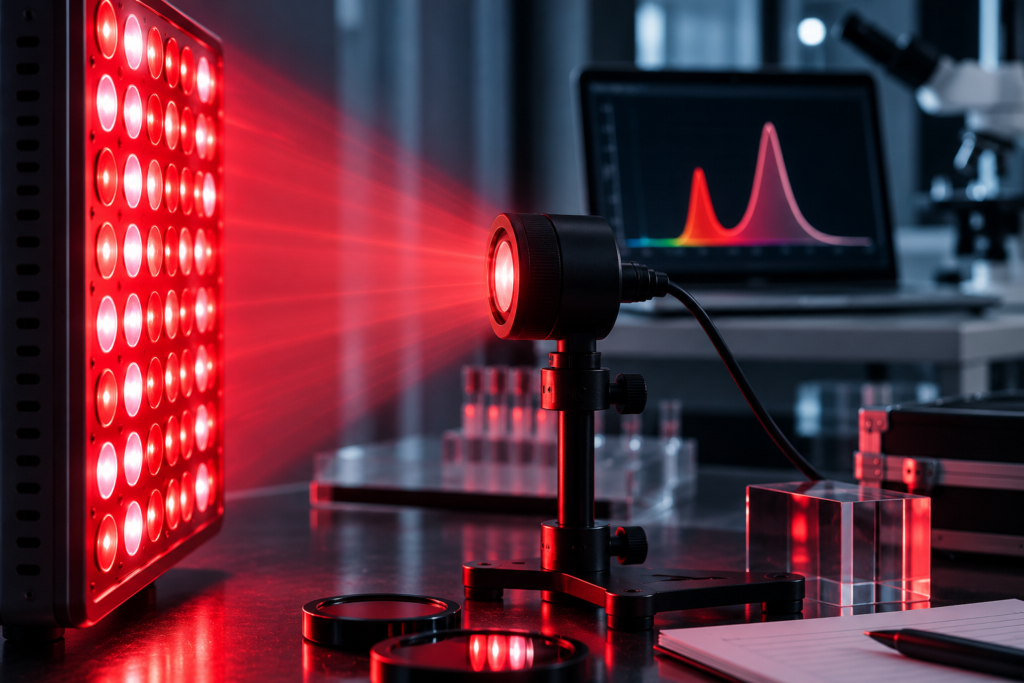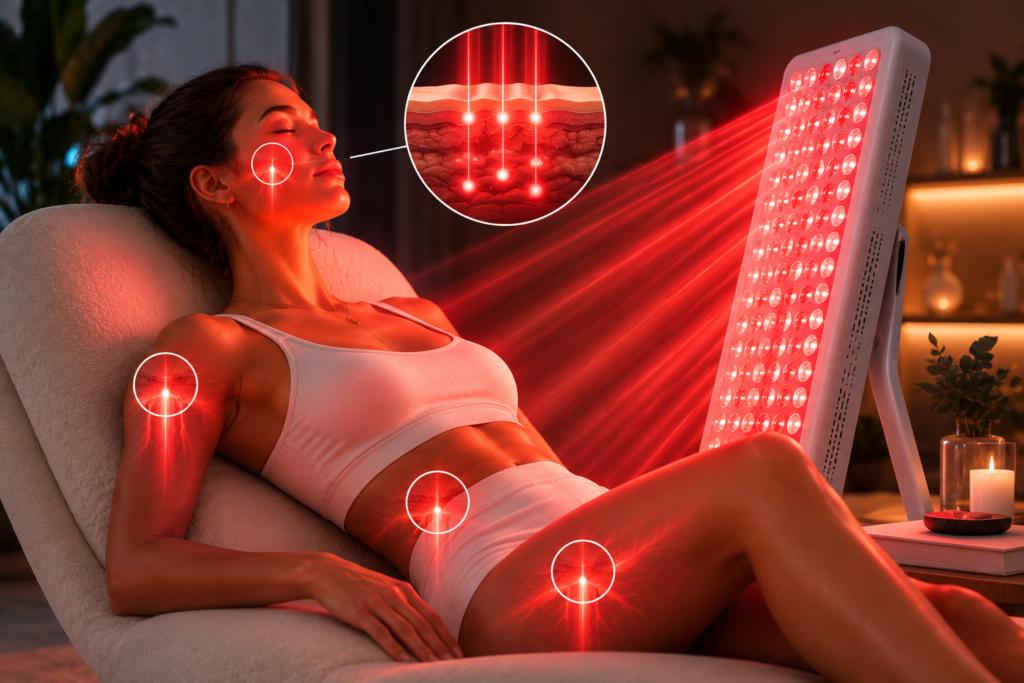

Red light therapy sleep and weight are often mentioned together, but the evidence behind each part of that pairing looks very different. It is also a topic where red light therapy is often mentioned, sometimes with claims that go well beyond the evidence. This article separates two things: the well-supported relationship between sleep and weight management, and the much more limited and cautious picture around red light therapy itself. The goal is to help you understand red light therapy sleep and weight connections without overstating what any light device can do.
To be clear from the outset: this article does not claim red light therapy sleep and weight loss are linked by evidence — they are not. The evidence does not justify those claims. What is well established is that sleep is an important healthy behavior, and that good sleep is one piece of a sustainable approach to weight management built on nutrition, activity, and behavior.
The Sleep and Weight Link Is Real
Before addressing red light therapy sleep and weight claims, it helps to establish what is actually well supported: sleep and weight are genuinely connected. The CDC has discussed raising awareness of sleep as a healthy behavior and its relationship to chronic disease, reflecting a broad body of evidence that insufficient or poor-quality sleep is associated with a range of health concerns. Sleep influences hormones related to appetite and fullness, energy levels that affect how active people feel, and the mental resources needed to make consistent choices about food and movement.
In practical terms, this means that when sleep suffers, weight-management efforts can become harder. People who are short on sleep may feel hungrier, have less energy for activity, and find it more difficult to stick to their intentions. None of this is about a quick fix; it is about recognizing that sleep is part of the foundation that supports healthy habits over time.
How Sleep Fits Into Weight Management
The CDC’s guidance on steps for losing weight emphasizes sustainable habits: sensible eating patterns, regular physical activity, and gradual, realistic change. Sleep supports each of these. Adequate rest can make it easier to be active the next day, to manage appetite, and to maintain the consistency that real weight management requires. Conversely, chronic sleep loss can undermine those efforts.
This framing keeps red light therapy sleep and weight thinking in its proper place — sleep as a supporting behavior, not a standalone fix.. Improving sleep will not by itself melt fat or guarantee weight loss, but neglecting sleep can make the broader effort more difficult.

Light, the Body Clock, and Sleep
Light is one of the strongest signals for the body’s internal clock, or circadian rhythm. According to the Sleep Foundation, light exposure plays a major role in sleep, and bright light at the wrong times, particularly in the evening, can interfere with the body’s natural wind-down and make it harder to fall asleep. This is why sleep guidance often emphasizes dimmer, warmer light in the hours before bed and avoiding bright screens late at night.
This is a key reason for caution with any bright light source in the evening, including red light therapy devices. While red and near-infrared wavelengths differ from the blue-rich light of screens, any bright light close to bedtime is worth approaching thoughtfully. The general principle from sleep science is to keep the pre-sleep environment dim, and that principle does not change because a light happens to be red.
What Red Light Therapy Cannot Be Claimed to Do
Here is where red light therapy sleep and weight language matters most: some marketing suggests the device improves sleep and therefore supports weight loss. The honest position is that the evidence does not support claiming red light therapy improves sleep or weight. Studies in this area are limited, mixed, and not strong enough to justify such promises.
It would be misleading to tell readers that using a red light device will help them sleep better and therefore lose weight. That chain of claims is not established. What is established is that sleep matters for health and weight management generally — a fact that stands entirely on its own, independent of any device.

A Sensible, Cautious Takeaway
If you care about the red light therapy sleep and weight connection, the evidence points toward prioritizing sleep itself through well-supported habits.. That means consistent sleep and wake times, a dark and quiet bedroom, limiting bright light and screens in the evening, and giving sleep the same priority you would give nutrition and activity. These steps are supported by sleep science and cost nothing.
Red light therapy, if you choose to use it for other reasons such as skin appearance, should be used earlier in the day or well before bed rather than as a sleep aid, and never as a weight-loss method. Keeping red light therapy sleep and weight categories separate protects you from overclaiming and helps you focus on what genuinely works.
Practical Sleep Habits Worth Prioritizing
If your real interest is the sleep and weight connection, the most productive place to put your effort is the sleep habits themselves, which are well supported and free. Aim for consistent sleep and wake times, including on weekends, so your body clock stays steady. Keep the bedroom dark, cool, and quiet, and dim household and screen light in the hour or two before bed, since the Sleep Foundation notes that light exposure strongly shapes the body clock.
Reserve the bed mainly for sleep, get some natural daylight earlier in the day to anchor your rhythm, and treat sleep with the same seriousness you give to meals and movement. None of these steps require a device, and together they do more for the sleep and weight relationship than any gadget marketed as a sleep aid. This is also why it would be misleading to substitute a light device for the basics: the habits are what the evidence actually supports.

Common Misunderstandings
Several misunderstandings tend to muddy this topic. One is the idea that because sleep affects weight, any product associated with sleep must help with weight; in reality, only the underlying behavior of getting good sleep is supported, not a device. Another is the assumption that red light is automatically safe to use right before bed because it is not blue light; the broader sleep principle of keeping pre-sleep light dim still applies to bright sources of any color. A third is the belief that fixing sleep alone will produce weight loss; sleep is one supporting factor within a broader approach centered on nutrition, activity, and behavior. Clearing up these points keeps expectations grounded.
Putting It Together
The sleep and weight connection is real and worth taking seriously: poor sleep can make weight management harder, and good sleep supports the habits that make it sustainable. Light strongly influences sleep through the body clock, which is a reason to keep evenings dim. But none of this means red light therapy improves sleep or causes weight loss. Those claims are not supported, and this article does not make them. The dependable path runs through sleep habits, nutrition, activity, and behavior — not through a light device.
The Bottom Line
Sleep is a genuine pillar of weight management, influencing appetite, energy, and the consistency healthy habits require. Light shapes sleep through the circadian system, so dim evenings matter. Red light therapy, however, cannot be claimed to improve sleep or support weight loss; the evidence simply is not there. Treat good sleep as a healthy behavior in its own right, build it through well-supported habits, and keep weight management anchored in nutrition, activity, sleep, and behavior — with professional guidance when needed.
Ready to get your red light therapy device? See our brand and product reviews, and try out our product comparison tool to inform your decision.
Frequently Asked Questions
Does red light therapy improve sleep?
The evidence is too limited and mixed to claim that red light therapy improves sleep. Sleep is best supported through well-established habits such as consistent sleep times and a dark, quiet bedroom.
Can better sleep alone cause weight loss?
No. Good sleep supports weight management by influencing appetite, energy, and consistency, but it is one supporting factor within a broader approach centered on nutrition, activity, and behavior. It is not a standalone weight-loss method.
Why does sleep matter for weight management?
Insufficient or poor sleep is associated with greater hunger, lower energy for activity, and more difficulty maintaining healthy choices, which can make weight management harder over time.
Is it okay to use a bright red light device right before bed?
Sleep science recommends keeping pre-sleep light dim. Even though red light differs from blue screen light, any bright light near bedtime is worth approaching thoughtfully, so using such devices earlier is more sensible.
Does red light therapy support weight loss through sleep?
No. There is no established evidence that red light therapy improves sleep or causes weight loss. Claims linking a light device to weight loss through better sleep are not supported.
This article is for general educational purposes only and is not medical advice. Red light therapy is not a substitute for professional care. Talk with a qualified healthcare professional about your individual situation.