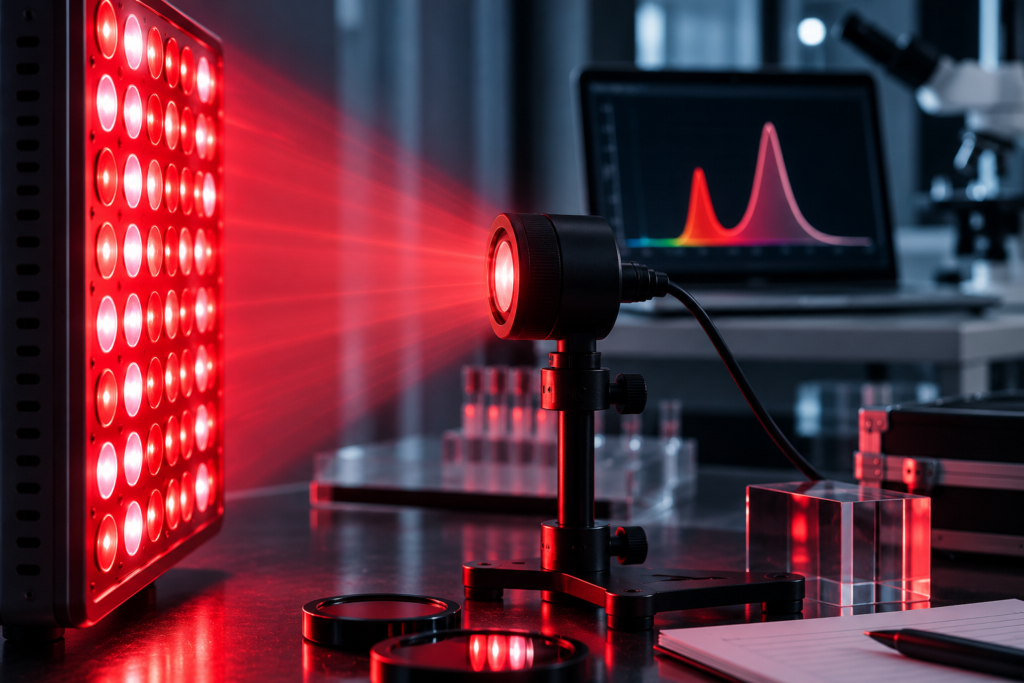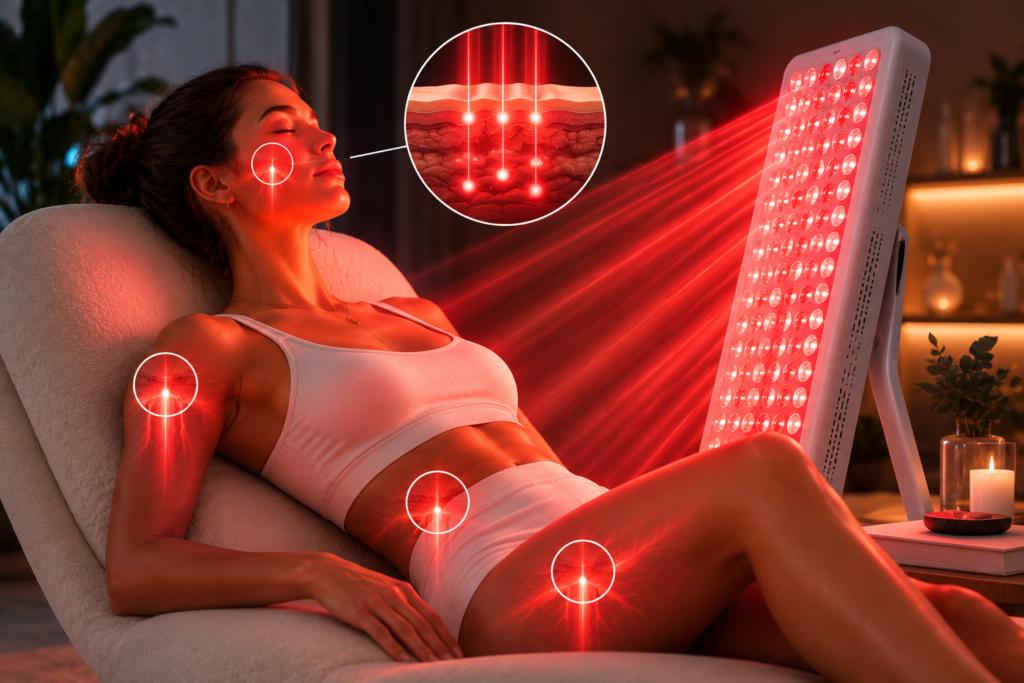
Few wellness topics attract more confident claims than red light therapy and sleep. Marketing language often promises deep, restorative nights, while skeptics dismiss the whole idea. The truth sits in a careful middle, and getting there means separating myth from fact. This article debunks the most common sleep myths about red light therapy with cautious, evidence-based framing, so you can set realistic expectations. Studies on red light therapy sleep myths have drawn increasing attention from researchers.
The goal here is not to hype or to bash, but to be accurate. Red light therapy may, at most, support a calm wind-down routine; it is not a sleep treatment, and the evidence for sleep benefits is very limited. With that anchor in place, let us address the myths one by one. When examining red light therapy sleep myths, it helps to look carefully at the underlying research.
Myth 1: Red Light Therapy Cures Insomnia
This is the most important myth to dispel. Red light therapy does not cure insomnia or any sleep disorder. Cleveland Clinic describes red light therapy as a low-intensity light practice studied mainly for skin and tissue-related goals, not as a treatment for sleep conditions. Insomnia is a recognized medical condition with established, evidence-based treatments, and a skin-directed light device is not among them. [source] The evidence around red light therapy sleep myths remains an active area of investigation.
The fact: If insomnia is a persistent problem, the appropriate step is to consult a healthcare professional, not to rely on a light panel. Framing red light therapy as a cure goes far beyond what any evidence supports. For those exploring red light therapy sleep myths, setting realistic expectations matters.
Myth 2: Red Light Therapy Guarantees Deeper, Better Sleep
No device can guarantee better sleep, and red light therapy is no exception. The evidence linking it to improved sleep is very limited. One small randomized controlled trial in Chinese female basketball players reported improved sleep quality scores after red light exposure, but it was small, involved a specific population, and is not enough to promise deeper sleep for the general public. Single small studies generate hypotheses; they do not establish guarantees. [source] Understanding red light therapy sleep myths requires separating marketing claims from published data.
The fact: Red light therapy may be a pleasant part of a wind-down for some people, but any sense of better sleep is more plausibly tied to a calm, dim, screen-free routine than to a guaranteed effect of the light itself. Individual responses vary, and there is no promise to be made here. Anyone researching red light therapy sleep myths will find the science is still developing.
Myth 3: Red Light Therapy Is the Same as a SAD Light Box
These two tools are routinely confused, but they are fundamentally different. A bright light therapy box, sometimes used for seasonal mood support or to shift circadian timing, delivers intense visible light to the eyes, typically in the morning and often with professional guidance. Red light therapy panels deliver red and near-infrared light to the skin for goals like appearance or recovery. [source] The current state of red light therapy sleep myths research points to early, modest findings.
The fact: The mechanism, the target, and the purpose all differ. Bright light boxes work through the eyes and the circadian system; red light therapy works at the skin. Treating a red light panel as if it were a SAD light box, or vice versa, leads to misguided expectations. They are not interchangeable. Interest in red light therapy sleep myths has grown alongside broader photobiomodulation research.
Myth 4: More Red Light Means Better Sleep
The intuition that a longer or more intense session must help more is mistaken. Across photobiomodulation research generally, the relationship between light dose and effect is not a simple more-is-better line, and there is no evidence that piling on red light improves sleep. For sleep specifically, the limited evidence does not support escalating exposure to chase a benefit. [source] Most published reviews on red light therapy sleep myths call for larger, better-controlled trials.
The fact: If you use red light therapy at all, follow the device’s recommended distance and duration rather than extending sessions. More light is not a path to better sleep, and overdoing exposure offers no sleep advantage. A clear-eyed look at red light therapy sleep myths means separating anecdote from controlled evidence.
Myth 5: Any Light at Night Is Fine If It Is Red
There is a kernel of truth that gets exaggerated here. The Sleep Foundation explains that light, especially blue-enriched light, can suppress the sleep-promoting hormone melatonin, and that managing light at night matters for sleep. Harvard Health’s discussion of blue light similarly highlights that blue wavelengths are particularly disruptive to the body clock at night, while dimmer, warmer light is less so. Red wavelengths are indeed among the gentler choices for evening melatonin. Consulting a healthcare provider about red light therapy sleep myths is always a sensible step.
The fact: Being gentler is not the same as being beneficial or unlimited. A dim, warm light is a reasonable evening choice for light hygiene, but bright light of any color late at night can still be stimulating, and red light is not a license to keep bright lights blazing before bed. The healthy principle is dim and warm, not simply red. Devices marketed for red light therapy sleep myths vary widely in power output and wavelength.
Myth 6: If It Helped Someone Online, It Will Work for You
Personal testimonials are common, but they are not evidence of a reliable effect. Sleep is influenced by countless factors, schedule, stress, environment, caffeine, so it is easy to attribute an improvement to a device when other things changed too. The limited research means individual stories cannot be generalized into a dependable outcome. Practitioners field frequent questions about red light therapy sleep myths from clients.
The fact: Treat glowing testimonials with healthy skepticism. What helps one person may do nothing for another, and the fundamentals of sleep hygiene remain the most dependable levers. Studies on red light therapy sleep myths have drawn increasing attention from researchers.
Myth 7: Skin-Directed Light Reaches the Brain to Reset Sleep
A subtler myth suggests that shining red or near-infrared light on the skin or head somehow reaches the brain to reset sleep cycles. While researchers continue to study photobiomodulation in many areas, there is no established evidence that a consumer red light panel resets sleep timing, and this should not be presented as a known effect. The circadian system is influenced primarily by light reaching the eyes, which is the basis for bright light therapy, not by red light aimed at the skin. When examining red light therapy sleep myths, it helps to look carefully at the underlying research.
The fact: Claims that a skin-directed device reprograms your sleep clock outrun the evidence. If your concern is circadian timing, the relevant, studied tool is appropriately timed bright light to the eyes, ideally with professional guidance, not a red light panel.

The Cautious, Balanced Picture
Pulling the facts together: red light therapy does not cure insomnia, does not guarantee better or deeper sleep, and is not the same as a bright light therapy box. More exposure does not help sleep, and although red light is gentler on melatonin than blue, that is a point about dim, warm evening lighting rather than a treatment claim. At most, red light therapy may be an optional, pleasant part of a calm wind-down, with very limited evidence and realistic expectations.
What Actually Supports Sleep: Red light therapy sleep myths Notes
The reliable levers are unglamorous: a consistent schedule, a dark, quiet, cool bedroom, a relaxing wind-down, dim evening light with fewer bright screens, and sensible habits around caffeine and alcohol. These do far more than any light device, and they are where your effort is best spent.
When to See a Professional
If you regularly cannot fall or stay asleep, feel unrefreshed despite adequate time in bed, or have symptoms that concern you, consult a healthcare professional. Persistent sleep problems and insomnia deserve proper evaluation, and no device, red light or otherwise, replaces medical care.
The Bottom Line
The biggest myths, that red light therapy cures insomnia, guarantees deeper sleep, equals a SAD light box, or works better in larger doses, all collapse under careful, evidence-based scrutiny. Red wavelengths are gentler on melatonin, but that is about dim, warm evening lighting, not a cure. Red light therapy may at most support a calm wind-down with very limited evidence; for real sleep problems, the fundamentals and professional care are what matter.
Frequently Asked Questions
Does red light therapy cure insomnia?
No. Red light therapy does not cure insomnia or any sleep disorder. Insomnia is a recognized condition with established treatments, and persistent insomnia should be evaluated by a healthcare professional.
Is red light therapy guaranteed to give me deeper sleep?
No. The evidence is very limited, resting largely on one small study in a specific group, and no device can guarantee better sleep. Any improvement is more plausibly tied to a calm, dim wind-down than to the light itself.
Is red light therapy the same as a SAD or light therapy box?
No. Bright light boxes deliver intense light to the eyes to influence circadian timing or seasonal mood, usually in the morning. Red light therapy panels are aimed at the skin. They work differently and are not interchangeable.
Does using more red light improve sleep?
No. There is no evidence that more or longer red light exposure improves sleep, and more light is not better. If you use a device, follow its recommended distance and duration.
Is red light safe to use at night because it is gentle on melatonin?
Red wavelengths suppress melatonin less than blue, so a dim, warm light is a reasonable evening choice. But bright light of any color at night can still be stimulating, so the principle is dim and warm, not simply red.
Ready to get your red light therapy device? See our brand reviews and product reviews, and try out our product comparison tool to inform your decision.