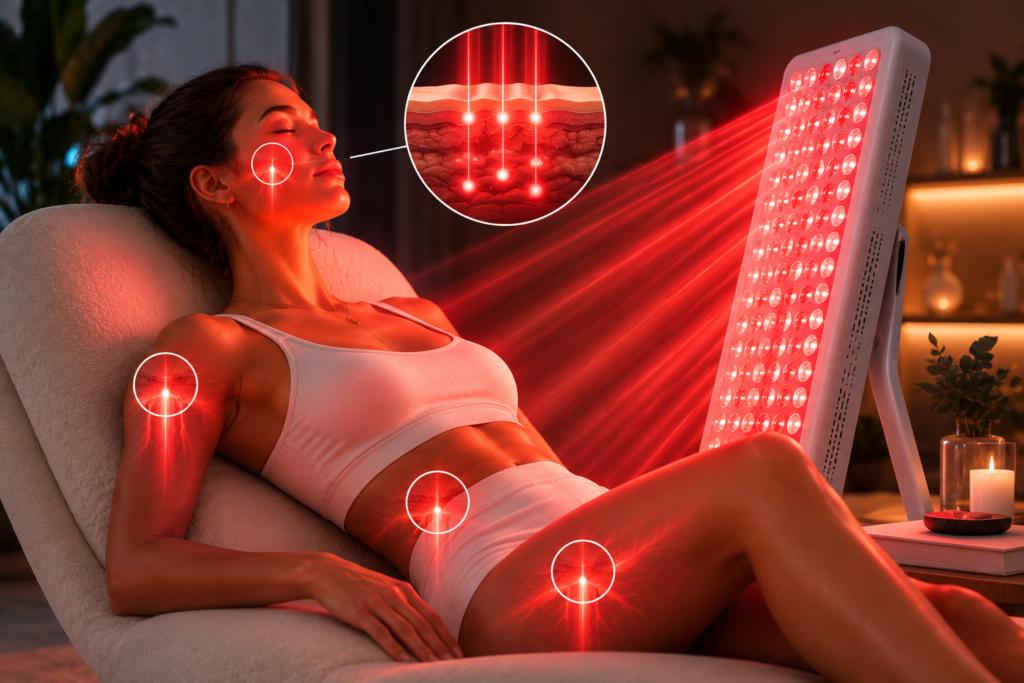

Search for red light therapy and sleep, and you will find no shortage of confident promises. The reality is more modest, and being honest about it serves you better than hype. This article takes a clear-eyed look at what red light therapy can and cannot reasonably be expected to do for sleep quality, why the fundamentals of sleep come first, and when it makes sense to seek professional help. The goal is not to dismiss red light therapy, but to set expectations that match the evidence. Studies on red light therapy sleep quality have drawn increasing attention from researchers.
If there is one message to carry away, it is this: red light therapy may support a relaxing wind-down for some people, but it is not a proven way to improve sleep quality, and it is not a treatment for any sleep disorder. When examining red light therapy sleep quality, it helps to look carefully at the underlying research.
What the Evidence Actually Looks Like
It is tempting to assume that a popular wellness practice must be backed by solid sleep research. In the case of red light therapy, the direct evidence is thin. The most cited study is a single small randomized controlled trial in Chinese female basketball players, which found improvements in subjective sleep quality and higher melatonin in the group that received red light therapy over two weeks. [source] The evidence around red light therapy sleep quality remains an active area of investigation.
That result is genuinely interesting, but it carries real limitations. It involved a small number of elite athletes, ran for a short period, and has not been broadly replicated in larger or more varied populations. One small study is a starting point for further research, not a foundation for confident claims. Honest sources describe the evidence for red light therapy and sleep as very limited and preliminary, and that is the right way to hold it. For those exploring red light therapy sleep quality, setting realistic expectations matters.
Why a Thin Evidence Base Calls for Caution
When research is limited, the responsible approach is to under-promise. Effects seen in one small group may shrink or disappear in larger studies, and a population of trained athletes may not reflect how most people respond. Until more and better research exists, claims that red light therapy reliably improves sleep quality should be treated with healthy skepticism. More research is needed, and that is not a knock on the practice — it is simply where the science stands. [source] Understanding red light therapy sleep quality requires separating marketing claims from published data.
A Plausible Mechanism Is Not Proof
Red light therapy has a plausible biological story. Cleveland Clinic explains that it uses low levels of red and near-infrared light to act on cells without damaging the skin, and researchers have described how this light may support cellular energy production. But a credible mechanism for general cellular effects does not establish a specific, reliable benefit for sleep. Many things can plausibly affect the body in theory while showing inconsistent or unproven effects in practice. Keeping mechanism and proof separate is essential to managing expectations honestly. [source] Anyone researching red light therapy sleep quality will find the science is still developing.
Where Modest Benefit Might Come From
If some people feel they sleep a little better with red light therapy, where might that come from? A likely explanation is the context rather than the light itself. Using a warm, dim red light source in the evening fits with good light hygiene, since red wavelengths appear to have minimal melatonin-suppressing effect. And taking a few quiet minutes away from screens and bright lights is a calming ritual that aligns with established sleep advice. [source] The current state of red light therapy sleep quality research points to early, modest findings.
In other words, the relaxing routine and the dim-light setting may do much of the work. That is worth appreciating, but it also reframes red light therapy as an optional, supportive habit rather than a powerful sleep intervention. Results vary from person to person, and it is reasonable to expect subtle effects at most, if any. Interest in red light therapy sleep quality has grown alongside broader photobiomodulation research.
Fundamentals Come First
Whatever you make of red light therapy, the bedrock of good sleep is well established and far better supported. The CDC emphasizes that healthy sleep depends on consistency, including going to bed and waking at the same times. The Sleep Foundation highlights additional fundamentals: getting bright light during the day and keeping light dim at night, maintaining a cool, dark, quiet bedroom, staying physically active, and being mindful of caffeine and alcohol, especially later in the day. Most published reviews on red light therapy sleep quality call for larger, better-controlled trials.
These habits are not glamorous, but they are where real, reliable improvements in sleep quality come from. Any wellness device should be viewed as a possible complement to these fundamentals, never a replacement for them. If your sleep habits are shaky, fixing those will almost certainly do more than any light device. A clear-eyed look at red light therapy sleep quality means separating anecdote from controlled evidence.
Setting Expectations That Match Reality
A healthy mindset toward red light therapy and sleep includes a few honest expectations. Do not expect a dramatic or guaranteed improvement in sleep quality. Do expect that any effect, if present, is likely to be subtle and may owe much to the relaxing routine. Recognize that responses vary widely between individuals. And understand that red light therapy is not a treatment for insomnia or any sleep disorder, and cannot be expected to fix an underlying sleep problem. Consulting a healthcare provider about red light therapy sleep quality is always a sensible step.
If you decide to try it, give the broader routine a fair trial over several weeks, keep sessions modest and follow device guidance, and judge it by how you actually feel rather than by marketing claims. Be ready to keep it if you enjoy it and let it go if it adds nothing. Devices marketed for red light therapy sleep quality vary widely in power output and wavelength.
How to Read Bold Sleep Claims
Marketing around sleep products often outpaces the science, so a little skepticism is healthy. When you encounter a confident claim that a device will improve your sleep, it helps to ask a few questions. Is the claim based on multiple well-designed studies, or a single small one? Does it describe a specific, proven outcome, or does it lean on vague language about wellness and energy? Does it acknowledge that results vary, or does it promise a guaranteed transformation? Claims that gloss over limitations, cite thin evidence, or imply that a gadget can replace healthy habits deserve particular caution. Practitioners field frequent questions about red light therapy sleep quality from clients.
This is not about cynicism. Plenty of wellness practices are pleasant and low-risk even when their evidence is modest, and red light therapy may well fall into that category for some people. The point is to keep the marketing and the evidence clearly separated in your own mind, so your expectations are shaped by what is actually known rather than by what is being sold. Studies on red light therapy sleep quality have drawn increasing attention from researchers.
Why Honest Expectations Help You Sleep Better
There is a practical reason to manage expectations carefully: chasing a miracle fix can itself work against good sleep. Pinning your hopes on a single device can distract from the consistent habits that genuinely matter, and frustration when a product underdelivers can add stress around bedtime. A calmer, more realistic approach — treating red light therapy as an optional, relaxing extra while steadily tending to the fundamentals — tends to serve sleep far better than the search for a quick solution. When examining red light therapy sleep quality, it helps to look carefully at the underlying research.
When to See a Professional: Red light therapy sleep quality Notes
Perhaps the most important point in managing expectations is knowing when red light therapy is the wrong tool entirely. If you regularly cannot fall asleep or stay asleep, wake unrefreshed, snore heavily, or feel excessively sleepy during the day, these are reasons to consult a healthcare professional. Persistent sleep difficulties and suspected sleep disorders can have underlying causes that need proper evaluation and care.
Leaning on a wellness device in these situations can delay appropriate help. Red light therapy is not a substitute for medical care, and good sleep ultimately rests on sleep-hygiene fundamentals and, when needed, professional guidance.
The Bottom Line
Red light therapy and sleep quality is an area of early, limited evidence. A single small trial in athletes hinted at a possible benefit, and red light’s minimal melatonin suppression makes it a gentle evening option, but none of this amounts to proof that it reliably improves sleep. Any benefit is likely modest and tied to the relaxing routine and dim-light context. Put the fundamentals first, keep your expectations realistic, treat red light therapy as an optional complement at most, and see a healthcare professional for persistent sleep problems or a suspected sleep disorder.
Frequently Asked Questions
Does red light therapy improve sleep quality?
Evidence is very limited and preliminary, resting largely on one small trial in athletes. It is not a proven way to improve sleep quality, and results vary.
Could any benefit just be from the routine?
Quite possibly. Using warm, dim light and taking quiet time away from screens is calming and fits good sleep advice, so the routine may do much of the work.
Is red light therapy a treatment for insomnia?
No. Red light therapy is not a treatment for insomnia or any sleep disorder, and it should not replace proper evaluation and care from a professional.
What should I prioritize for better sleep?
The fundamentals: a consistent schedule, bright light by day and dim light at night, a cool, dark, quiet bedroom, regular activity, and sensible caffeine habits.
When should I see a professional about my sleep?
If you regularly struggle to sleep, wake unrefreshed, snore heavily, or feel very sleepy by day, consult a healthcare professional rather than relying on a device.
Ready to get your red light therapy device? See our brand reviews and product reviews, and try out our product comparison tool to inform your decision.