Years of sun exposure leave their mark on skin: fine lines, rough texture, uneven tone, and dark spots are all common signs. Unsurprisingly, many people wonder whether red light therapy can help reverse this “sun damage.” It is a reasonable question, but it requires an especially careful answer, because the phrase “sun damage” covers everything from cosmetic photoaging to serious medical concerns. This guide explores red light therapy sun damage research, what current studies suggest, and why it’s important to distinguish cosmetic photoaging from medical sun damage.
The careful summary is this: some research suggests red light therapy may support the appearance of photoaged skin — such as the look of fine lines and texture — for some people. It does not reverse the underlying medical effects of ultraviolet (UV) damage, does not treat skin cancer or precancerous changes, and does not replace sunscreen or other sun-protective habits.
Understanding Red Light Therapy Sun Damage
The single most important idea in this article is that “sun damage” means two quite different things, and conflating them leads to false expectations.
Photoaging: The Cosmetic Appearance
Photoaging refers to the visible, cosmetic changes associated with long-term sun exposure: fine lines and wrinkles, a leathery or rough texture, sallowness, and uneven pigmentation. According to the National Institute on Aging, sun exposure is a major contributor to the visible changes we associate with aging skin, accelerating the loss of firmness and the development of spots and wrinkles. These are largely appearance-related concerns.
Medical Damage: A Matter for a Dermatologist
Sun exposure also causes damage at a deeper, medical level, including DNA damage in skin cells that can contribute to actinic (solar) keratoses and skin cancers. These are medical conditions, not cosmetic ones. No wellness device, including red light therapy, treats, cures, or prevents skin cancer or precancerous lesions. Any new, changing, non-healing, or suspicious spot — a mole that changes shape or color, a sore that will not heal, a rough scaly patch — should be evaluated promptly by a board-certified dermatologist. This is essential and takes priority over any cosmetic consideration.
What Red Light Therapy Sun Damage Research Shows
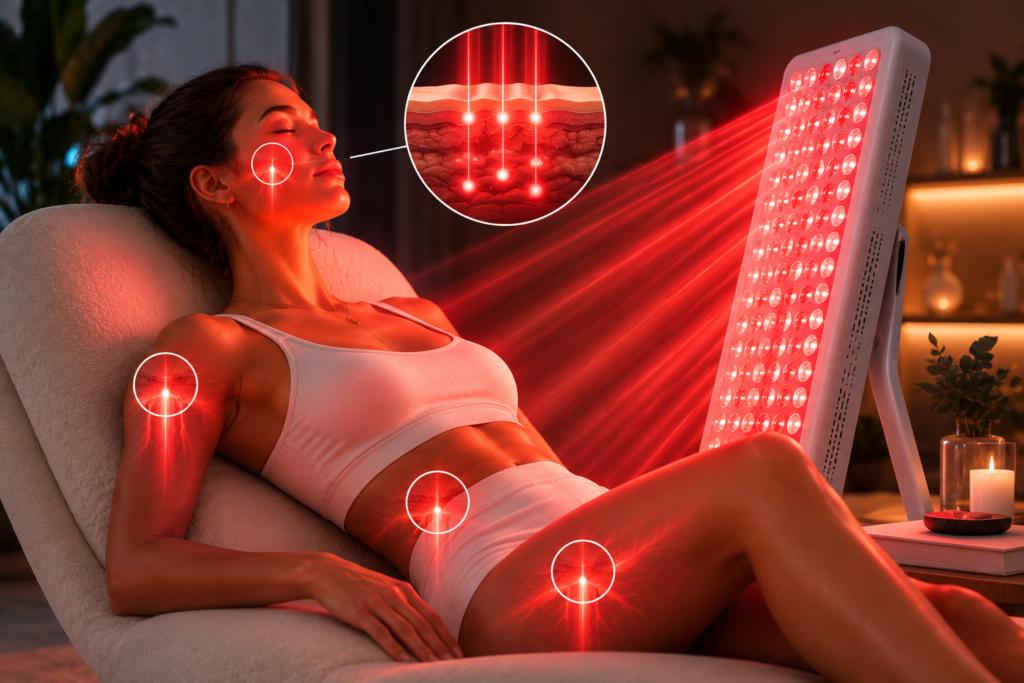
With that crucial distinction in place, what does research suggest about red light therapy and the appearance of photoaged skin? Red light therapy, or photobiomodulation, uses low-intensity red and near-infrared light. Cleveland Clinic describes it as a method that may be used for skin-appearance goals such as reducing the look of wrinkles and improving skin tone, without the UV radiation that causes sun damage in the first place.
Research on reversing visible signs of skin aging through red light photobiomodulation explores how this light may influence skin cells and the structural proteins that affect firmness and texture. The implication for photoaging is that red light therapy may, over weeks of consistent use, support the appearance of smoother, more even-looking skin for some people. This is a cautious, appearance-focused statement — not a claim that the therapy reverses the cellular damage UV light causes.

Red Light Therapy Sun Damage: Appearance vs. Repair
It is tempting to read “improves the appearance of photoaged skin” as “reverses sun damage,” but these are not the same. Supporting the look of fine lines or texture is a cosmetic outcome. The underlying photodamage — including DNA changes and the cumulative biological effects of UV exposure — is not something red light therapy has been shown to undo. Marketing that promises to “reverse sun damage” overstates the evidence and blurs the line between cosmetic and medical effects. A responsible expectation is improvement in appearance for some people, with results that vary.
Preventing Future Red Light Therapy Sun Damage Concerns
There is a logical reason to treat sun protection, rather than red light therapy, as the centerpiece of caring for sun-exposed skin: photoaging is cumulative. According to the National Institute on Aging, sun exposure builds up over a lifetime and is a leading driver of the wrinkles, rough texture, and uneven pigmentation people associate with aged skin.
Every additional unprotected exposure adds to that total. This means that even if a cosmetic step modestly improves how photoaged skin looks, ongoing unprotected sun exposure keeps working in the opposite direction. A device used a few times a week cannot out-pace damage that continues daily. Viewed this way, the most powerful thing you can do for sun-exposed skin is simply to limit further exposure — which makes sunscreen and sun-smart habits the foundation, and anything cosmetic a distant secondary consideration.
Red Light Therapy Sun Damage Is Not Sun Protection
This point deserves its own section because it is so important. Red light therapy uses red and near-infrared wavelengths, not UV, so it does not tan or burn skin — but it also offers no protection against the sun. It is not a sunscreen, does not provide an SPF, and does nothing to shield skin from future UV damage. Using red light therapy is not a reason to skip sun protection.
The most effective way to address sun damage is to prevent more of it. That means daily broad-spectrum sunscreen, seeking shade, protective clothing and hats, and avoiding peak-intensity sun and tanning beds. Any cosmetic benefit you might hope for from red light therapy will be undermined if ongoing UV exposure continues to age and damage the skin. Sun protection is the foundation; red light therapy is, at most, a possible supportive add-on.
When Red Light Therapy Sun Damage Requires a Dermatologist
Because sun-damaged skin sits at the intersection of cosmetic and medical concerns, professional evaluation matters. See a board-certified dermatologist if you notice any new or changing spots, moles, or growths; a sore that does not heal; rough, scaly patches; or any lesion that bleeds, itches, or looks different from your other spots. Regular skin checks are wise for anyone with significant sun exposure history. A dermatologist can also advise on evidence-based treatments for photoaging and pigmentation that go beyond what a wellness device offers. Do not use red light therapy as a reason to delay getting a suspicious spot checked.
Using Red Light Therapy for Sun Damage Safely
If your dermatologist has no concerns and you want to explore red light therapy for the look of photoaged skin, use it thoughtfully. Apply it to clean, bare skin, follow the manufacturer’s guidance on distance and time, and be consistent over several weeks. Keep expectations modest: gradual, subtle improvement in appearance is the realistic best case, and some people notice little. Most importantly, continue rigorous daily sun protection, since that is what actually limits further damage. For most healthy adults, consumer-dose red light therapy is low-risk, but protect your eyes, and consult a professional first if you are pregnant, take photosensitizing medication, or have a skin condition.
The Bottom Line
Red light therapy sun damage research suggests it may support the appearance of photoaged skin for some people, but it does not reverse UV damage, prevent skin cancer, or replace daily sun protection. It does not reverse the medical effects of UV damage, does not treat or prevent skin cancer, and is not a substitute for sun protection or sunscreen. Any suspicious or changing spot needs a board-certified dermatologist. Think of red light therapy as a possible cosmetic supplement, and sun protection as the genuine, evidence-based foundation for caring for sun-exposed skin.
Ready to get your red light therapy device? See our brand and product reviews, and try out our product comparison tool to inform your decision.
Frequently Asked Questions
Can red light therapy reverse sun damage?
It may support the appearance of photoaged skin, such as the look of fine lines and texture, for some people. It does not reverse the underlying medical effects of UV damage or undo cellular changes, and results vary.
Does red light therapy protect my skin from the sun?
No. Red light therapy uses red and near-infrared light, not UV, so it neither tans nor protects against the sun. It is not a sunscreen and does not replace any sun-protective habit.
Can red light therapy treat sun spots or skin cancer?
No. Red light therapy is not a treatment for skin cancer, precancerous lesions, or other medical sun damage. Any new, changing, or suspicious spot should be evaluated by a board-certified dermatologist.
What is the difference between photoaging and sun damage?
Photoaging refers to cosmetic changes like wrinkles and uneven tone, while medical sun damage includes DNA changes that can lead to skin cancers. Red light therapy concerns appearance only, not the medical aspects.
What actually helps prevent further sun damage?
Daily broad-spectrum sunscreen, shade, protective clothing, avoiding peak sun, and not using tanning beds. These are the evidence-based foundation; red light therapy is, at most, a possible supportive add-on.
This article is for general educational purposes only and is not medical advice. Red light therapy is not a substitute for professional care. Talk with a qualified healthcare professional about your individual situation.