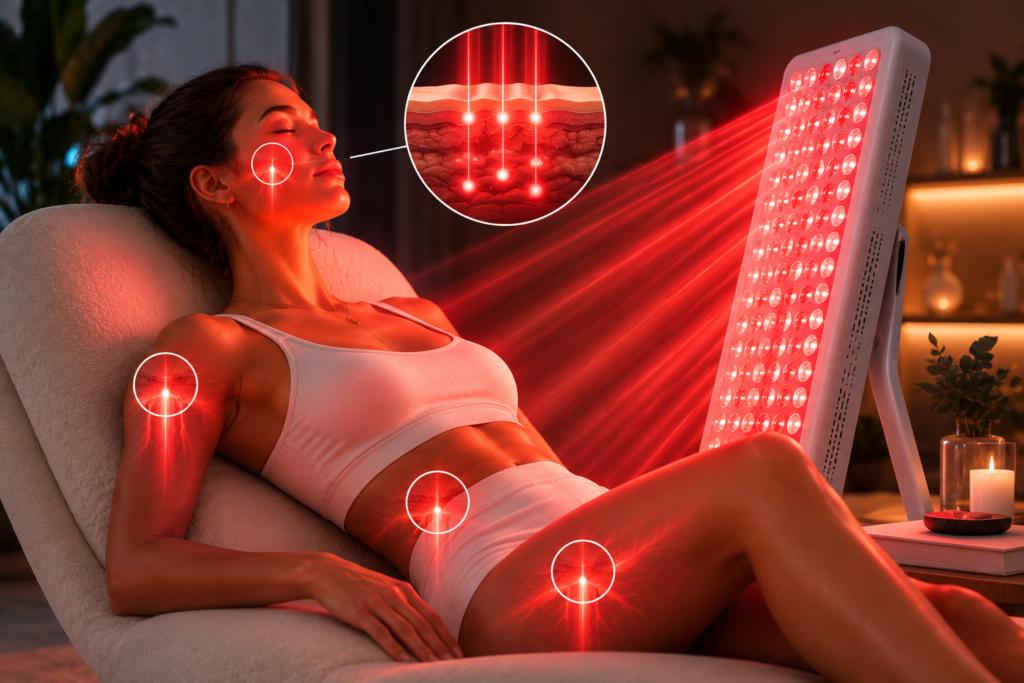

One of the more specific claims in red light therapy marketing is that it reduces red light therapy waist circumference, taking inches off your midsection. Unlike vague promises about boosting metabolism, this claim points to something that has actually been measured in studies: the circumference of treated areas of the body. That makes it worth examining carefully. This article reviews what red light therapy waist circumference studies actually measured and why the results are not the same as weight loss or fat loss.
The goal here is not to dismiss the research but to read it accurately. Some short trials have reported small reductions in waist or other circumference measurements after a series of low-level laser or light sessions. Red light therapy waist circumference findings are a narrow, modest result rather than evidence of meaningful weight loss.
What These Studies Actually Measured
The key to understanding red light therapy waist circumference research is recognizing what the primary outcome was: circumference measured at a specific treated area over a short period. A randomized controlled trial by Jackson and colleagues examined low-level laser therapy as a non-invasive approach for body contouring and reported reductions in the circumference of treated areas. A separate six-week protocol reported reductions across the waist, hip, thigh, and upper abdomen, and another study examined circumference reduction at the hip, waist, and upper abdomen in individuals with obesity.
Notice what these outcomes are and are not. They are short-term measurements of how many centimeters around a treated body part changed during the study. Red light therapy waist circumference outcomes are short-term measurements of centimeters — not total body weight loss, fat percentage, or lasting change.
Why Circumference Is Not the Same as Weight Loss
It is tempting to assume that a red light therapy waist circumference reduction means fat has been lost, but the two are not equivalent. A change in the circumference of a treated area can occur without a corresponding change in body weight, and a short-term tape-measure difference does not establish that fat was meaningfully or permanently reduced. Reviews of low-level laser therapy for body contouring are explicit that the mechanism behind these changes is not fully understood and that stand-alone efficacy has not been adequately established.
This is why responsible sources avoid describing red light therapy as a weight-loss method. Even when a study reports fewer centimeters at a treated spot, that finding sits a long way from the claim that the therapy causes weight loss. The honest framing is that red light therapy waist circumference trials measured small, localized, short-term circumference changes, not weight or true fat loss.

The Limits of the Evidence
Beyond the question of what was measured, the studies themselves come with significant limitations that temper how much weight they can bear.
Small and Short
Many of these trials involved relatively small numbers of participants and ran for only a few weeks. Small, short studies can detect short-term effects but cannot tell us whether changes last, whether they generalize to different people, or whether they hold up under more rigorous conditions. A six-week reduction in a measurement is not evidence of a durable outcome.
Funding and Conflicts
Research in the body-contouring space is sometimes connected to the companies that make the devices, and industry involvement can introduce bias even in well-intentioned studies. This does not automatically invalidate the findings, but it is a reason to interpret positive results cautiously and to weight independent reviews heavily. A comprehensive review of low-level laser therapy for fat-layer reduction underscores that the evidence is preliminary and that more rigorous work is needed.
Uncertain Mechanism
As the efficacy review notes, exactly how these circumference changes occur is not well established. When the mechanism behind a measured effect is unclear, confidence in that effect — and in any claims built on it — should be correspondingly limited.
How to Read “Inches Off” Marketing
Armed with this context, red light therapy waist circumference marketing looks rather different from how it is often presented. A claim that a device reduces waist circumference might technically echo a study finding, while still being misleading if it implies weight loss, fat loss, or lasting transformation. The Federal Trade Commission has cautioned that several categories of weight-loss claims are essentially never credible, and dramatic body-change promises deserve that skepticism. A measured, short-term red light therapy waist circumference change is not a weight-loss result, however it is dressed up.
The most accurate reading is narrow: under specific study conditions, some people showed small, temporary reductions in the measurement around treated areas. Whether that translates into anything a person would value in everyday life, and whether it lasts, remains unsettled.

Why Measurement Choices Matter
Part of what makes red light therapy waist circumference studies easy to over-interpret is that circumference is a convenient but limited measurement. A tape measure around the waist can shift for many reasons unrelated to lasting fat loss, and a small change of a centimeter or two can look impressive in a headline while meaning little in practice. This is one reason researchers and reviewers are careful to describe exactly what was measured rather than letting “reduced circumference” stand in for “lost weight” or “lost fat.”
It also explains why the choice of outcome shapes the story a study can tell. A trial designed to measure short-term circumference at a treated area can only speak to short-term circumference at a treated area. It cannot, on its own, answer the bigger questions people actually care about: whether body composition changed meaningfully, whether any change persisted, and whether the approach does anything for overall health or weight. Those questions require different, more rigorous study designs that the current evidence base has not fully provided.

Putting the Findings in Context
Set against the wider picture, red light therapy waist circumference studies are a modest piece of a cautious story. The efficacy review concludes that stand-alone efficacy is inadequate, and the comprehensive fat-layer review describes the evidence as preliminary. Neither supports the leap from a short-term tape-measure change to a weight-loss claim. Responsible framing keeps red light therapy waist circumference expectations low and never describes it as a way to lose weight.
What This Means for You
If you are considering red light therapy waist circumference changes as a goal, the realistic takeaway is to keep expectations very modest. It is not a weight-loss tool, and it is not a substitute for the fundamentals. For actual weight management, the evidence continues to point to nutrition, regular physical activity, adequate sleep, and supportive behavior change, as reflected in public health guidance from the CDC.
It is also wise to consult a qualified professional before pursuing body-contouring procedures, both to understand what is realistic and to make sure the approach is appropriate for you. Red light therapy is not a replacement for medical care or for proven weight-management habits.
The Bottom Line
Red light therapy waist circumference studies have measured small, short-term reductions at treated areas, but these were narrow findings from limited trials with an uncertain mechanism. A change in a tape-measure reading at a treated spot is not weight loss or true fat loss, and reviewers conclude that stand-alone efficacy is inadequate. Read “inches off” claims with care, keep expectations modest, and rely on proven fundamentals — with red light treated, if at all, only as a possible short-term appearance adjunct.
Ready to get your red light therapy device? See our brand and product reviews, and try out our product comparison tool to inform your decision.
Frequently Asked Questions
Do studies show red light therapy reduces waist size?
Some small, short trials have reported reductions in the circumference of treated areas, including the waist, over a few weeks. Red light therapy waist circumference stand-alone efficacy has not been adequately established, according to reviewers.
Is a smaller waist measurement the same as losing weight?
No. A change in the circumference of a treated area is not the same as weight loss or true fat loss. A red light therapy waist circumference change should not be called a weight-loss result.
Why should I be cautious about these studies?
Many were small and ran only a few weeks, some research in this area has industry connections, and the mechanism behind any circumference change is not well understood. These limitations mean positive findings should be interpreted carefully rather than treated as proof.
Does ‘lose inches’ marketing reflect real results?
Red light therapy waist circumference marketing can echo a study finding while still being misleading if it implies weight loss or lasting transformation. The Federal Trade Commission warns that dramatic weight-loss claims are often not credible, and a short-term, localized measurement change is not a weight-loss outcome.
What should I rely on for actual weight management?
Public health guidance points to nutrition, regular physical activity, adequate sleep, and supportive behavior change as the proven fundamentals. Red light therapy, if used at all, should be treated only as a possible short-term appearance adjunct and never as a substitute for medical care.
This article is for general educational purposes only and is not medical advice. Red light therapy is not a substitute for professional care. Talk with a qualified healthcare professional about your individual situation.