
Not long ago, red light therapy meant sitting in front of a rigid panel or visiting a clinic. Today, the same idea is being built into wraps, belts, pads, and flexible garments you can fasten around a knee, shoulder, or torso and wear while moving around. These wearable devices are one of the most visible trends in the category, promising convenience and targeted coverage. They are genuinely interesting — and, like any trend, they come with trade-offs worth understanding.
This article looks at how wearable red light therapy became possible, what these devices do well, where their limitations lie, and how to keep expectations realistic given the current state of the evidence. Understanding wearable red light therapy helps explain why flexible wraps and pads have become one of the fastest-growing categories in light therapy devices.
How Wearable Red Light Therapy Became Possible
The shift toward wearables is largely a story about light-emitting diodes (LEDs). Earlier light-based therapy often relied on lasers, which are powerful but rigid, costly, and concentrated on small areas. As researchers compared lasers and LEDs, LEDs emerged as a practical alternative for delivering red and near-infrared light over broader areas, and they are small, energy-efficient, and increasingly inexpensive.
That miniaturization is what allows dozens of tiny LEDs to be mounted on a thin, bendable backing and powered by a small battery. The result is a device that conforms to the body’s curves, which is difficult to achieve with a flat panel. In short, the same component revolution that put efficient lighting into phones and homes also made flexible, portable light therapy feasible. Without advances in LED technology, wearable red light therapy would not exist in its current form.
The Appeal of Wearable Red Light Therapy
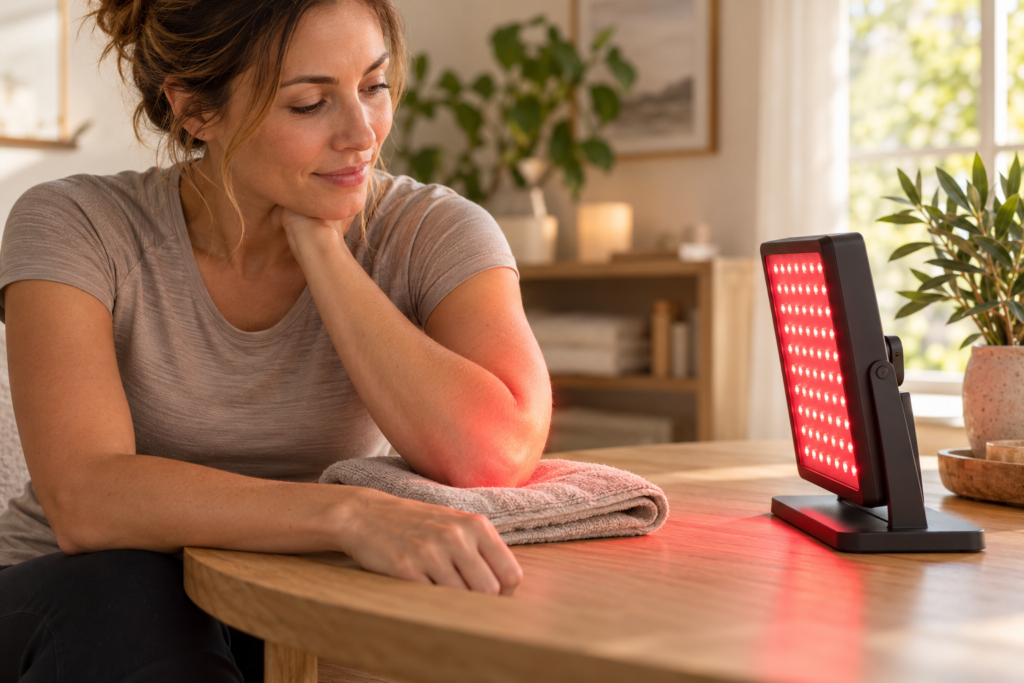
The central promise of a wearable is contact and contour. Because a wrap sits directly against the skin and curves around a joint or limb, it can place light close to the target area without you having to hold a position in front of a panel. For someone focused on a specific spot — a single knee, an elbow, the lower back — that targeted, hands-free design is appealing.
Portability adds to the draw. A foldable pad or wrap can travel, be used while reading or working, and fit into a routine more easily than a large fixture. For people whose main barrier is convenience, wearables lower it.

Wearable Red Light Therapy Trade-Offs to Understand
Convenience, however, involves compromises, and the most important ones concern coverage, irradiance, and dose.
Coverage Versus Area
A wrap covers a small region well but cannot treat large areas the way a full-body panel can. If your goals span multiple body parts, a single wearable may require many sessions or simply may not reach everything. The right tool depends on whether your goal is focal or broad.
Irradiance and Output
Small, battery-powered devices may emit less total light than larger, plugged-in panels. Because the relationship between dose and effect is biphasic — a moderate dose tends to help while too little does little — a low-output wearable used briefly might not deliver a meaningful dose, even though it touches the skin. Skin contact is not the same as adequate dose.
Dose and Session Time
On the other hand, because a wrap sits against the skin, the distance between light and tissue is minimal, which can be efficient. The key is that the manufacturer provides honest irradiance figures and sensible session guidance so you can judge whether the device delivers a reasonable dose in the time suggested. Without those numbers, it is hard to know what you are actually getting.
Depth and Wavelength Still Apply
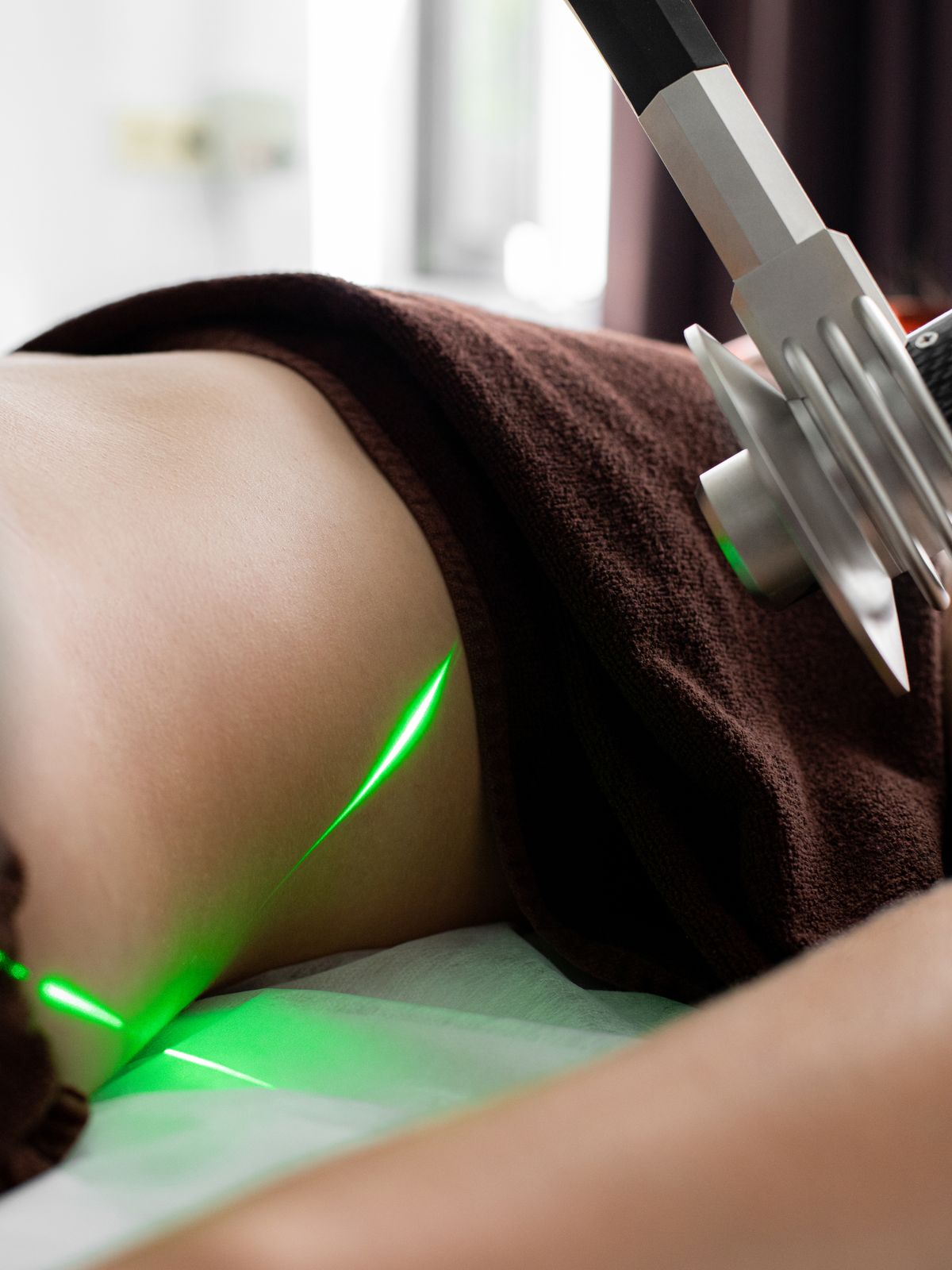
Wearables do not change the underlying physics. Research measuring light in human tissue shows that longer near-infrared wavelengths generally penetrate more deeply than red wavelengths, so a wrap aimed at deeper tissue should emphasize near-infrared, while one aimed at the skin’s surface can rely more on visible red. A flexible form factor is convenient, but it does not let red light reach deeper than its wavelength allows. Checking the stated wavelengths remains as important for a wrap as for a panel.
What the Evidence Says About Wearable Red Light Therapy
The cellular mechanism behind red light therapy is well studied. Researchers, including Michael Hamblin and colleagues, describe how red and near-infrared light may be absorbed by mitochondrial targets and support cellular energy and signaling. That mechanism applies regardless of whether the light comes from a panel or a wrap. Current research suggests wearable red light therapy relies on the same biological mechanisms as panels and other LED devices.
What is less settled is how reliably any given device produces specific real-world benefits. Many studies are small, use varied devices and settings, and report mixed results. Wearables are a relatively new form factor, so evidence specific to a particular wrap or pad is often limited. It is fair to say a wearable may support goals like recovery or skin appearance for some people, but it is not accurate to promise guaranteed outcomes. The newness of the format is a reason for measured expectations, not breathless ones.
Wearable Red Light Therapy Safety Considerations
For most healthy adults, red light therapy at consumer doses is generally considered low-risk, with side effects that tend to be mild and temporary, such as brief warmth or redness. Because wearables sit directly on the skin, it is sensible to follow guidance on session length and to notice any persistent discomfort or heat. As with any device emitting near-infrared light, protecting the eyes is worth considering, especially if the wearable is near the face.
Anyone who is pregnant, takes medication that increases light sensitivity, or has a relevant medical or skin condition should consult a healthcare professional before starting. Red light therapy, in any form, is a complement to good health habits rather than a replacement for medical care.
Why LEDs Matter for Wearable Red Light Therapy
The move toward wearables also reframes an old debate about whether lasers or LEDs are the “better” light source. Comparisons of the two note that each has characteristics suited to different purposes: lasers deliver concentrated, coherent light, while LEDs spread light over larger areas at lower cost and in flexible arrays.
For a wearable, the LED’s ability to be distributed across a bendable surface is the entire point — you could not realistically wrap a laser around a knee. This does not make LEDs universally superior; it means they are the right tool for the wearable form factor. Understanding that helps explain why nearly every wrap and pad on the market uses LEDs, and why claims that one light source is simply “stronger” miss the more important question of whether a device delivers an appropriate dose to the target area.

Setting Realistic Expectations
Perhaps the most useful mindset for wearable red light therapy is patience and realistic expectations. The convenience of a device you can wear while working should not be mistaken for evidence that it does more, and the novelty of a flexible form factor does not accelerate results. Studies that report benefits typically involve weeks of consistent use, and individual responses vary widely. A wearable earns its place by making consistency easier, not by promising faster or larger effects than a panel. Viewed as one supportive habit within a broader routine — rather than a gadget that does the work for you — a wrap or pad is far more likely to leave you satisfied.
Choosing and Using Wearable Red Light Therapy Devices
If a wearable appeals to you, treat it like any other device: check the stated wavelengths, look for irradiance measured at the contact surface, and read the recommended session time. Match the wearable to a focal goal rather than expecting it to replace whole-body coverage, and give any routine several weeks of consistent use before judging it. A wearable can be a genuinely convenient way to fit light therapy into daily life — provided you keep its trade-offs and the still-developing evidence in mind.
The Bottom Line
Wearable red light therapy devices exist because efficient LEDs can now be mounted on flexible, portable backings, bringing targeted, hands-free convenience to a category once dominated by rigid panels. They shine for focal goals and ease of use, but they involve real trade-offs in coverage, irradiance, and dose, and the evidence for any specific device is still maturing. Approached with transparency about specifications and realistic expectations, a wearable can be a useful tool — not a shortcut, and not a substitute for medical care.
Ready for your red light therapy device? See our product and brand reviews to help inform your decision on the best device for you. Also, you can try out our product comparison shopping tool.
Frequently Asked Questions
How is wearable red light therapy different from panels?
Wearable red light therapy uses flexible LED wraps and pads that contour to the body for targeted, hands-free treatment, while rigid panels cover larger areas from a fixed distance.
Why did LEDs make wearables possible?
LEDs are small, efficient, and inexpensive, so dozens can be mounted on a thin, bendable surface and powered by a battery. This is far harder to achieve with lasers or large fixtures.
Do wearables deliver enough light to matter?
It depends on the device. Because dosing is biphasic, a low-output wearable used briefly may not deliver a meaningful dose. Look for honest irradiance figures and sensible session guidance rather than assuming skin contact is enough.
Are wearables proven to work better than panels?
No. Wearable red light therapy uses the same underlying biological mechanisms as panels, but current evidence does not show that wearable devices are inherently more effective.
Are wearable red light devices safe?
For most healthy adults, consumer-dose red light therapy is generally considered low-risk, with mild, temporary effects. Follow session guidance, consider eye protection near the face, and consult a professional if you are pregnant, photosensitive, or have a relevant condition.
This article is for general educational purposes only and is not medical advice. Red light therapy is not a substitute for professional care. Talk with a qualified healthcare professional about your individual situation.