OVERALL
4
DEVICES
Total Spectrum Mini, Total Spectrum Compact, Total Spectrum Max, Total Spectrum Ultra, Total Spectrum Elite
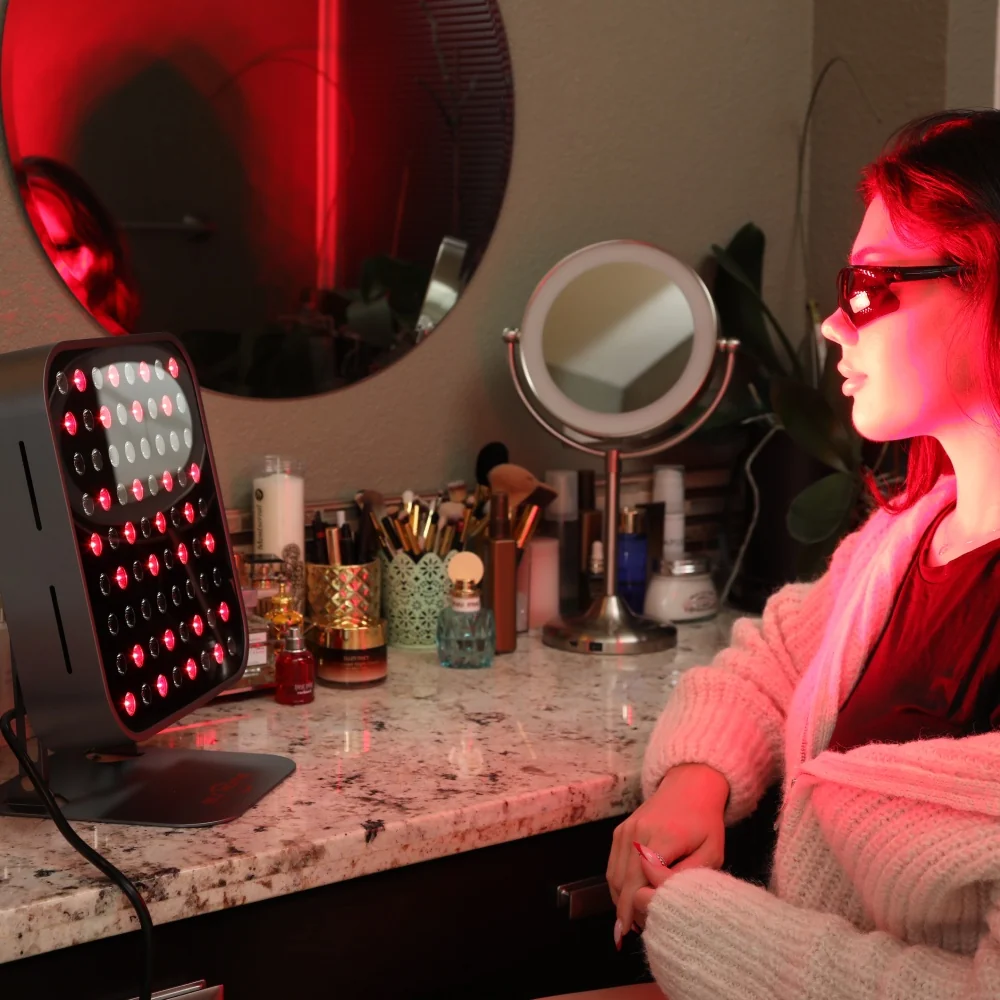
2023
Targeted Panels ~ Full-Body Panels
From $495
480nm, 630nm, 660nm, 810nm, 830nm, 850nm & 1064nm
About RLT Home
RLT Home is a red light therapy company focused specifically on at-home panels rather than masks, belts, or a huge catalog of unrelated wellness devices. Its Total Spectrum lineup includes five panel sizes, from the smaller MINI for targeted areas to the much larger ELITE for full-body sessions, and every model uses the same seven wavelengths: 480, 630, 660, 810, 830, 850, and 1064 nm. That makes the lineup easier to compare because moving up in price is mainly about getting more LEDs and covering more of your body at once, not unlocking an entirely different version of the technology. RLT Home also includes preset modes, adjustable channels, a three-year panel warranty, and a 60-day home trial, putting it firmly in the premium at-home panel category.
Editor's Take
RLT Home makes the most sense for someone who wants a feature-heavy panel with seven wavelengths but doesn’t want to manually figure out every setting from scratch. The panels aren’t cheap, but the consistent technology across all five sizes, preset modes, three-year warranty, 60-day trial, and strong customer-service feedback give the brand more than specifications alone to stand on.
Some red light therapy companies seem determined to put LEDs into every object imaginable.
RLT Home takes a much narrower approach.
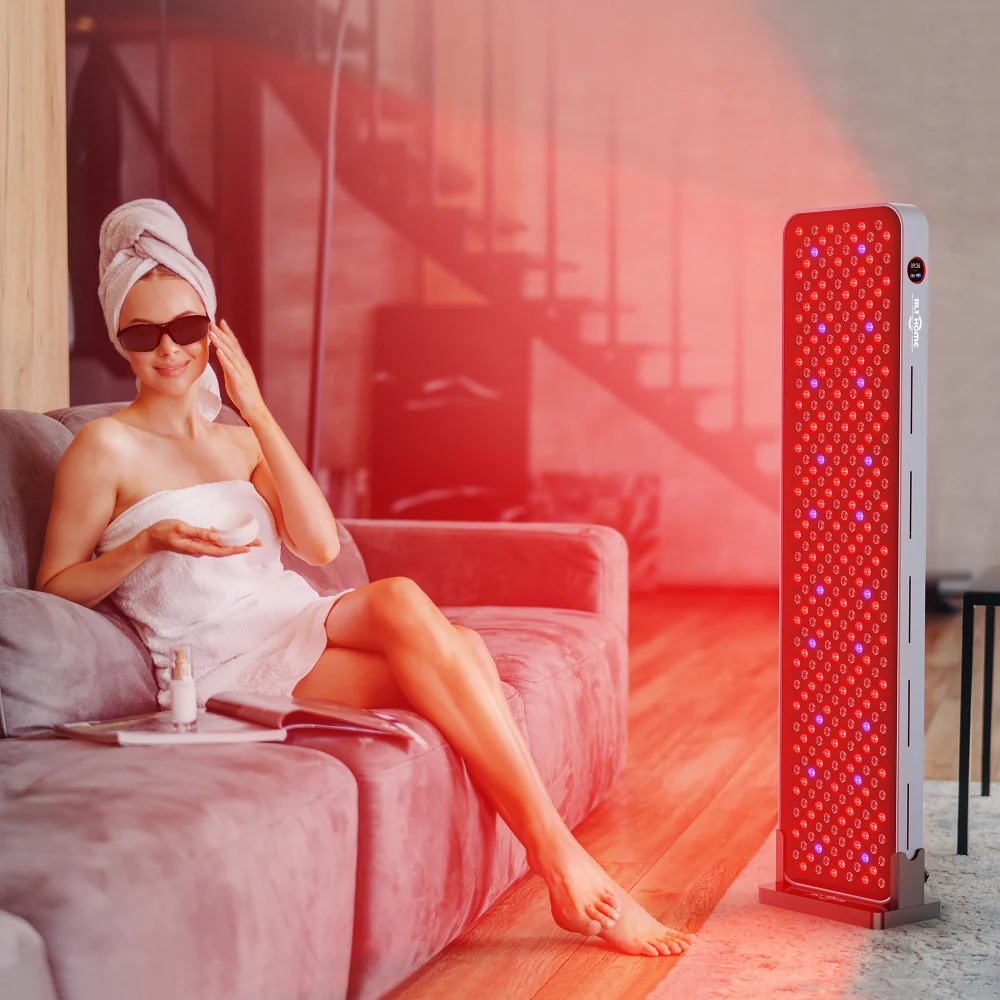
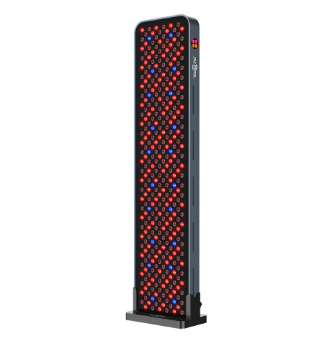
The company’s main lineup consists of five Total Spectrum panels: MINI, COMPACT, MAX, ULTRA, and ELITE.
That’s pretty much the decision you’re making.
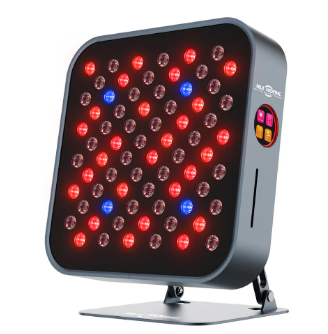
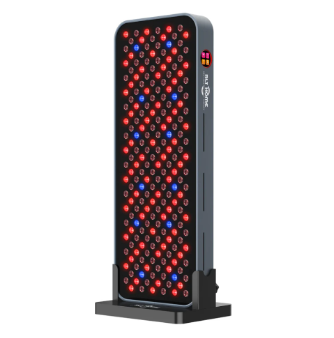
The MINI has 72 LEDs and is meant for smaller, targeted areas. The COMPACT moves up to 216 LEDs and more coverage. The MAX has 360 LEDs, the ULTRA has 480, and the ELITE reaches 864 LEDs for substantially wider full-body coverage.
We actually like this approach.
You don’t have to figure out whether one product is a belt, another is a mask, and three nearly identical panels somehow have completely different technology. You decide how much coverage you need and work from there.
This is probably one of the most important things to understand about RLT Home.
Buying the smaller MINI doesn’t mean you’re getting the “basic” light spectrum while the person spending thousands on the ELITE gets the good stuff.
Every Total Spectrum panel uses 480, 630, 660, 810, 830, 850, and 1064 nm wavelengths.
That gives you blue light, two red wavelengths, and four near-infrared wavelengths across the same platform.
RLT Home also publishes the percentage allocated to each wavelength. According to the company, approximately 6% of the output is allocated to 480 nm, 19% each to 630, 660, and 810 nm, 14% each to 830 and 1064 nm, and 9% to 850 nm.
That’s more useful than simply saying a panel has seven wavelengths.
Two devices can technically include the same number of wavelengths while distributing their LEDs very differently. Knowing the allocation gives you a better idea of what the panel is actually emphasizing.
RLT Home spends a lot of time explaining why it chose these seven wavelengths.
That’s fair. Wavelength selection is an important part of photobiomodulation.
But we’d still avoid turning this into a numbers competition.
A seven-wavelength panel isn’t automatically seven times better than a panel with one red and one near-infrared wavelength. Different wavelengths have different optical properties, and research doesn’t support the idea that simply adding more of them guarantees a better outcome for everyone.
The more useful question is whether you’re interested in having access to several parts of the red and near-infrared spectrum and whether you’ll actually use the additional control RLT Home gives you.
If you are, the Total Spectrum setup becomes much more interesting.
This is probably one of our favorite things about RLT Home’s approach.
Seven wavelengths and multiple adjustable channels sound great until you’re standing in front of the panel wondering what you’re actually supposed to press.
RLT Home tries to solve that with nine pre-built modes.
The company includes presets built around different goals, including skin, pain and inflammation, sleep, and mental health and brain-related use. The settings automatically adjust the panel’s light channels instead of requiring you to manually choose every intensity.
We’d be careful about interpreting the names of those modes as promises that the panel will treat a particular medical problem. A preset called “Pain & Inflammation,” for example, doesn’t establish that the device will eliminate someone’s pain.
But from a usability standpoint, presets make sense.
Someone new to red light therapy may want a simple starting point rather than immediately trying to design their own session.
The presets aren’t your only option.
RLT Home divides the wavelengths into four controllable channels and lets you adjust intensity and pulsing.
That’s where the panels become more interesting for someone who already understands red light therapy or simply wants more control as they learn.
You can use a preset when you want something easy or move into the manual controls when you want to change how the session is configured.
We prefer that over a system that forces everyone into one extreme or the other.
A beginner doesn’t need to become a photobiomodulation researcher before their first session, while someone who wants more control isn’t permanently locked into a few factory presets.
RLT Home doesn’t require an app or Bluetooth connection to control its panels.
For some shoppers, that may initially sound less advanced.
We’re not convinced it is.
The controls are built into the device, which means you aren’t relying on an app continuing to receive updates, maintaining a Bluetooth connection, or collecting information through your phone just to use your red light panel.
RLT Home specifically promotes this as a privacy feature because the panels don’t need an internet or app connection.
If controlling everything from your phone is important to you, another brand may suit you better.
If you just want to walk up to the panel, choose your settings, and use it, keeping things offline can actually be a plus.
The MINI is where we’d start if you’re mostly interested in targeted use.
It has 72 LEDs and uses the same seven wavelengths as the larger RLT Home panels. At the time of our review, it was listed at $495 during a sale, down from a regular price of $695.
That’s still a substantial amount of money for a small panel.
What you’re getting, though, isn’t a stripped-down two-wavelength version of the larger devices. You’re primarily giving up treatment area.
That makes the MINI easier to justify for someone who specifically wants to use red light on their face, knees, joints, or another relatively small area and likes RLT Home’s wavelength and control system.
If you know from the beginning that you want to cover your entire back or most of your body, we’d skip the small-panel stage and compare the larger options instead.
This is where choosing based on your actual routine becomes important.
The COMPACT has 216 LEDs and was listed at $995 during our review, while the MAX has 360 LEDs and was $1,595.
These panels make more sense for someone who wants to cover areas such as the back, shoulders, torso, or legs without jumping all the way to a large full-body setup.
The technology isn’t suddenly more sophisticated because you’re spending more.
You’re buying coverage.
That’s worth repeating because it’s easy to fall into the trap of assuming the more expensive RLT Home panel must somehow deliver “better” red light therapy.
The better device is the one that covers the areas you care about without making your sessions unnecessarily inconvenient.
The ULTRA and ELITE are designed for people who want much broader coverage.
The ULTRA has 480 LEDs and was listed at $2,595 at the time of our review. The ELITE moves up to 864 LEDs and was $4,495.
Those prices immediately change how we’d shop.
Once you’re spending several thousand dollars, we wouldn’t compare RLT Home only with its own smaller models. We’d put it next to other premium full-body red light systems and look at what you’re getting for the total cost.
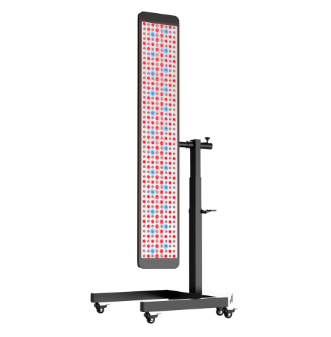
RLT Home does make the package more interesting by including an electric stand with its full-body devices rather than automatically treating the stand as an expensive add-on.
That’s meaningful if you want to use the panel both vertically and horizontally.
A horizontal setup lets you lie underneath the light instead of standing in front of it, which may make longer or more frequent sessions easier to fit into your routine.
RLT Home offers customers a personalized usage plan based on what they’re interested in using the panel for.
That’s not something we’d buy a panel for by itself, but it’s a useful addition.
Red light therapy devices often arrive with a basic manual that explains how to turn everything on but leaves the person wondering how far away to stand, which settings to choose, and how to build a routine around their goals.
RLT Home’s customer reviews repeatedly mention getting help with personalized plans and asking the company follow-up questions about using the devices.
We’d still distinguish personalized product guidance from individualized medical advice. A red light therapy company shouldn’t replace your physician when you’re dealing with an actual medical condition.
But helping customers understand the device they’ve just spent hundreds or thousands of dollars on? We like that.
We’re always a little cautious when a red light company tells us its own panel is incredibly powerful.
Of course it thinks that.
RLT Home goes a step further by publishing third-party testing related to irradiance, electromagnetic fields, and other performance measurements.
The company reports approximately 0.0 μT EMF at distances of six inches or greater and promotes the panels as flicker-free.
Independent reviewers have also put RLT Home panels under their own measurement equipment. In 2026, Outliyr published spectrometer testing of the Total Spectrum panels rather than relying solely on the manufacturer’s specification sheet.
That’s the kind of independent testing we like seeing when a company is making performance a major part of its sales pitch.
It doesn’t automatically tell us the panel will produce a particular health outcome, but it gives shoppers more evidence that the hardware is doing what the specifications claim.
Every RLT Home panel currently comes with a three-year warranty beginning on the delivery date. Manual and electric stands receive one year of coverage.
The panel warranty covers manufacturing defects involving things such as faulty LEDs, power problems, and structural failures caused by manufacturing errors.
If RLT Home considers the issue minor, it may troubleshoot remotely or send replacement parts. For major approved warranty issues, the company says it will cover the necessary shipping costs and either repair the panel or provide a replacement if repair isn’t possible.
Three years is respectable.
There are competing red light brands offering longer warranties, so we wouldn’t call it exceptional. But it’s substantially more reassuring than spending thousands of dollars on a panel protected for only one year.
RLT Home gives customers 60 days from the date the device arrives to request a return.
There isn’t a restocking fee.
That’s a meaningful advantage, particularly when you’re buying an expensive device without being able to walk into a store and try it first.
There is some fine print.
The product and its packaging must be returned in perfect condition without wear and tear. You need approval from RLT Home before sending it back, and you’re responsible for the cost and safe delivery of the return shipment.
If the panel doesn’t pass the company’s inspection, the return can be rejected and the device sent back to you at your expense.
So we’d call this a good trial period, but not a completely consequence-free one.
If you’re even remotely considering a return, keep every piece of packaging and take care of the device while you’re deciding.
RLT Home currently advertises free and insured U.S. shipping.
The company says U.S. orders ship domestically from warehouses in California and Georgia, which also means U.S. customers aren’t dealing with import duties or customs charges on those orders.
That’s useful with large panels.
A surprise international freight charge or import bill on a device that already costs several thousand dollars is the kind of surprise nobody wants.
This is one area where RLT Home has more evidence behind it than some smaller red light companies we’ve reviewed.
At the time of our review, RLT Home had a 4.6 out of 5 TrustScore on Trustpilot based on 53 reviews, with 81% of reviewers giving the company five stars.
That’s still a relatively small review pool compared with huge consumer brands, so we wouldn’t treat it as definitive proof that everyone has a great experience.
But the feedback is useful.
One of the most consistent themes isn’t actually about wavelengths or LEDs. It’s customer support.
Several recent reviewers describe getting detailed responses to questions, help choosing devices, assistance creating usage plans, and continued support after the sale. Other customers mention timely delivery and panels that felt well built and easy to use.
We also found repeat customers, including one reviewer who said their family bought a second RLT Home device for a son heading to college.
Those ownership experiences are anecdotal, and claims customers make about improvements in pain, sleep, skin, recovery, or other health concerns shouldn’t be treated as clinical evidence.
But the repeated comments about responsiveness and support are relevant when we’re evaluating the company rather than trying to prove whether red light therapy works.
RLT Home doesn’t have a perfect independent review record.
At the time we checked Trustpilot, 7% of reviews were one star, while another 6% were two stars and 6% were three stars.
That’s worth acknowledging.
A high average rating doesn’t mean every customer gets the experience they expected.
With only 53 total Trustpilot reviews, individual negative experiences also affect the percentages more dramatically than they would on a profile with several thousand reviews.
We’d keep watching this as RLT Home sells more devices and its independent review history gets larger.
RLT Home repeatedly describes its panels as “clinical-grade.”
That sounds impressive.
It’s also a term we’d want shoppers to put into context.
The company states that its devices are FDA-registered Class II medical devices under a category that’s 510(k)-exempt. That’s different from saying the FDA has independently evaluated and approved every health or therapeutic claim RLT Home makes about the panels.
Those aren’t interchangeable ideas.
We’d focus more on the things we can meaningfully evaluate: wavelengths, wavelength distribution, measured output, treatment area, controls, build, safety testing, warranty, return policy, and how the panel fits into your routine.
Those tell us more about what you’re actually buying than the phrase “clinical-grade.”
The lineup makes sense.
Five sizes share the same underlying wavelength system, so you don’t have to pay thousands of dollars just to unlock the full spectrum of the company’s technology.
We also like the balance between presets and customization. Someone who doesn’t want to think about every wavelength can choose a pre-built mode, while someone who wants more control can adjust the channels, intensity, and pulsing themselves.
The 60-day trial, three-year panel warranty, free U.S. shipping, published third-party testing, and included personalized guidance all make the ownership package more appealing.
And so far, independent customer feedback around RLT Home’s service is largely positive.
Price is the obvious hurdle.
Even the MINI normally sits well above the price of many basic targeted red light panels, and moving into the ULTRA or ELITE puts you firmly into multi-thousand-dollar territory.
We’d also like to see the panel warranty pushed beyond three years as the brand competes more directly with companies offering five-year or longer coverage.
The 60-day return policy sounds generous, and it is better than many we’ve reviewed, but requiring the product and packaging to be in perfect condition leaves some room for disagreement over what qualifies as acceptable after someone has genuinely tried a device at home.
Finally, some of RLT Home’s language around “clinical-grade” technology and goal-specific presets can make the panels sound more medically definitive than we’d like. We’d rather shoppers judge the hardware and available research separately from marketing terminology.
RLT Home makes the most sense for someone who already knows they want a traditional red light therapy panel and likes having more wavelengths and control than a basic red-and-near-infrared setup provides.
The MINI works better for targeted areas. The COMPACT and MAX make sense if you want broader coverage without dedicating a huge part of a room to the system. The ULTRA and ELITE are where we’d look if you’re committed to full-body sessions and want to minimize repositioning.
We’d also put RLT Home higher on the list for someone who values actual human support. The personalized usage plans and repeated positive customer-service comments are meaningful when you’re buying a device with more settings than a simple on/off panel.
On the other hand, if all you want is straightforward 660 and 850 nm red and near-infrared light for one small area, you may be paying for wavelengths and controls you don’t really need.
There’s quite a bit we like here.
RLT Home isn’t trying to win by having 30 different products. It has five panel sizes built around the same seven-wavelength system, which makes moving through the lineup much easier to understand.
The preset modes make a feature-heavy panel more approachable, while manual controls leave room for customization. Third-party testing gives us more to work with than manufacturer specifications alone, and the 60-day trial, three-year warranty, free U.S. shipping, and personalized support strengthen the overall package.
We wouldn’t automatically choose RLT Home just because it has seven wavelengths or calls its devices clinical-grade. There are strong competing panels at these prices, and some brands offer longer warranties.
But this is one of those cases where the brand gives us several meaningful things to evaluate beyond a long specification sheet.
Our verdict: RLT Home is worth considering if you want a premium at-home panel with seven wavelengths, preset programs, plenty of manual control, and strong customer support behind it. The biggest decision is less about which model has the best technology and more about how much coverage you’re willing to pay for, since all five Total Spectrum panels use the same core wavelength system.

Join red light therapy users comparing devices, sharing protocols, and posting honest results. Free to join, no sales pitch.
Protocol sharing
Device comparisons
Safety-first advice
Category
Score
Product Range
Price & Value
Warranty & Returns
Customer Support
