OVERALL
DEVICES
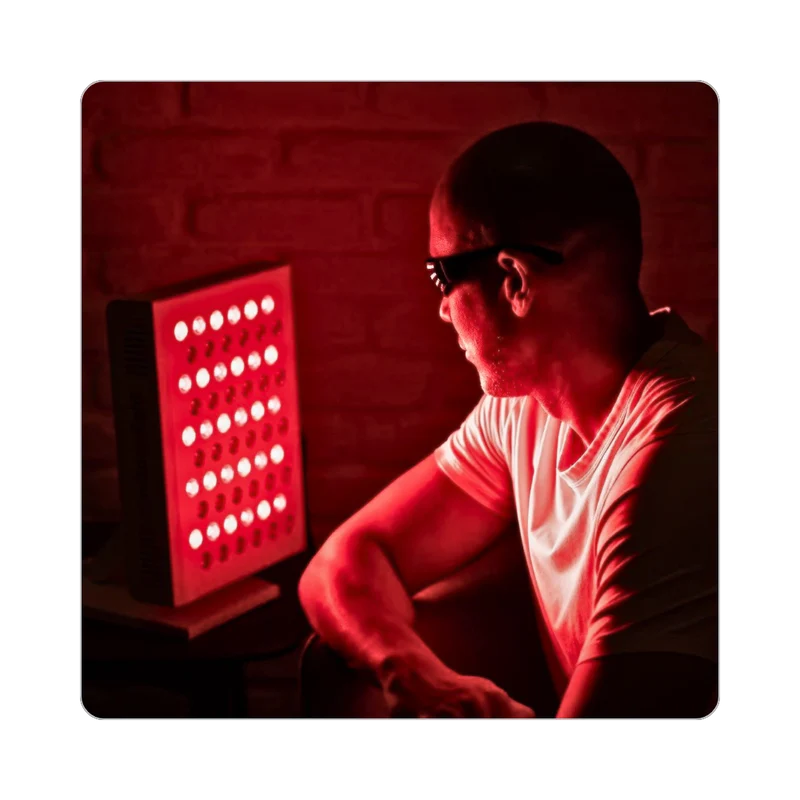
Red Light Therapy Bed, Helmet, Desktop RLT, Face Mask RLT, PDT Pro
2022
Face Masks ~ Panels ~ Hair Helmets ~ Full-Body Beds
From €190
415nm to 850nm (varies by device)
About LUMEA
Lumea Red Light is a UK-based wellness brand with a fairly focused red light therapy lineup that includes an LED face mask, portable panel, larger multi-wavelength panels, a full-body mat, and a red light therapy blanket. Its products cover quite a bit of ground, so someone mainly interested in their face isn’t shopping from the same setup as someone who wants to lie down for a full-body session. Lumea gets particularly interesting with its Titan 7 panels, which use seven wavelengths rather than sticking with the more common red and near-infrared combination, although some of the brand’s broader wellness claims go further than we’d be comfortable accepting at face value. Prices aren’t exactly entry-level either, so this is a brand we’d research carefully rather than impulse-buy from.
Editor's Take
Lumea Red Light is most interesting for shoppers who want more than a basic two-wavelength panel, especially with the seven-wavelength Titan 7 series. The technology gives us something worth looking at, but the short warranty, return fees, limited independent customer feedback, and some overly confident health claims keep us from giving the brand an easy yes.
Maybe you’ve seen one of Lumea’s Titan panels and you’re wondering what all those wavelengths are about. Or maybe you found the Glow face mask while looking for something specifically for your skin.
Either way, the first thing to understand about Lumea is that the brand has several very different ways to use light therapy at home.
Its current red light selection includes the Lumea Glow face mask, Lumea Mini portable panel, Titan 7 Pro, Max, and Ultra panels, Lumea Flow full-body mat, and Lumea Calm red light therapy blanket. Lumea also sells other wellness devices, including PEMF mats and an infrared sauna blanket, but we’re focusing primarily on the actual red light therapy lineup here.
That’s a useful amount of variety without becoming completely overwhelming.
If you’re mainly interested in facial skincare, you can look at the Glow. If you want a small device that can move between different areas, there’s the Mini. The Titan series moves into more serious panel territory, while the Flow and Calm are designed for someone who’d rather lie down and cover much more of the body at once.
So before comparing wavelengths or counting LEDs, we’d start there. How do you actually picture yourself using red light therapy?
A lot of red light therapy panels rely heavily on red and near-infrared wavelengths. There’s nothing inherently wrong with that. Those are commonly used areas of the light spectrum in photobiomodulation.
Lumea’s Titan 7 series takes a broader approach.
The Titan 7 Pro currently lists seven wavelengths: 480, 630, 660, 810, 830, 850, and 940 nm. That gives you blue light alongside several red and near-infrared wavelengths rather than limiting the panel to one red and one near-infrared wavelength. The Pro also has a touchscreen and is listed at 180 mW/cm² from 15 centimeters.
Why should you care?
Mainly because different wavelengths interact with tissue differently. Someone primarily interested in a simple red and near-infrared setup may not need seven wavelengths at all. But if you’re specifically looking for a panel that gives you a wider spectrum to work with, the Titan lineup becomes more interesting.
Just don’t assume that more wavelengths automatically equals better results.
Lumea makes some pretty sweeping claims about what individual wavelengths can accomplish. We’d separate those claims from the much simpler fact that the Titan gives you more wavelength options. That’s a legitimate feature. Whether every promised benefit on the product page follows from having those wavelengths is a different question.
This is where the £189 Lumea Mini makes more sense.
The Mini is designed as a small portable red and near-infrared device rather than a miniature version of everything the Titan can do. It uses two wavelengths and is intended for targeted sessions.
For someone who wants to use red light on a smaller area and doesn’t care about blue light, seven wavelengths, or covering a large portion of the body at once, that may be enough.
It also highlights something we think shoppers sometimes forget when comparing red light therapy devices: buying more technology than you’ll actually use isn’t necessarily better value.
If you’re treating one small area, you may be happier moving a £189 device into position than finding space for a much larger panel.
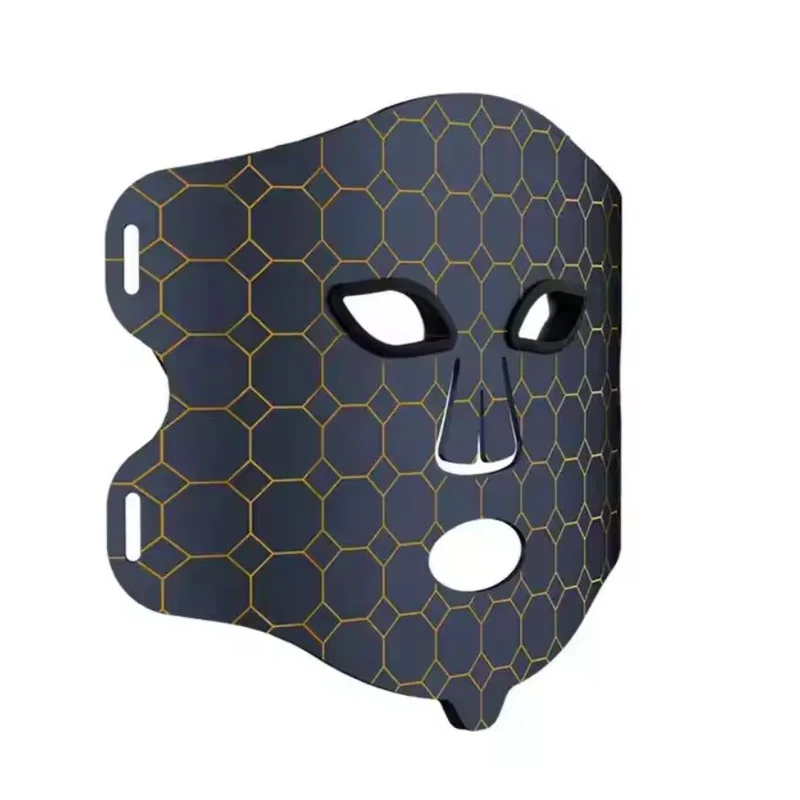
If your main interest is your face, we’d look at the Lumea Glow separately from the panels.
The Glow is a flexible silicone LED face mask currently priced at £150. It uses 630 nm red light, 830 nm near-infrared light, and 465 nm blue light, with 144 triple-core LEDs. It’s rechargeable, weighs 270 grams, and sessions are designed to last around 10 to 20 minutes.
There’s also something unusual here: Lumea incorporates what it calls patented acupressure technology into the mask.
We’re more interested in the LED side of the device than the broader claims surrounding acupressure. If you’re comparing the Glow with another LED mask, we’d focus first on things we can meaningfully compare: wavelengths, facial coverage, fit, session time, controls, comfort, warranty, and price.
That doesn’t mean you can’t enjoy the acupressure feature. We just wouldn’t make it the reason you buy an LED mask.
This is where the Lumea Flow and Calm come in.
The Flow is a full-body red light therapy mat currently priced at £579, while the Calm is a larger blanket-style system priced at £749. Both are around 180 cm by 80 cm, giving you a very different experience from positioning yourself several inches in front of a traditional panel.
That’s useful if convenience is one of your biggest concerns.
You can lie down instead of repeatedly adjusting your position in front of a light. The tradeoff is that you’re buying into a more specialized setup. A panel is easier to use on different parts of the body from different angles, while a mat or blanket makes the most sense if you actually like the idea of lying down for your sessions.
This is one of those areas where “better” depends almost entirely on how you’ll use it.
Lumea isn’t really a bargain red light therapy brand.
At the time of our review, the Glow was listed at £150 and the Mini at £189. The Titan 7 Pro was £489, the Titan 7 Max £649, and the Titan 7 Ultra £885. The Flow mat was £579, while the Calm blanket was £749.
Those were sale prices shown on Lumea’s website, and several products displayed considerably higher crossed-out regular prices.
That’s something we’d keep in mind when judging value.
A £189 portable panel isn’t an enormous commitment compared with many larger red light therapy systems. Once you’re looking at £649, £749, or £885, we’d slow down and compare Lumea against other established red light therapy brands before buying.
At that price, wavelength count isn’t enough. We’d also compare treatment area, irradiance at a useful distance, controls, warranty coverage, return terms, independent customer history, and how easy the system will actually be to use regularly.
This is probably one of our bigger hesitations with Lumea.
According to the company’s current policies, most Lumea devices come with a one-year limited warranty covering manufacturing defects and providing a one-time replacement. The Titan 7 series gets a longer two-year warranty.
One year isn’t nothing.
But when you’re potentially spending several hundred pounds on a light therapy system, we’d prefer more coverage. The two-year warranty on the Titan series is better, but even that is worth comparing against competitors offering longer protection on similarly priced panels.
Lumea does have an interesting trade-in system after the warranty expires. The company says you can return an old Lumea device for recycling and receive half of the original purchase price toward another device. It separately advertises a lifetime upgrade program where an eligible working device can receive its full retail value as credit when the replacement purchase costs at least twice the original product’s retail value.
That’s unusual, and it could be useful for someone who already expects to upgrade later.
We’d still rather see a longer standard warranty first.
This deserves its own section because Lumea’s marketing makes the guarantee sound pretty simple.
The company’s About page says you have 30 days to try a Lumea device and get your money back if you don’t love it.
Then you read the policy page.
Lumea says returns require valid tracking within 30 days of delivery and that the customer pays return shipping. More importantly, the company says a 10% to 30% restocking fee applies to returns. Returned products must also be undamaged.
That’s not what we’d personally describe as completely “risk-free.”
If a £749 device receives a substantial restocking fee and you’re also responsible for sending it back, your trial could still cost you a meaningful amount of money.
There’s another condition worth knowing before clicking Buy: Lumea’s policy says orders cannot be canceled after they’re placed. If you change your mind, you’re instructed to wait for the product to arrive and then go through the return process.
We’d read those terms carefully before placing a large order.
Lumea advertises free worldwide shipping.
According to its shipping policy, most products are dispatched within four to five business days. The company gives typical transit times of around eight to 12 business days for European and North American orders, while some made-to-order mats can take longer.
That’s reasonable enough if you’re expecting it.
Just don’t order a Lumea device assuming that “free shipping” also means it’ll be at your door in a few days.
This is probably the part of Lumea’s website we’d most like to see cleaned up.
There are legitimate reasons to research photobiomodulation, and there is a substantial body of research on red and near-infrared light. That doesn’t mean every health benefit listed beside a red light product has been proven for that particular device.
Some Lumea product pages make broad claims involving wound healing, arthritis, sleep, circulation, inflammation, hair growth, immune function, cellulite, weight loss, and other health concerns.
We wouldn’t buy a device because of a giant list of promised outcomes.
In fairness, Lumea itself includes a disclaimer elsewhere on its website acknowledging that some of the alternative approaches incorporated into its broader product lineup don’t align with conventional scientific views and that certain products haven’t undergone clinical studies demonstrating their efficacy.
That’s actually useful context.
Our approach is simpler: evaluate the red light therapy hardware for what it actually provides, then look at the evidence for your particular reason for using photobiomodulation instead of assuming the device can accomplish everything mentioned on its sales page.
This was probably the biggest limitation we ran into while researching Lumea.
Lumea publishes customer reviews on its own website, including reviews for the Glow, Mini, Titan panels, and its mats. Some customers report positive experiences with product quality, portability, skin appearance, targeted use, and the strength of the panels.
But those are reviews hosted by Lumea.
We always prefer to compare brand-hosted reviews with independent sources, particularly when someone may be spending £500 or more.
At the time of our research, Lumea Red Light’s Trustpilot profile had only one review. That review was positive and described buying three Lumea products, being impressed with the Titan Ultra, and receiving quick assistance from customer support.
That’s encouraging, but one independent review tells us almost nothing about the average ownership experience.
We couldn’t find enough substantial independent customer feedback to confidently tell you there’s an established pattern around long-term reliability, returns, warranty claims, shipping, or customer service.
And we’d rather tell you that than pretend the evidence is stronger than it is.
The Titan 7 lineup gives Lumea a legitimate point of difference. Seven wavelengths give shoppers who specifically want broader wavelength coverage something they won’t find on every basic red light panel.
We also like that the lineup isn’t panel-only.
The Glow, Mini, Titan panels, Flow, and Calm serve noticeably different purposes. Someone looking for facial use doesn’t have to buy the same device as someone who wants broad body coverage.
The free worldwide shipping is another plus, and the lifetime upgrade and trade-in programs are interesting ideas for people who plan on sticking with the brand.
There are things here worth considering.
We’d start with the warranty.
One year for most devices feels short when some of these products cost several hundred pounds. The Titan’s two-year warranty is better, but we’d still compare it with the coverage offered by competing panel brands.
The return policy is another sticking point. Calling something a 30-day risk-free guarantee while also stating that returns can receive a 10% to 30% restocking fee is confusing. We’d much rather see clearer language upfront about what returning a used device could actually cost.
We’d also like more independent customer history.
That may simply come with time, but right now we have considerably more confidence describing Lumea’s hardware and policies than describing what ownership looks like after one, two, or three years.
Finally, we’d tone down some of the health claims. A long list of promised wellness outcomes doesn’t make a red light therapy device more convincing to us. Clear specifications, sensible treatment guidance, good policies, and evidence do.
We’d put Lumea higher on the list for someone specifically interested in broader wavelength coverage, particularly if the Titan 7 series is what brought you to the brand in the first place. It’s also worth exploring if you prefer a mat or blanket over standing in front of a panel, or if you’re looking for a dedicated facial device and like the Glow’s combination of red, near-infrared, and blue light.
We’d be more hesitant if a long warranty is one of your biggest buying priorities, you want a truly low-risk trial period, or you rely heavily on large amounts of independent customer feedback before making an expensive purchase.
And if all you need is straightforward red and near-infrared light, don’t assume you need to pay for the Titan 7 simply because seven wavelengths sounds more advanced. Compare what you’ll actually use.
There’s enough here for us to take Lumea seriously.
The Titan 7 panels are the most compelling part of the lineup because they give you a wider wavelength selection than a basic two-wavelength panel. Lumea also does a good job of offering genuinely different form factors instead of selling several panels that only change in size.
But we’re not completely sold on the ownership side yet.
The one-year warranty on most devices is fairly limited, the return policy can involve a 10% to 30% restocking fee, orders can’t be canceled once placed, and there simply isn’t enough independent customer feedback for us to confidently judge Lumea’s long-term reliability or service record.
We’d also look past some of the huge wellness claims on the product pages and judge each device according to its actual hardware, the evidence relevant to what you want to use it for, and how it compares with similarly priced alternatives.
Our verdict: Lumea Red Light is worth considering, particularly if the seven-wavelength Titan panels or full-body mat and blanket formats match what you’re looking for. The technology and device variety are interesting, but at the higher prices we’d compare Lumea with more established red light therapy brands offering longer warranties and stronger independent customer histories before making the final call.

Join red light therapy users comparing devices, sharing protocols, and posting honest results. Free to join, no sales pitch.
Protocol sharing
Device comparisons
Safety-first advice
Category
Score
Product Range
Price & Value
Warranty & Returns
Customer Support
