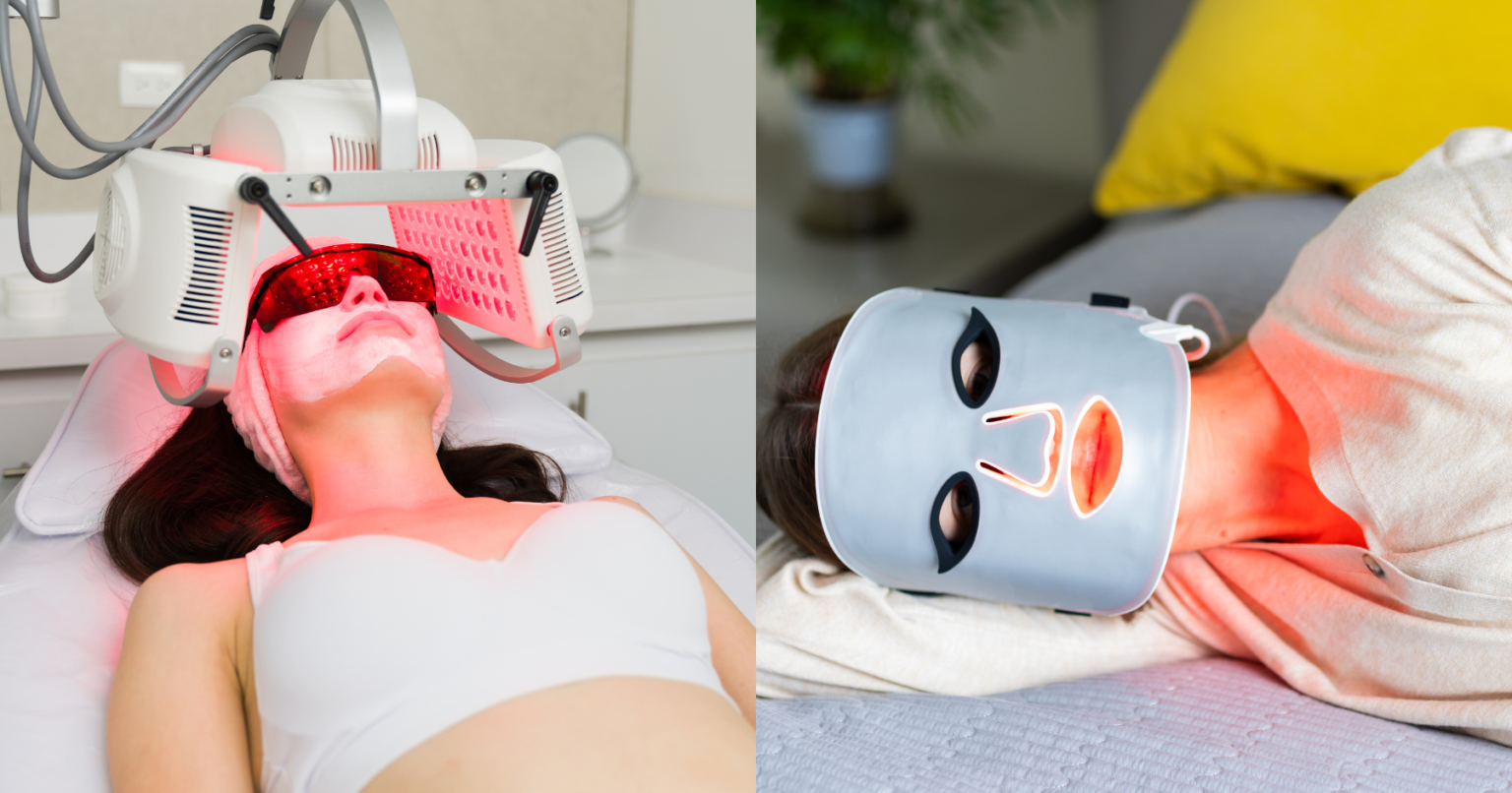
Walk into a wellness clinic, and you might see a large red light therapy system overseen by trained staff. Browse online, and you will find compact panels, masks, and wraps marketed for home use, often described as “professional” or “medical-grade.” A natural question follows: how different are these devices really, and does a clinical machine do something a home device cannot?
Understanding consumer vs clinical red light therapy starts with recognizing that there are meaningful differences in power, oversight, and regulatory status—but also a great deal of marketing language that blurs the line. This guide explains consumer vs clinical red light therapy so you can compare devices using evidence rather than marketing claims.
Consumer vs Clinical Red Light Therapy: Power and Irradiance
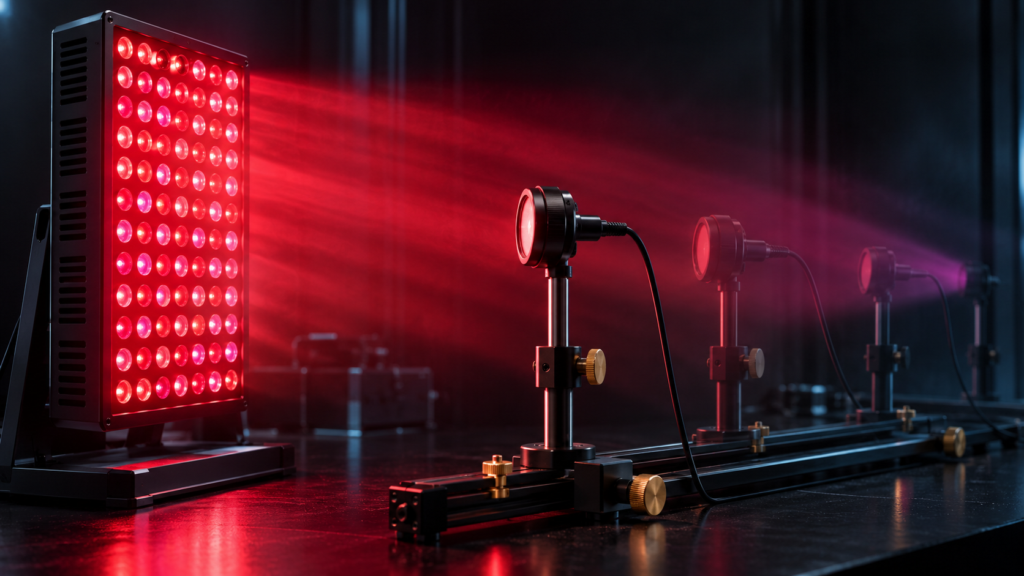
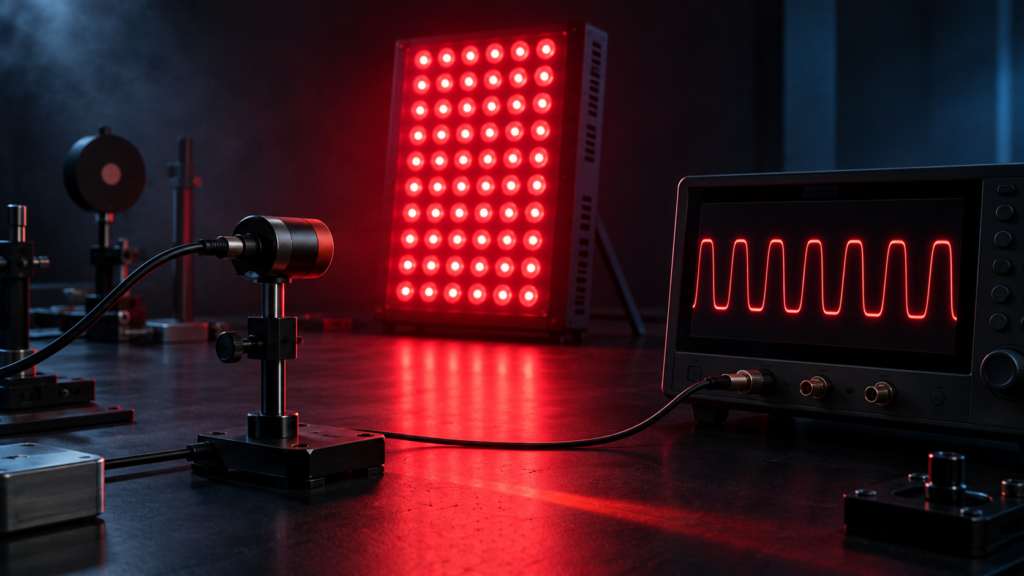
The clearest difference is often output. Irradiance — the amount of light energy reaching a surface, usually measured in milliwatts per square centimeter — tends to vary across devices, and clinical systems are frequently built to deliver consistent, higher output across a large treatment area. Many consumer devices deliver lower irradiance, cover a smaller area, or both.
Output matters because, combined with time and distance, it determines the dose. But more is not automatically better. Research on the biphasic dose response in low-level light therapy describes how a moderate dose may help while too much can reduce or reverse the benefit. So a higher-powered clinical device is not inherently superior; it simply offers more capacity and consistency, which a trained operator can dose appropriately.
Consumer vs Clinical Red Light Therapy and Penetration Depth
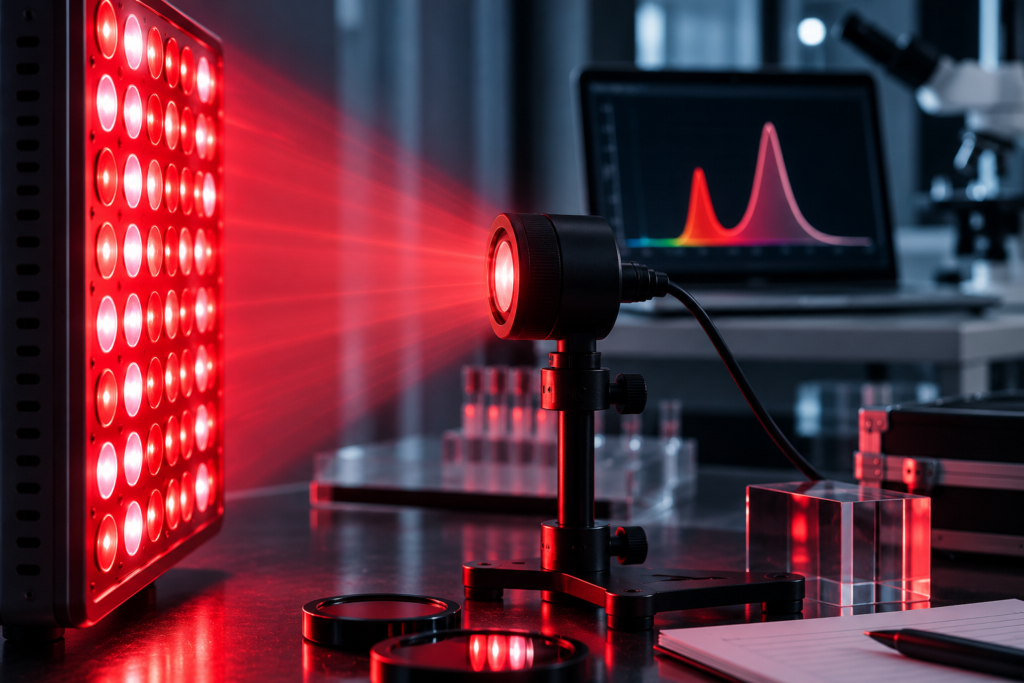
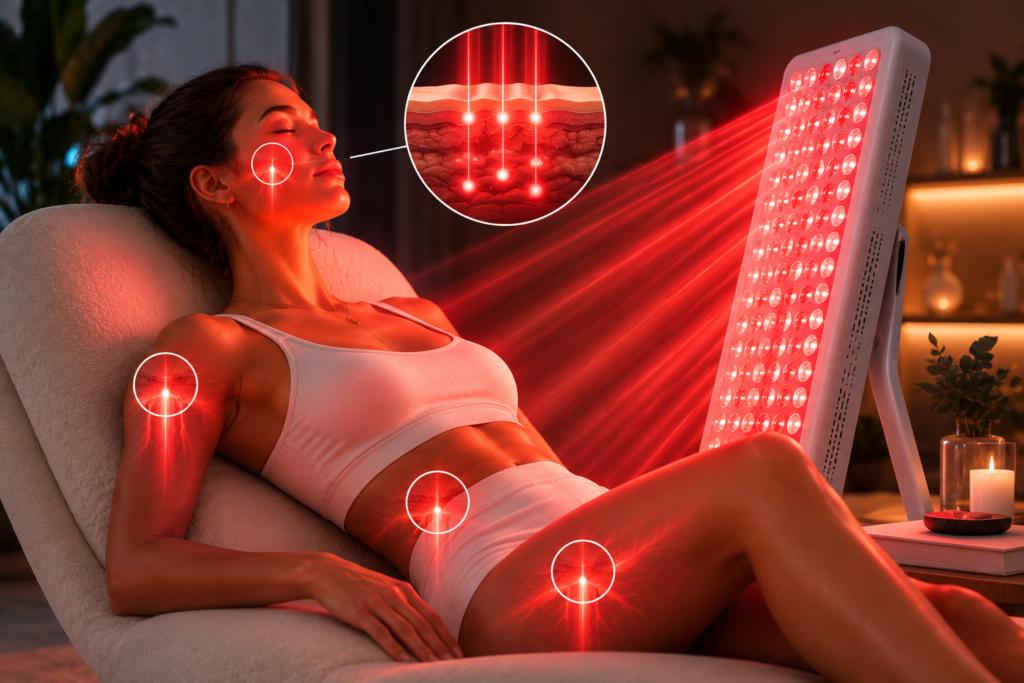
Marketing sometimes implies clinical devices reach “deeper.” Penetration depth is mostly governed by wavelength: research measuring the penetration depths of red and near-infrared light in human tissue shows that longer near-infrared wavelengths generally reach deeper than red wavelengths. A device’s depth of reach is therefore tied to the wavelengths it uses and the dose delivered, not simply to whether it is labeled “clinical.” A consumer device using comparable wavelengths addresses similar tissue depths, even if it covers less area or takes longer.
Consumer vs Clinical Red Light Therapy: Regulatory Classification
Regulatory status is a frequent source of confusion. In the United States, many light-based devices go through the FDA’s 510(k) clearance pathway, which allows a device to be marketed when it is shown to be substantially equivalent to an already-legally-marketed device for a stated use. The FDA’s 510(k) clearance resources explain that clearance is not the same as “approval,” a term reserved for a more stringent process typically applied to higher-risk devices.
Importantly, both clinical and consumer devices can hold FDA clearances — or a company may market a device as a general-wellness product without a specific clearance. So “clinical” does not automatically mean “more regulated,” and a consumer device may be cleared for a specific use while a flashy competitor is not. Checking the actual regulatory status of a specific device matters more than the category label.

Consumer vs Clinical Red Light Therapy: Professional Supervision
A genuine difference lies in how devices are used. Clinical equipment is typically operated by trained staff who select parameters, position the device, manage timing, and tailor sessions to an individual. Consumer devices are used unsupervised at home, where the user is responsible for following guidance.
This supervision affects more than convenience. A trained operator can adjust dose, monitor the area, and integrate the session into a broader plan. At home, the safeguards are the manufacturer’s instructions and the user’s diligence. Cleveland Clinic notes that red light therapy is generally considered safe and is often delivered in clinical settings, while also emphasizing that evidence is still developing — a reminder that professional context does not transform the therapy into a guaranteed treatment.
Consumer vs Clinical Red Light Therapy and “Medical-Grade” Claims
“Medical-grade” is one of the most overused phrases in this market. It has no single, strictly enforced consumer definition, so it can mean very different things depending on who is using it. Sometimes it signals that a device holds a relevant FDA clearance; sometimes it simply describes build quality or higher output; and sometimes it is pure marketing.
Because the term is elastic, it should never be taken at face value. The useful questions are concrete: Does this specific device hold an FDA clearance, and for what stated use? What are its actual wavelengths and irradiance, measured at what distance? Guidance from the Federal Trade Commission on health-product claims underscores that marketing should rest on competent and reliable evidence — so a vague label like “medical-grade” is far less informative than verifiable specifications.

How to Compare Consumer vs Clinical Red Light Therapy Claims
When comparing devices, a few principles keep the marketing in perspective. Treat “professional” and “medical-grade” as prompts to investigate, not as proof of anything. Look for transparent specifications — wavelengths in nanometers, irradiance at a stated distance, and recommended session time. Verify regulatory claims rather than assuming them; “FDA cleared” is meaningful but different from “FDA approved,” and “registered” is different still. And remember that a bigger, more powerful device is only an advantage if it is dosed correctly — capacity is not the same as benefit.
Safety Considerations Either Way
At consumer doses, red light therapy is generally considered low-risk for healthy adults, with side effects that tend to be mild and temporary, such as brief warmth or redness. Clinical devices, being more powerful, place a premium on correct operation, which is part of why they are used under supervision. In both settings, protecting the eyes from bright light is sensible, and anyone who is pregnant, takes photosensitizing medication, or has a relevant medical or eye condition should consult a healthcare professional before starting.

How to Compare Consumer vs Clinical Red Light Therapy Claims
Beyond raw power, one of the most practical differences between categories is coverage. Clinical systems are often large, designed to treat a sizable area of the body in a single session, which can make sessions efficient. Many consumer devices — especially handhelds and small panels — cover a smaller area, so reaching the same total exposure may take longer or require repositioning the device.
This is a convenience and time difference more than a fundamental effectiveness difference. A smaller device used patiently over a larger area can still deliver an appropriate dose; it simply asks more of the user. For people with limited time or larger goals, a bigger panel can be appealing, while a focused handheld may be perfectly adequate for spot use. The right choice depends on the goal, the budget, and how much effort someone is willing to invest in each session.
How to Compare Consumer vs Clinical Red Light Therapy Claims
Cost and access also shape the comparison. Clinical sessions may involve appointments and per-visit fees, which can add up with repeated use, while a one-time consumer purchase allows unlimited at-home sessions on your own schedule. Neither model is universally better. Some people value the guidance and higher output of a professional setting; others prefer the convenience and long-term economy of owning a device. Because red light therapy generally relies on consistent use over weeks, the practicality of sticking with a routine is itself a meaningful factor — sometimes more meaningful than a difference in raw output.
Setting Realistic Expectations
When comparing consumer vs clinical red light therapy, it is tempting to assume a clinical machine guarantees results a home device cannot match. The more accurate picture is that clinical equipment offers higher capacity, consistency, and professional oversight, which can be valuable — but the underlying therapy, mechanism, and the still-developing state of the evidence are the same. A well-specified consumer device used consistently and correctly can be a reasonable choice for general wellness goals, while clinical settings may suit those who want professional guidance or higher-output sessions. Neither is magic, and both work best with patience and realistic expectations.
The Bottom Line
Consumer vs clinical red light therapy comes down primarily to differences in power, professional oversight, treatment capacity, and sometimes regulatory status—not a completely different form of therapy. Penetration depends on wavelength and dose; clearance is not the same as approval, and supervision adds value without changing the fundamental therapy. Judge any device by its verifiable specifications and regulatory status, dose it sensibly, and keep your expectations grounded in the evidence rather than the label.
Ready to get your red light therapy device? See our brand and product reviews, and try out our product comparison tool to inform your decision.
Frequently Asked Questions
Which is better: consumer vs clinical red light therapy?
When comparing consumer vs clinical red light therapy, clinical equipment generally offers higher, more consistent output and professional supervision, while well-designed home devices can still be appropriate for many general wellness goals. A well-specified home device used correctly can be reasonable for general wellness goals.
Does “medical-grade” have an official meaning?
Not a single enforced consumer definition. It can refer to an FDA clearance, build quality, or higher output, or it can be pure marketing, so it should prompt you to check the actual specifications and regulatory status.
Do clinical devices penetrate deeper than consumer ones?
Penetration depth depends mainly on wavelength, not the device category. Longer near-infrared wavelengths reach deeper than red, so a consumer device using similar wavelengths addresses similar depths.
What is the difference between FDA cleared and FDA approved?
Clearance, often via the 510(k) pathway, means a device is substantially equivalent to an existing one for a stated use. Approval is a more stringent process typically reserved for higher-risk devices.
Why are clinical devices used under supervision?
They are more powerful, so trained staff select parameters, manage dosing and timing, and monitor the session. At home, the manufacturer’s instructions and the user’s diligence are the main safeguards.
Is a higher-powered device always better?
No. One of the biggest misconceptions about consumer vs clinical red light therapy is that higher power automatically means better results. Because of the biphasic dose response, that isn’t necessarily true. Higher power offers more capacity and must be dosed appropriately rather than assumed to be superior.
This article is for general educational purposes only and is not medical advice. Red light therapy is not a substitute for professional care. Talk with a qualified healthcare professional about your individual situation.