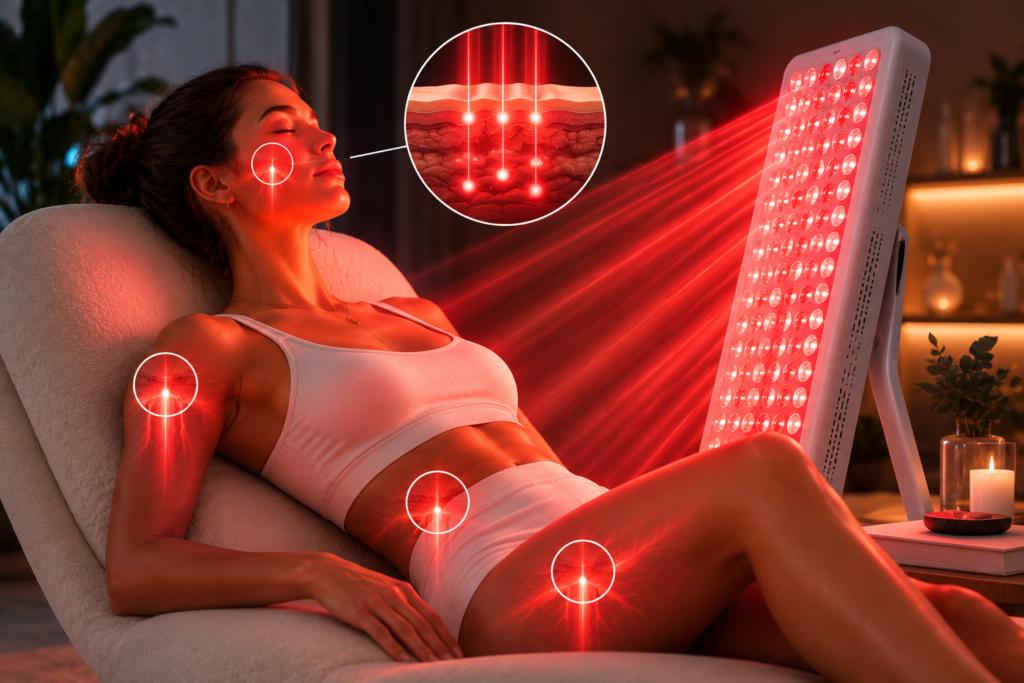
The Evidence-Based Guide to Red Light Therapy

Red light therapy — more precisely, photobiomodulation — uses red and near-infrared light to influence cellular activity. This guide explains what the light actually does, what determines a meaningful dose, and what clinical research does and does not currently support. Evidence quality varies substantially by condition, so outcomes here are described with the certainty the studies actually justify rather than as promises.

Educational information, not medical advice · Last evidence review: August 2026

What Is Photobiomodulation?

Photobiomodulation is the use of red and near-infrared light to influence cellular activity without heating or damaging tissue. It is non-ionizing: the photons do not carry enough energy to break chemical bonds the way UV or X-rays can.

The field is often described in terms of two wavelengths, 660 nm and 850 nm, because those are common in consumer devices. That framing is too narrow. Research protocols use a broad range across red and near-infrared, and the wavelength chosen depends on the target tissue and the intended application. No single wavelength is universally optimal.

Proposed Mechanisms

The pathways below are proposed mechanisms supported largely by laboratory and translational research — not guaranteed effects in every person or every application.

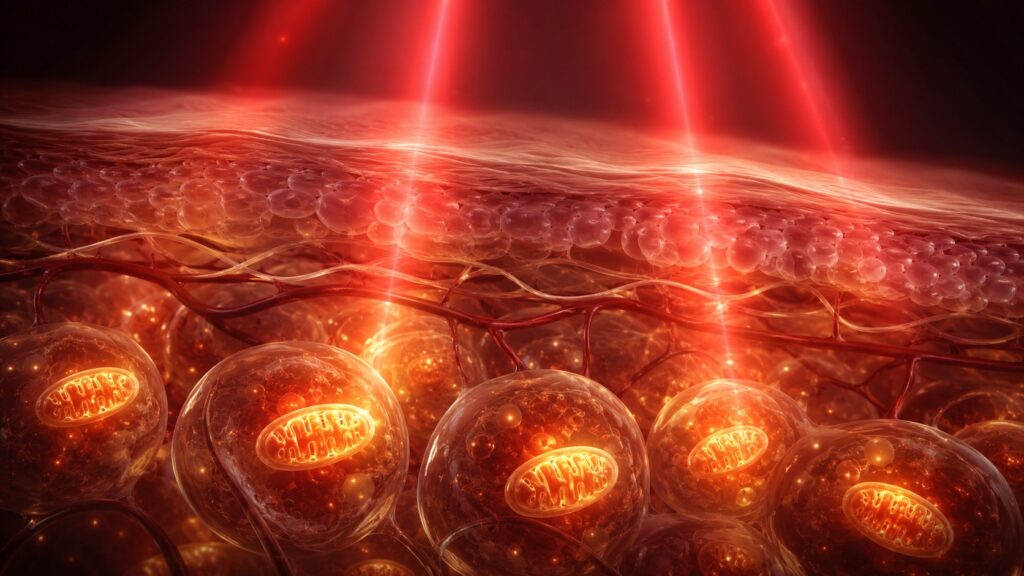
The leading model holds that photons are absorbed by candidate photoacceptors in the cell, which may in turn influence mitochondrial signalling, cellular redox state, nitric oxide availability, local perfusion, and inflammatory signalling. How much of any of this occurs in a given session depends on wavelength, how much light actually reaches the target tissue, and the total dose delivered.

Describing a plausible pathway is not the same as demonstrating a clinical outcome. A mechanism that holds in cell culture does not automatically produce a measurable benefit in a person.

Red and Near-Infrared: What Actually Differs

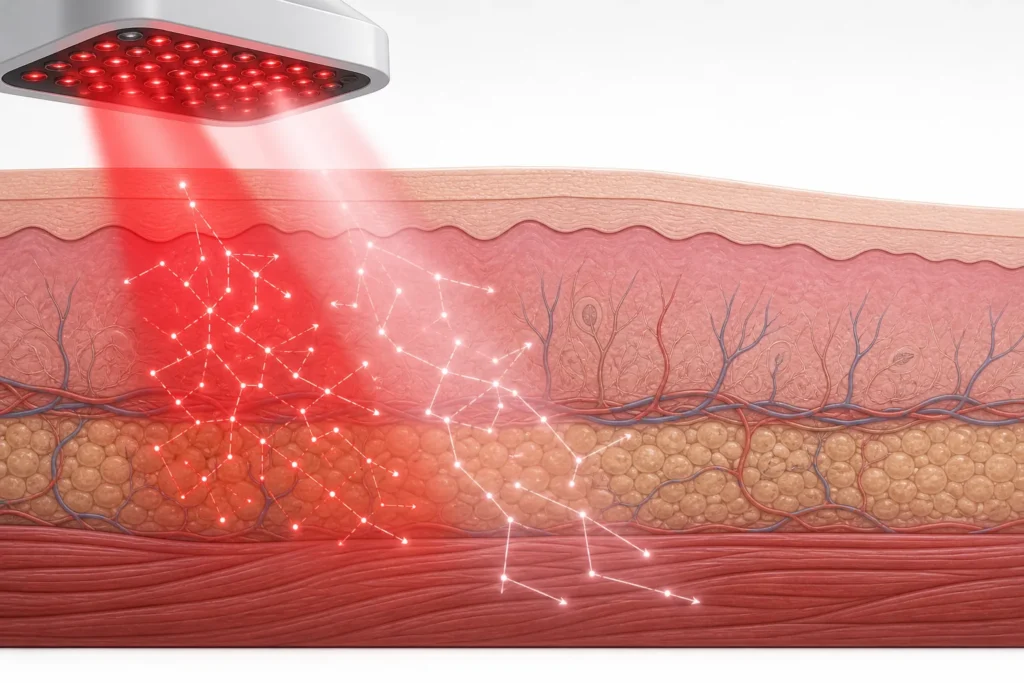
Red and near-infrared light do behave differently in tissue, and that difference is real. But it is a gradient, not a set of fixed depths.

No device can promise a specific treatment depth in millimetres. How far light travels depends on tissue type, skin pigmentation, scattering, the geometry of the light source, irradiance, and dose. Two people using the same panel at the same distance will not receive the same delivered dose to the same tissue.

Red light (~600–700 nm)

Absorbed more strongly nearer the surface, which is why skin applications commonly use this range. Consumer devices often centre on 660 nm, but studies use a broader span and the useful range depends on the application rather than on one favoured number.

Near-infrared (~800–900 nm)

Scatters and attenuates more gradually, so a greater proportion reaches deeper tissue before being absorbed. This is why near-infrared is more often used for deeper targets. It is largely invisible, which matters for eye safety: you cannot judge exposure by how bright it looks.

Cross-section illustration of skin, subcutaneous tissue and muscle showing red light scattering and attenuating with depth.
what is red light therapy
 Red ~660nmNear-infrared ~850nm
VisibilityVisible red glowInvisible to the eye
PenetrationSurface & skinDeeper tissue
Often discussed forSkin tone & textureMuscles, joints, recovery

Types of Red Light Therapy Devices

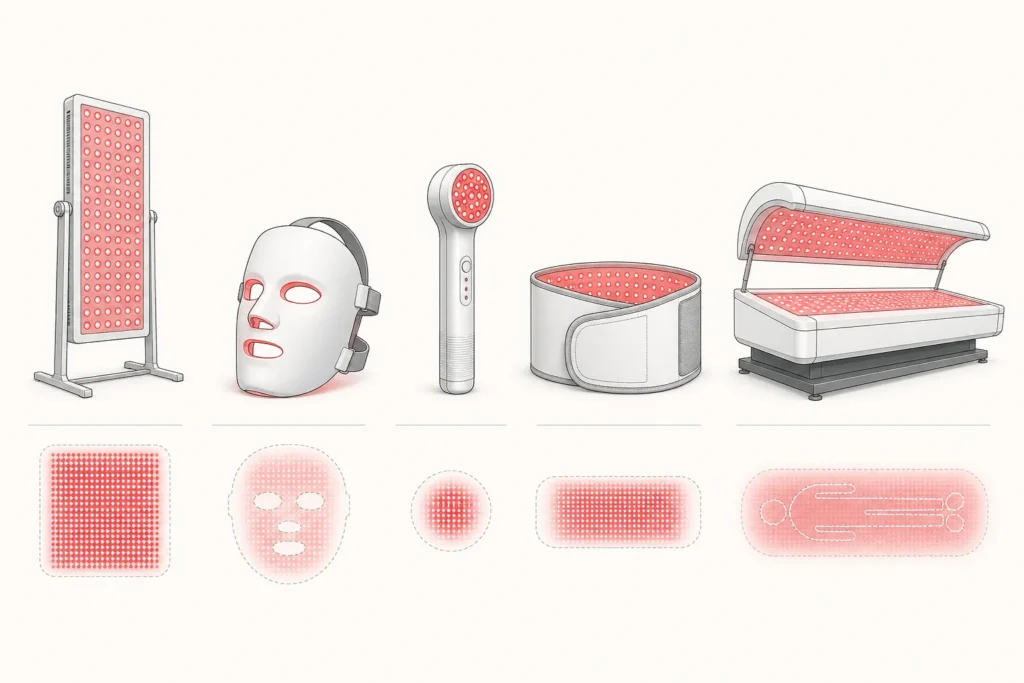
Red light therapy comes in several device formats. The right one depends on the area you want to treat, your budget, and how consistently you can use it. Most quality devices use red light around 660nm, near-infrared around 850nm, or both.

Line illustrations of five unbranded red light therapy device formats — panel, mask, handheld, wrap and full-body bed — with their relative treatment areas.

Panels

Larger panels cover more of the body at once and are popular for full-torso or full-body sessions. They typically offer higher power output and let you adjust treatment distance.

Masks

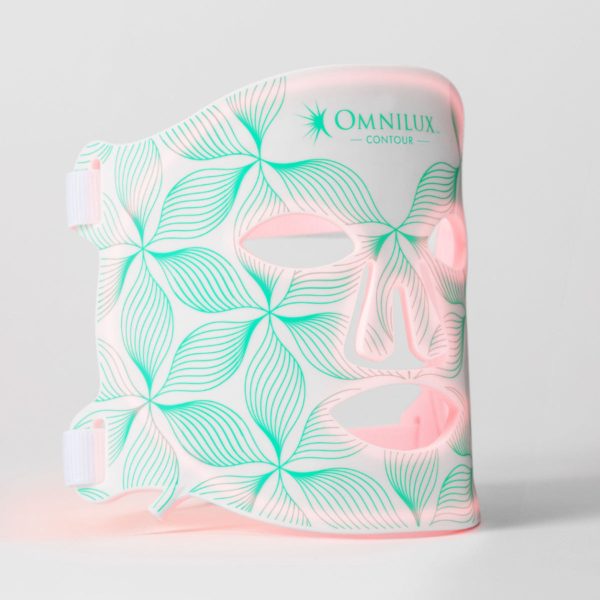
Face masks are shaped to sit close to the skin of the face and are commonly chosen for skin tone and texture goals. They are convenient but cover a small, fixed area.

Handhelds & Wands

Handheld devices and wands are portable and well suited to targeting a small, specific spot. Treating larger areas with them simply takes longer.

Wraps & Belts

Flexible wraps and belts fasten around joints or muscle groups — knees, shoulders, or the waist — for close, hands-free contact during recovery-focused use.

Full-Body Beds

Full-body beds surround you with light for whole-body exposure in a single session. They are most often found in clinics and spas rather than the home.

what is red light therapy
DeviceBest forCoverage
PanelsTorso / full-bodyLarge
MasksFacial skinSmall
Handhelds & wandsSpot targetingVery small
Wraps & beltsJoints & musclesMedium, hands-free
Full-body bedsWhole bodyLargest (clinic)

What the Evidence Supports, by Condition

Evidence quality varies enormously depending on what is being treated. The summary below reflects the strength of the research, not the popularity of the claim.

ApplicationEvidenceNotes
Selected localized pain conditionsPromising to moderateDiagnosis and protocol matter; results do not generalise across all pain
Androgenetic alopeciaModerateSupported in a recent umbrella review
Skin appearance / photoagingSome controlled supportParameters and measured outcomes vary between studies
Exercise recoveryMixedHighly protocol-dependent
SleepEarly and limitedSpecialised protocols are not equivalent to ordinary home-panel use
Mood disordersExperimentalProtocol-specific; not a home-device application
General wellnessInsufficientToo broad a claim to evaluate scientifically

A 2025 umbrella review covering 204 randomised trials found most outcomes supported by low-to-moderate certainty evidence. That is not nothing, and it is not proof.

How to Evaluate a Device

There is no universal optimum wavelength or dual-wavelength combination across indications and devices — so “660 + 850 is ideal” is not a useful buying rule. What matters is whether a device is appropriate and honestly specified for what you actually intend to use it for.

What to check before buying:

  • Intended use — what tissue and what application you are actually targeting.
  • Wavelengths — appropriate to that target, and actually disclosed by the manufacturer.
  • Independently measured irradiance, at a stated distance. Figures measured at the diode face are not comparable to figures measured at treatment distance, and this is where marketing numbers are most often inflated.
  • Treatment area — coverage determines how long a realistic session takes.
  • Beam uniformity — a single average irradiance figure hides how unevenly light is distributed across the panel.
  • Clear exposure instructions — distance, duration and frequency, stated by the manufacturer.
  • Eye safety guidance — what protection is specified, and for which use.
  • Regulatory status for the specific indication — clearance for one indication is not clearance for all of them.

Dose: What Actually Determines Exposure

Minutes alone do not define a dose, and neither does distance alone. The variables that actually determine exposure are:

  • Wavelength — determines how the light interacts with the target tissue.
  • Irradiance (W/cm² or mW/cm²) — power delivered per unit area at the target, not at the device face.
  • Exposure time — how long the tissue is illuminated.
  • Fluence (J/cm²) — total energy delivered per unit area. This is the standard measure of dose, and it is simply irradiance multiplied by time.
  • Treatment area — how much tissue is actually being illuminated.
  • Distance — changes irradiance at the target, which changes the dose for the same duration.
  • Pulsing — alters the temporal pattern of delivery and the average irradiance.

Distance and irradiance

Distance matters because it changes irradiance at the target, not because any particular distance is correct. Moving further away lowers irradiance, which lowers the dose delivered in the same amount of time. There is no universal 6–12 inch rule — use the distance your manufacturer specifies, because that is the distance their irradiance figures and session times assume.

Time, fluence and the biphasic response

Photobiomodulation does not follow “more is better.” The literature describes a biphasic dose response: below a certain exposure there may be no measurable effect, there appears to be a response window, and beyond that additional exposure adds no further benefit and may reduce it.

This is why copying someone else’s session length is unreliable — their device, distance and treatment area are probably not yours. Avoid universal rules like “15–20 minutes” and follow the exposure instructions for your specific device.

Consistency

Treating the same area regularly over several weeks is where most people report seeing change. Build it into a routine you can actually keep.

Safety and When to Ask a Doctor

Safety guidance is device- and application-specific. Follow the instructions supplied with your device rather than treating any general list as complete.

  • Eyes. These sources are bright, and near-infrared is largely invisible — so discomfort is a poor guide to exposure. Do not stare into emitters, use the eye protection your manufacturer specifies, and account for reflected light as well as direct viewing.
  • Skin response. Stop if you get persistent redness, irritation, burning or heat. These are not signs that the treatment is working.
  • Photosensitivity. Some medications and conditions increase sensitivity to light. Check with a prescriber if that may apply to you.
  • Ask a clinician first if you are pregnant, being treated for cancer, have an active skin condition in the treatment area, have a photosensitivity disorder, or are treating over the thyroid or a recent surgical site.

Where the evidence for a specific precaution is limited, this guide says so rather than stating a categorical rule. Individual advice should come from a qualified clinician who knows your history.

Medical disclaimer: This guide is for general education only and is not medical advice. It does not diagnose, treat, or cure any condition. Please ask a qualified medical professional first — and avoid or seek guidance before use — if any of the following apply to you:

  • Pregnancy
  • Active or suspected cancer
  • Photosensitizing medications
  • Photosensitizing conditions
  • Certain antibiotics (e.g. some that increase light sensitivity)
  • Retinoids (e.g. isotretinoin or topical retinoid use)
  • Lupus or other autoimmune light-sensitivity
  • Recent cortisone or steroid use (oral, injected, or topical)
  • Direct exposure over the thyroid (front of the neck)
  • Eye conditions or any direct eye exposure — always wear eye protection
  • Any serious or unmanaged medical condition

When in doubt, check with your doctor before starting.

References and Evidence Review

This guide is written from the sources below. Where a claim is hedged, it is hedged because the underlying evidence is limited — not as a legal formality.

  1. Son et al., 2025 — Umbrella review of 204 randomised photobiomodulation trials. PubMed
  2. Huang et al., 2012 — Biphasic dose response and parameter sensitivity in low-level light therapy. PubMed
  3. Jagdeo et al., 2018 — Systematic review of randomised LED dermatology trials. PubMed
  4. Montazeri et al., 2022 — Systematic review of photobiomodulation in mood disorders. PubMed
  5. US Food & Drug Administration — Premarket considerations for photobiomodulation devices (draft guidance). FDA

Last evidence review: August 2026. Search scope: systematic reviews, umbrella reviews and randomised controlled trials indexed in PubMed, plus current FDA guidance.

Frequently Asked Questions

Does red light therapy really work?

It depends entirely on what you are asking it to do. A 2025 umbrella review of 204 randomised trials found most outcomes supported by low-to-moderate certainty evidence — meaningful, but short of proof. Support is strongest for selected localized pain conditions, androgenetic alopecia and some skin-appearance outcomes; it is mixed for exercise recovery and early or experimental for sleep and mood. “Does it work?” has no single answer, because the evidence is condition-specific.

660nm vs 850nm — what’s the difference?

Red light around 660 nm is absorbed more strongly nearer the surface; near-infrared around 850 nm attenuates more gradually, so proportionally more reaches deeper tissue. That distinction is real but it is a gradient, not a fixed depth — how far light actually travels also depends on tissue type, pigmentation, scattering, the geometry of the source, irradiance and dose. Treat “660 for skin, 850 for deep tissue” as a rough orientation, not a specification.

How long and how often should I use it?

There is no universal answer, and session length alone does not define your dose. What matters is fluence — irradiance at the target multiplied by time — along with treatment area and distance. Photobiomodulation also shows a biphasic response, meaning more exposure is not reliably better and can be counterproductive past a point. Follow the exposure instructions for your specific device rather than a generic minutes-per-session rule.

Is red light therapy safe for the eyes?

Use the eye protection your device manufacturer specifies. Two things make eye safety easy to underestimate: these sources are bright, and near-infrared is largely invisible, so how uncomfortable it feels is a poor guide to how much exposure you are getting. Do not stare into emitters, and consider reflected light as well as direct viewing. Guidance varies by device and application, so the manufacturer’s instructions govern.

Who should avoid it or check with a doctor first?

Speak to a clinician before starting if you are pregnant, being treated for cancer, have a photosensitivity disorder, take medication that increases light sensitivity, have an active skin condition in the treatment area, or are treating over the thyroid or a recent surgical site. Contraindication lists vary by device and jurisdiction and the evidence behind some commonly repeated precautions is limited — which is a reason to get individual advice, not to assume any general list is complete.

Related Guides

Keep learning with our latest red light therapy articles and explainers.

Top Product Reviews

See how specific red light therapy devices — panels, masks, wraps and more — stack up in our hands-on reviews.

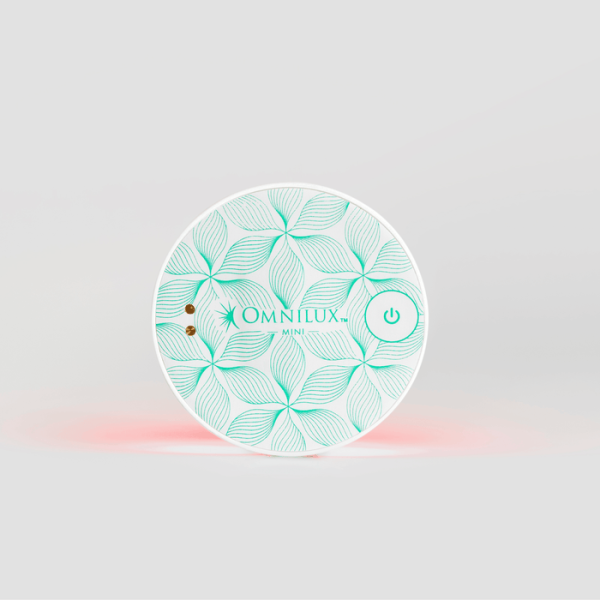
Omnilux Skin Corrector LED mini device
what is red light therapy

Omnilux Skin Corrector

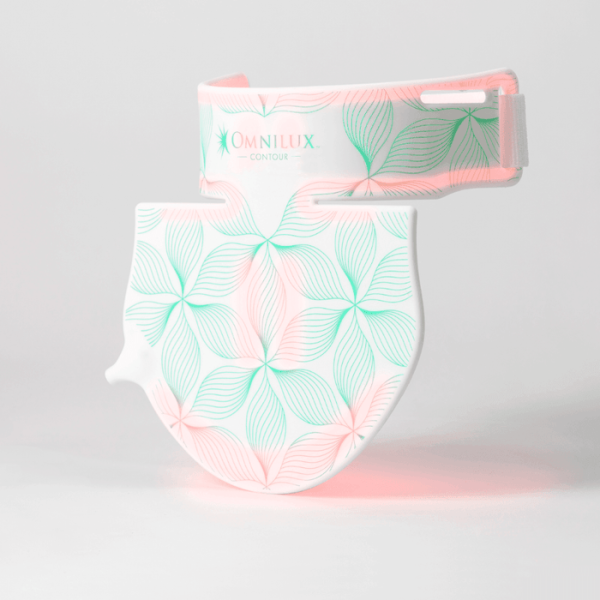
Omnilux Contour Neck and Décolleté LED device
what is red light therapy

Omnilux Contour Neck & Décolleté

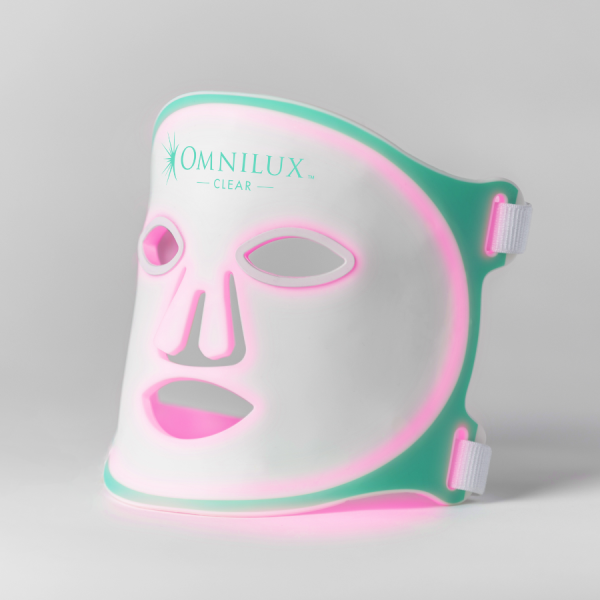
Omnilux Clear blue and red LED face mask
what is red light therapy

Omnilux Clear

what is red light therapy

Omnilux Men

what is red light therapy

Omnilux Contour Face

what is red light therapy
celluma

Celluma PRO PLUS

Brands We’ve Reviewed

Compare the leading red light therapy brands and what each is known for.

Built by Two Men Who Needed It to Work

Red Light Rising

A British brand founded by two men treating their own post-concussion symptoms and chronic joint pain.

4

Our Rating

Lasers, Not Just LEDs

Kineon

A wearable laser and LED device built specifically for joints rather than skin or general recovery.

4.0

Our Rating

COB Architecture, Six Wavelengths

EMR-TEK

A Canadian brand using chip-on-board emitters instead of individual diodes, for far higher irradiance at the panel face.

4.0

Our Rating

Red Light That Fits In A Bag

LUMEBOX

A single portable panel built around cordless use and travel rather than full-body coverage.

4.1

Our Rating

Premium therapy devices

Vital Red Light

Premium-grade panels delivering excellent irradiance and dual wavelengths to ensure consistent, reliable red and near-infrared light therapy.

5.0

Our Rating

Your perfect combo for better skin

Dermabeam

Dermabeam develops at-home LED light therapy devices designed to support healthier-looking skin through clinically inspired light-based treatments. Their products aim to make professional-style skincare technology more accessible for everyday use.

3.6

Our Rating

Keep Exploring Red Light Therapy

Ready to go deeper? Use our tools and resources to find the right device and the best deal.